Getting a crested gecko diet right shouldn’t feel this hard. A lot of first-time owners end up exactly where you are: mixed the powder, followed the instructions, put it in the bowl.
And your gecko ignored it completely.
Two days of watching your crestie walk straight past the bowl, and now you’re wondering whether you bought the wrong brand, whether live crickets are needed, or whether something is actually wrong. All totally normal questions. Usually the answer is simpler than you think.
Going back through feeding questions from dozens of new gecko owners, the same patterns show up every time. Most of the time, the fix is something you can actually do tonight.
Crested geckos do best on a complete gecko diet (CGD). Feed daily for hatchlings, babies, and juveniles, dropping to every 2–3 days once they reach adulthood (12+ months). Add calcium-dusted insects 1–3 times a week depending on age (see the full schedule below). Pangea, Repashy, and Arcadia are the brands that actually work; just mix with water until it looks like ketchup.
Why Crested Gecko Diet Is Different
Your crestie isn’t like your dog or cat. Not even close.
These guys evolved in New Caledonia’s rainforests, spending thousands of years on mushy overripe fruit, flower nectar, and whatever insects they could catch at night. That ancestral diet is baked into how their metabolism works. You cannot just feed them like any other lizard.
Calcium is the number that matters most here. Without enough, bones cannot form properly, and you will start seeing bent legs, weak grip when they climb, shaky movement. That condition is called metabolic bone disease (MBD), and it can be fatal if allowed to progress.
Here’s the problem most people don’t realize: most feeder insects have poor calcium levels. Crickets carry significantly more phosphorus than calcium — roughly the inverse of what crested geckos need. The target ratio is approximately two parts calcium to one part phosphorus.
That’s the gap commercial CGD powders were designed to fill. They correct the calcium imbalance and deliver the fruit-based nutrition a crested gecko’s physiology is built around.
The Best Crested Gecko Food & Brands (What Actually Works)
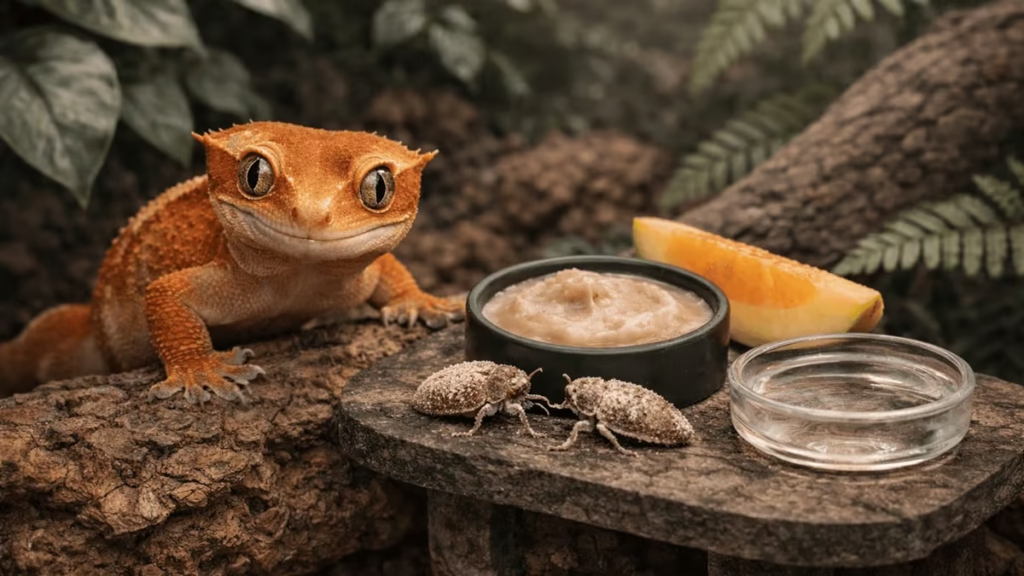
Easiest way to feed your gecko? A good CGD powder mixed with water covers almost everything your gecko needs. These complete diets replace all the complicated fruit-and-bug combinations people used to do.
Brands that reptile vets actually recommend:
Before you buy anything, flip the container and check the label. A calcium-to-phosphorus ratio printed clearly is the one thing that separates a properly formulated diet from a cheap filler-heavy mix.
Budget brands are not automatically bad, but some do cut corners on nutritional completeness. The ingredient list tells you everything. If a calcium-to-phosphorus ratio is not listed anywhere on the packaging, keep looking.
Mixing your CGD: One part powder, one part water. Mix it until it looks like ketchup or a fruit smoothie. Some geckos like it thicker, some like it runny. Start with the standard mix and see what yours actually eats.
Most cresties won’t eat off the floor — it just doesn’t register instinctively. A wall-mounted feeding ledge placed halfway up the tank is the fix. Check our crested gecko enclosure setup guide for exact placement tips. One cup for food, one for fresh water.
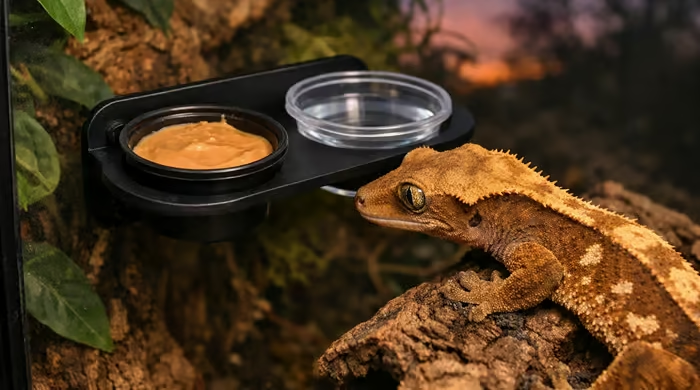
Cresties are notorious flavor snobs. Cross-checking feeding notes from multiple gecko keepers, the pattern that keeps coming up is this: rotate two or three flavors from the start so they don’t lock onto one and refuse everything else. Try a few options and commit to whatever yours actually finishes consistently.
How to Feed Crested Gecko the Right Way
Crested gecko feeding really comes down to two things: what you’re offering and how frequently. CGD as the base diet, live insects for protein and enrichment, and the right amounts for each life stage. Get those two variables right and the nutritional piece is essentially covered.
Feeding Schedule by Life Stage
| Life Stage | Age / Weight | CGD Frequency | Insects | Key Priority |
|---|---|---|---|---|
| Hatchling | 0–3 months / under 5g | Daily | Once a week — pinhead crickets or micro dubias only | Bone development — never skip calcium dusting |
| Baby | 3–6 months / 5–15g | Daily | 1–2 times a week | Weight gain — check tail base weekly for fat stores |
| Juvenile | 6–12 months / 15–35g | Daily | 2–3 times a week | Growth phase — rotate CGD flavors to prevent food refusal |
| Adult | 12+ months / 35g+ | Every 2–3 days | 1–2 times a week | Weight maintenance — reduce insects if visible fat rolls appear |
| Breeding female | 12+ months / 40g+ minimum | Daily during breeding season | 2–3 times a week with extra calcium dusting | Calcium replenishment — mandatory plain calcium dish always in enclosure |
Best time to feed: Put food out in the evening when the lights are going down. Crested geckos wake up at dusk and dawn that’s when they’re hungry. Pull out any leftover CGD after 24 hours or it’ll grow bacteria.
Your gecko’s body is the most honest feedback tool you have. Adults should look solid and well-filled without visible ribs or hip bones. Fat rolls along the sides mean pull back on feeding. A skinny, bony tail means increase portions. The tail base is where fat stores first — check it weekly on young geckos.
Feeder Insect Size Chart by Gecko Age
Live insects do more than add protein — they give your gecko something to actually hunt, which matters for mental stimulation and keeps feeding behavior sharp. Baby geckos especially grow faster with regular insect access. But you cannot just throw crickets in and walk away.
Size rule: never feed an insect longer than the distance between your gecko’s eyes. Oversized feeders cause choking, regurgitation, and in young geckos can cause impaction. When in doubt always go one size smaller — a gecko that eats more small insects is safer than one struggling with a large one.
| Life Stage | Gecko weight | Cricket size | Dubia roach size | Black soldier fly larvae |
|---|---|---|---|---|
| Hatchling | Under 5g | Pinhead (1/16″) | Too large — avoid until 5g+ | Small (¼”) |
| Baby | 5–15g | Small (¼”) | Extra small (¼–3/8″) | Small–medium (¼–½”) |
| Juvenile | 15–35g | Medium (3/8″) | Small–medium (3/8–½”) | Medium (½”) |
| Adult | 35g+ | Medium–large (½–1″) | Medium (½–5/8″) | Large (½–¾”) |
Note on dubias for hatchlings: dubia roaches are too hard-bodied for geckos under 5g — the size is wrong and the chitin can cause real problems. Pinhead crickets or small black soldier fly larvae only until your hatchling is reliably eating and hits that 5g mark. Then you can introduce dubias.
Step 1: Gut-Loading (24-48 Hours Before)
Gut-loading is the step most people skip, and it’s the one that actually moves the needle on insect nutrition. Whatever nutrition the bugs consume transfers directly to your gecko when they eat them.
Repashy Bug Burger or Arcadia InsectFuel are solid go-to options. Dark leafy greens — collard greens, mustard greens — work well too. Add water crystals so the insects stay hydrated and don’t dry out before feeding time.
Step 2: Dust with Calcium
The method is simple: bugs in a small cup, a pinch of calcium powder, shake until evenly coated. Takes about ten seconds.
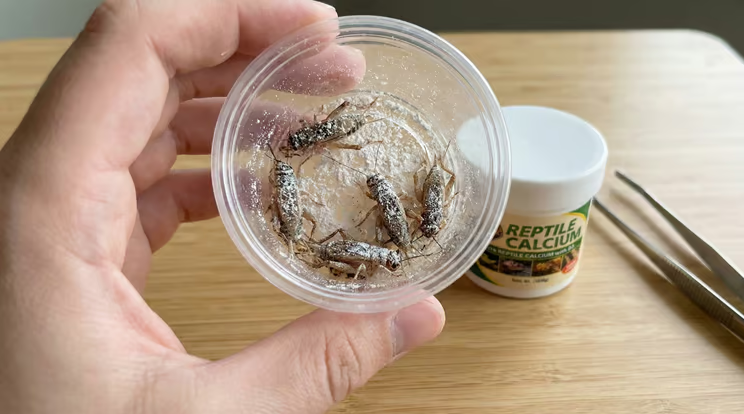
Don’t overdo the calcium powder. A fine white coating over the insects is all that’s needed for proper supplementation (as shown in the image above)
- No UVB light in your tank? Use calcium WITH D3
- You have UVB lighting? Use calcium WITHOUT D3
D3 is the actual mechanism — it’s what allows calcium to get absorbed into bone tissue. UVB lighting lets a gecko’s skin synthesize D3 naturally. Without UVB, D3 in the supplement powder is essential. But if your setup already has UVB and you’re also dusting with D3 powder every feeding, you risk toxicity from excess accumulation. Pick one source, not both.
Step 3: Time to Feed
Release bugs in the evening and only give as many as your gecko can finish in 10–15 minutes. Crickets left overnight don’t just hang around — they actively bite. Tails, toes, anywhere they can reach. Remove any uneaten insects before you go to bed.
Got a shy one? Tong-feeding a few insects at a time builds confidence without the stress of live bugs loose in the enclosure.
Temperature Affects Appetite (Most People Miss This)
Here’s the thing new owners almost always miss: your gecko won’t eat if the temperature is off. Full stop.
Crested geckos are ectotherms — they depend entirely on ambient temperature to regulate digestion. Too cold and the metabolism stalls. Too hot and they’re too stressed to eat at all. Temperature is not just about comfort; it’s directly tied to whether food gets processed.
Good temperature range:
- Cool zone: 70-75°F (21-24°C)
- Basking zone (Warm spot): 82-85°F (28-29°C)
- Nighttime drop: 65-72°F (18-22°C)
- NEVER go above 85-86°F (30°C) — this can lead to fatal heat stroke
Most homes naturally sit in the 70–75°F range, which is the cool zone crested geckos do well in without supplemental heating. If your place runs cold in winter, a low-wattage heat lamp at the top of the enclosure handles it without overheating the space.
Use a digital thermometer, not the adhesive strips sold at most pet stores. Those strips are notoriously inaccurate, often reading 5–10°F off from actual tank temperature. That margin is enough to cause real problems.
Any time your gecko suddenly stops eating, temperature is the first thing to check. It’s the single most common cause of feeding refusal, and usually the easiest fix.
What About Fresh Fruit?
In the wild, crested geckos eat fallen, overripe fruit — super-ripe figs, soft bananas, berries. Not fresh-picked grocery store produce. That distinction matters more than most people realize.
In captivity, treat fresh fruit as once or twice a month at most. Store-bought fruit carries far more sugar than what crested geckos would find in the wild. Too much and your gecko starts skipping their balanced CGD in favor of the sweet stuff — which leads to malnutrition.
Safe fruits:
- Mango, papaya, pear, or apricot (soft and mushy)
- Berries, figs
- Banana (not too often. lots of sugar)
Skip citrus entirely. Hard or crunchy fruit is off the list too — texture matters as much as ingredients for a gecko’s digestive system.
Most experienced keepers skip fresh fruit altogether. The better commercial diets already include fruit components formulated at the right concentrations — with all the vitamins and minerals calibrated to go with them. Fresh fruit on top of that is redundant at best.
Mistakes First-Time Owners Make
Mistake 1: Using baby food from the grocery store
This one circulates constantly in beginner forums, and it doesn’t hold up. Baby food is formulated for human infants — it contains preservatives, artificial colors, and a nutrient profile that has nothing to do with reptile requirements. A gecko-specific diet is the only appropriate base food.
Mistake 2: Only feeding bugs
Insects alone cannot cover a crested gecko’s full nutritional needs. The fruit-based carbohydrates and vitamin profile in CGD are not optional extras — they’re core to the diet. An all-insect approach leads to deficiencies over time.
Mistake 3: Adding extra calcium powder to the CGD
Commercial CGD is already formulated with balanced calcium. Adding more on top creates an imbalance that can block absorption of other essential minerals. Dust only the insects, and leave the CGD mix as-is.
The one exception: egg-laying females deplete calcium rapidly during breeding season. A small dish of plain calcium powder (no D3) left in the enclosure lets them self-supplement on demand — which is exactly what they need.
Mistake 4: Leaving food out too long
CGD spoils quickly — especially in the warm, humid conditions of a well-maintained gecko enclosure. Pull it after 24 hours. Leaving it longer risks bacterial growth that can genuinely make your gecko sick.
Most owners assume bugs are the main event. They’re not. If your gecko eats CGD but ignores bugs, that’s okay. The commercial diets are nutritionally complete on their own—bugs just add fun.
Water bowls matter more than you think. Cresties drink from bowls too. Most feeding ledges have room for two cups. One for food, one for water. Change water every 2-3 days.
CGD powder doesn’t last forever. Once opened, vitamins start breaking down. Buy smaller bottles you’ll finish in 3-4 months instead of those giant tubs.
Your gecko might eat less in winter even if the tank temp stays the same. It’s built into them. Don’t freak out unless you see actual weight loss.
Troubleshooting Common Feeding Problems
|
What’s Happening |
Why It Happens |
What to Do Right Now |
|---|---|---|
|
Won’t eat for 3-10 days after bringing them home |
Normal stress from moving |
Keep offering food, don’t handle them much, make sure temps are correct (70-75°F cool zone) |
|
Eats bugs but won’t touch CGD |
Just prefers hunting live prey |
Cut bugs down to once a week, try a different CGD flavor, mix in a tiny bit of mashed fruit |
|
Won’t eat anything for 2+ weeks |
Temperature problems, stress, or sick |
Check temps with a digital thermometer, look for stuck shed or injuries, and call an exotic vet if it goes past 2 weeks |
|
Getting fat with visible rolls |
Feeding too often |
Cut back to every 3-4 days instead of the usual every 2-3 days |
|
Skinny tail, can see hip bones |
Not eating enough or has parasites |
Feed daily, give high-protein bugs like Black Soldier Fly Larvae, If your gecko appears significantly underweight (visible ribs/hip bones), schedule a vet visit immediately to check for internal parasites |
How Long Can Crested Geckos Go Without Food?
Healthy adult crested geckos can go 2–3 weeks without food. Hatchlings and juveniles have almost no fat reserves — if a young gecko stops eating for more than 5 to 7 days, that warrants a visit to an exotic-specialized vet, not a wait-and-see approach.
Surviving and thriving are not the same thing. A week without eating in a gecko that was previously eating normally is a signal worth investigating, not ignoring.
Check these things in order:
- Temperature – This is usually the problem
- Stress – New home, too much handling, lights on at night
- Food preference – Maybe they hate that flavor
- Health issues – Stuck shed, mouth injury, parasites
Two weeks without food means it’s time to book an appointment with an exotic vet. Don’t push past that window.
2 WEEKS
(5–7 days for younger geckos)A Real Success Story
Digging through gecko feeding case notes, one situation stands out as a useful example: a baby gecko that wouldn’t eat crested gecko diet for 10 consecutive days. Walking up to the bowl, a single lick, then leaving. Temperature was correct at 75°F, humidity was fine — everything looked right on paper.
Three adjustments were made. First: switched from Pangea Apricot to Repashy Grubs ‘N Fruit — same one-lick response. Second: the mix was thinned slightly and a single tiny drop of bee pollen was added as an appetite trigger. Third: feeding time shifted from 8 PM to right at dusk around 6 PM, aligned with the gecko’s peak activity window.
That combination worked. Within three days, the gecko was eating normally — strong licks, visibly interested when the bowl appeared. Two months out: eating Repashy daily, accepting dusted crickets twice a week, gaining weight steadily, and showing bright, healthy coloration.
Timing and presentation matter more than most people expect. Those two variables are worth adjusting before assuming something is wrong with the gecko itself.
Mastering Your Crested Gecko’s Diet Plan
Crested gecko nutrition doesn’t have to be complicated. A quality crested gecko diet — Pangea, Repashy, or Arcadia — paired with age-appropriate feeding schedules and proper calcium supplementation on insects covers roughly 90% of what your gecko needs nutritionally. For everything else in their care routine, our complete crested gecko care sheet is a good next read.
Researching before things go wrong is the right approach. Keep watching how your gecko responds at feeding time, check the tail base weekly for fat stores, and look at scale brightness and skin condition after each shed. Those physical markers tell you more about whether the diet is working than any schedule can.
Has your crestie ever staged a full flavor strike? Drop a comment — what finally got them eating again?
Frequently Asked Questions
The best diet is a high-quality commercial powdered diet like Pangea or Repashy, mixed with water. These complete diets contain the perfect balance of calcium, vitamins, and protein. You should also offer calcium-dusted insects (like crickets or dubia roaches) 1-2 times a week for variety and exercise.
While not strictly required for survival, UVB is highly recommended. Herpetological and veterinary guidance generally suggests a low-level UVB source, such as the Arcadia ShadeDweller or Zoo Med ReptiSun 5.0, designed specifically for crepuscular species. This allows your gecko to synthesize Vitamin D3 naturally, supporting stronger bones and reducing reliance on D3 supplements alone.
Crested geckos are crepuscular and nocturnal. That means they are most active during dawn, dusk, and nighttime. They naturally sleep during the day and hunt or forage at night. Always place fresh food in their tank in the evening (around 6-8 PM) to match their natural feeding cycle.
Never feed your gecko citrus fruits, avocado (which is toxic), onions, or rhubarb. Also, avoid insects with hard shells like mealworms or superworms as they can cause impaction (digestive blockage). Never feed wild-caught bugs as they may carry parasites.
Yes, but only as an occasional treat (1-2 times a month). Safe fruits include mashed mango, papaya, pear, and figs. Avoid citrus fruits like oranges and lemons, and limit bananas due to high sugar content and poor calcium-to-phosphorus ratio. Never use fruit as a meal replacement for their main diet.
This article is for informational purposes only and is not a substitute for professional exotic veterinary advice. Every pet has unique needs based on species, age, health status, and UVB access. Always consult a qualified exotic veterinarian before significant diet changes, especially if your pet shows signs of MBD, organ dysfunction, or health concerns.
REVIEWED BY: Christina Koch, RVT, for clinical accuracy. Information reflects current understanding as of August 5, 2026.
Sarah Jenkins is a Research-based exotic pet nutrition and health writer, specializing in evidence-based feeding practices and deficiency-prevention topics (e.g. Metabolic Bone Disease) in reptiles and small mammals. She writes Petwikia’s diet and supplementation content.