You just brought home your first crested gecko and now you’re staring at the enclosure wondering whether you got any of it right. That feeling is completely normal.
Every care sheet you’ve read contradicts the last one. Heat lamps mandatory. Room temp is fine. No UVB needed. Always use UVB. The conflicting advice is genuinely confusing, and it’s not your fault.
Crested geckos are one of the easiest reptiles to keep well once you understand what actually matters. They’re forgiving, adaptable, and far less demanding than most lizards.
But those first few weeks set the foundation for a 15–20 year relationship. Getting them right matters.
Adult crested geckos need an 18″x18″x24″ vertical terrarium, 70-85°F temperatures with warmth at the top, 60-80% humidity through daily misting, and a diet of powdered crested gecko diet (CGD) mixed with water plus occasional insects. Low-level UVB lighting supports healthy calcium metabolism and is now considered standard care.
Crested Gecko Care Sheet: Natural Habitat, Behavior, and Biology
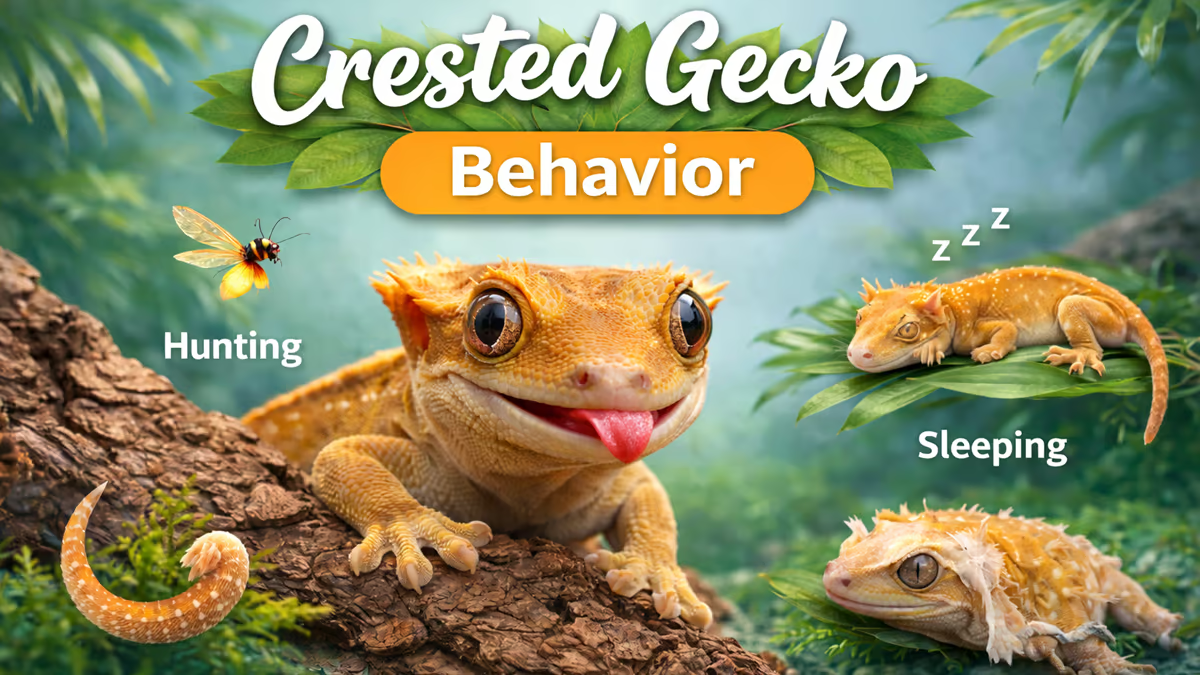
Crested geckos come from New Caledonia, a cluster of islands between Fiji and Australia, where they live in humid tropical forests. They’re nocturnal climbers: active at night, scaling trees and shrubs, hunting insects, licking nectar from flowers and overripe fruit.
What sets them apart: distinctive “eyelash” crests running from their eyes down their backs, adhesive toe pads that let them walk straight up glass, and a semi-prehensile tail used for gripping branches while they move.
Unlike most gecko species, a lost tail never grows back. Whether it drops from stress, injury, or being grabbed, the tail is gone permanently. That single fact is why proper handling technique matters from the very first day.
These geckos were considered extinct until 1994, when a tropical storm led to the accidental rediscovery of thriving wild populations. Today they’re among the most popular pet reptiles available. Adults measure 7–9 inches from nose to tail tip and weigh around 35–45 grams when fully grown.
Cresties also shift color between lighter daytime tones and richer nighttime hues. They’re not chameleons, but the shift is real and visible. This is completely normal behavioral thermoregulation. When your tan gecko looks dark brown after waking up, that’s exactly what’s supposed to happen.
Crested Gecko enclosure Setup
For crested geckos, height matters far more than floor space. They’re arboreal animals built to live in trees, so vertical climbing room is the priority. A tall enclosure with good structure will serve them far better than a wide, shallow one.
Minimum Enclosure Sizes by Life Stage
According to established crested gecko enclosure standards, here’s what you need at each life stage:
| Life Stage | Minimum Size | Notes |
|---|---|---|
| Hatchlings (<13g) | 12″x12″x12″ | Grow-out enclosure, easier feeding monitoring |
| Juveniles (13g-25g) | 12″x12″x18″ | Can transition directly to adult size if feeding well |
| Adults (25g+) | 18″x18″x24″ | Absolute minimum. Larger is always better |
Note: Crested geckos generally prefer to live alone. Never keep two males together. Keeping two females together is also not recommended, since territorial fights can occur between them.
Never house two males together. They’ll fight, often to the death. Even females can be territorial and may injure each other through tail nipping or crest biting. Cresties are solitary by nature and don’t need companionship. The risks of cohabitation far outweigh any benefit.
Enclosure Type Selection
Glass terrariums with front-opening doors are the best choice. They hold humidity more reliably than screen enclosures (though screen cages work well in naturally humid climates), come with secure latches to prevent escapes, and make it easy to arrange vertical climbing structures.
When selecting a glass terrarium, look for these specific features:
- Screen top for ventilation and heat lamp placement
- Waterproof bottom for substrate and moisture retention
- Height over width – minimum 24″ tall, but 36″ or 48″ is even better
- Secure latches – these geckos are escape artists
For Bio-active Setups: Use a glass terrarium with a drainage layer system. This advanced approach creates a self-sustaining ecosystem with live plants, beneficial insects, and naturalistic substrate that breaks down waste. It’s gorgeous and functional, but requires more initial investment and knowledge. Start simple, upgrade later if interested.

crested gecko Temperature Management
This is where crested geckos are significantly easier than most reptiles: they prefer cooler temperatures. No intense basking setups, no complex heating systems. Just a gentle gradient that lets them thermoregulate naturally between zones.
Temperature Requirements
When it comes to crested gecko heating, these are the proven target ranges:
| Zone | Temperature | Measurement Location |
|---|---|---|
| Basking area (top of enclosure) | 82-85°F | Surface temp under heat source |
| Mid-level ambient | 75-78°F | Middle height of terrarium |
| Cool zone (bottom) | 70-75°F | Lowest branches/substrate level |
| Nighttime drop | 65-72°F | Optional but beneficial |
Crested geckos become stressed and can suffer fatal heat stroke when exposed to temperatures above 85-86°F for extended periods. These are tropical rainforest geckos—they need a proper gradient to thermoregulate, and exposure to extreme heat is dangerous.
Heating Equipment
Most homes sit naturally within the cool zone range of 70–75°F, but you’ll almost certainly need a supplemental heat source to hit the 82–85°F basking spot at the top of the enclosure.
Best heat source: A low-wattage halogen flood bulb (25-50 watts) positioned 12-18 inches above the basking branch. Why halogen? It produces a more natural spectrum than incandescent and creates a realistic heat gradient.
Thermostat is non-negotiable. Don’t plug your heat source directly into the outlet. Thermostats maintain consistent ±1°F accuracy and prevent dangerous temperature spikes that can cook your gecko overnight.
Heat mats work for ground-dwelling species but heat from below, the opposite direction of how arboreal geckos warm themselves in tree canopies. If you use one, attach it to the side wall rather than the floor, and always connect it to a thermostat.
Monitoring Temperatures
You need exactly two temperature-monitoring tools:
- Infrared temperature gun (like the Etekcity Lasergrip 774) – Point and shoot to measure exact surface temps where your gecko actually sits. Stick-on thermometers measure glass, not basking surfaces, and can be off by 10-15°F.
- Digital probe thermometer – Place the probe at your basking branch to passively track temperatures throughout the day. The cheap ribbon thermometers from pet stores aren’t accurate enough. You’ll save a few dollars but risk accidentally overheating your pet.
Check temperatures twice daily for the first week, then weekly once your setup is stable and consistent.
Crested Gecko Humidity Control: Species-Specific Moisture Requirements
Crested geckos come from tropical rainforests, so they need significant moisture. But there’s an important nuance most guides skip entirely.
Crested geckos thrive between 60–80% humidity. The nuance most guides miss: constant high humidity breeds mold and bacterial infections. The enclosure needs to dry back down to 40–50% before you mist again. That daily wet-dry cycle replicates their natural forest environment and prevents respiratory infections from developing.
Proper Misting Protocol
Mist heavily in the evening, around 8–10 PM, until humidity hits 80–100%. This times out perfectly with your gecko’s active period. Let the enclosure dry naturally to 40–50% over the day before misting again. One solid evening misting is enough. That single daily cycle matches the natural wet-dry pattern of their rainforest habitat and stops mold and respiratory issues before they start.
Use tap water, not distilled or reverse-osmosis water. Tap water contains essential minerals (calcium, magnesium) that your gecko absorbs through their skin and by licking water droplets. Yes, this creates water spots on the glass. Clean them with lemon juice on a cotton ball or a razor blade for heavy buildup.
Your gecko will drink water droplets off leaves and enclosure walls. That’s their primary hydration method. But contrary to widespread belief, they also drink from bowls. Offer both: a small water dish mounted on a feeding ledge alongside your daily misting routine.
Measuring Humidity
Place a digital hygrometer (not analog) at mid-level inside the enclosure. Position the probe among the foliage where your gecko actually spends time, not pressed against the glass. Check it in the morning to track overnight humidity retention, then again just before your evening misting.
If humidity drops too quickly during the day, try these adjustments:
- Add more live or artificial plants
- Use moisture-retentive substrate (see next section)
- Cover part of the screen top with plexiglass
- Mist more frequently (but still allow drying periods)
If humidity stays too high and won’t drop between misting cycles:
- Increase ventilation
- Remove some plants
- Use a less absorbent substrate
- Run a small fan near (not on) the enclosure
🌊 Real-World Success Story:
Last year I worked with a keeper whose two-year-old crested gecko had chronic stuck shed on the toes and tail. Classic dehydration signs, despite misting every single day. The humidity gauge read 50%. When we dug deeper, the problem was obvious.
They were misting lightly once in the morning, and the enclosure was completely dry by noon. Crested geckos need 60–80% humidity during their active nighttime window, not during the day when they’re sleeping. We switched to heavy evening mistings, enough to leave visible droplets across every surface, and light morning misting only if overnight humidity had dropped below 50%.
Within two shed cycles, roughly 3–4 weeks, the stuck shed cleared completely. Skin condition improved noticeably, nighttime activity levels picked up, and feeding response got stronger. The fix wasn’t more misting. It was misting at the right time.
Crested Gecko Lighting & UVB Protocols
Crested gecko care has shifted significantly on this point in recent years. The old position was straightforward: no UVB needed. They’re nocturnal, they get D3 from supplements, they’ll be fine. Research now tells a different story.
Crested geckos are crepuscular shade-dwellers that benefit measurably from low-level UVB. They’re classified as Ferguson Zone 1, which means they need gentle UVB delivering a UVI of 1.0–2.0 at the basking spot. Nothing intense, but not zero either.
Why UVB Matters
The exotic vet community has shifted strongly toward recommending low-level UVB for crested geckos. Reptiles synthesize D3 more safely and efficiently through natural UVB than through synthetic supplementation alone. A significant number of MBD cases appear in geckos eating complete commercial diets but with no UVB exposure at all.
Recommended UVB Setup
For a standard 18”x18”x24” terrarium, any of the following bulbs will work correctly:
- Arcadia T8 ShadeDweller 7% positioned 8-12 inches from basking branch
- Arcadia T5 HO ShadeDweller Max 2.4% positioned 6-9 inches from basking branch
- Zoo Med T8 ReptiSun 5.0 positioned 6-8 inches from basking branch
All distances above assume the bulb sits above a screen top, accounting for roughly 35% UVB reduction through mesh. For the most accurate readings, use a Solarmeter 6.5 to measure actual UVI directly at the basking position. Target the 1.0–2.0 range.
Replace T5 UVB bulbs on a 12-month cycle, or every 6 months for compact and coil-style UVB bulbs, regardless of whether they’re still producing visible light. UVB output degrades well before a bulb burns out visually. Past 6–8 months, you’re running a bulb that looks fine but delivers no meaningful UV benefit.
Photoperiod Schedule
Photoperiod length directly regulates your gecko’s appetite cycles, reproductive behavior, and natural brumation-like rest periods. Getting it right isn’t simply about the lights being on and off. It’s about keeping your gecko’s entire biological rhythm on schedule.
Seasonal schedule:
- Summer: 12-14 hours of light daily
- Winter: 10 hours of light daily
Use a basic outlet timer, around $10, and take human error completely out of the equation. Put both your UVB bulb and your heat lamp on the same timer so light and warmth cycle together. Running heat continuously while only cycling the UVB creates a mismatched environment that disrupts your gecko’s circadian rhythm.
Transitioning between seasons: don’t flip abruptly from 14 hours down to 10 overnight. Reduce by 30 minutes every 1–2 weeks as the seasons shift. That gradual change mirrors natural day length shortening and lets your gecko’s biology adjust without any stress response.
Night Light Warning
Never use red, blue, or purple night viewing bulbs marketed for reptiles. Crested geckos can see these wavelengths clearly and any light at night disrupts their circadian rhythm and reduces natural nighttime activity. If you want to observe your gecko at night, do so during the natural dusk transition period when the lights first go off. This is their most active window and ambient room darkness is sufficient.
Direct sunlight is not a UVB substitute. Window glass blocks UVB completely, so placing the enclosure near a window gives warmth but zero UV benefit. Worse, direct sun through glass creates dangerous hot spots that can push internal temperatures above 90°F in minutes, a potentially fatal situation for crested geckos. If you want natural light exposure, build a properly shaded outdoor enclosure and use it only during mild weather between 70–78°F.
Photoperiod and breeding: the shortened 10-hour winter photoperiod also signals the rest period that females need between breeding seasons. If you keep females, pairing that reduced light with a slight temperature drop to 65–72°F gives their bodies the recovery time they need. The full rest period protocol is covered in the Breeding section.
Substrate Deep-Dive: From Simple to Bioactive
Substrate affects humidity retention, cleaning frequency, and impaction risk. Crested geckos rarely touch the ground in the wild. They’re arboreal animals. So substrate is less critical than it would be for a ground-dwelling species, but the choice still matters.
Beginner-Friendly Substrates
Paper towels are the gold standard for hatchlings and any gecko you’re monitoring closely. Zero impaction risk, very cheap, and waste is immediately visible. Change them every 2–3 days or right after defecation. The trade-off: they hold humidity poorly and look clinical rather than natural.
Reptile carpet is a more visually appealing option with low impaction risk. The drawback: tiny claws and teeth can snag on loose fibers and cause injury. Inspect it weekly for fraying and replace every 3–4 months. Keep two pieces so you can swap them during cleaning and always have one available.
Naturalistic Options
Coconut fiber (coco coir) or cypress mulch retains moisture well, looks natural, and is safe for geckos above 13 grams when paired with appropriate feeding practices. A 50/50 mix with organic topsoil improves moisture retention further.
Layer substrate 2–4 inches deep for best humidity buffering. That depth allows beneficial microfauna to establish and provides meaningful resistance to humidity fluctuations between misting cycles.
Substrates to Avoid Completely
- Calcium sand – Marketed as “digestible” but causes severe impaction when ingested in quantity
- Wood shavings (pine, cedar) – Aromatic oils irritate respiratory systems
- Walnut shells – Sharp edges can cause intestinal perforation
- Crushed coral – Too rough, poor humidity retention
Bioactive Substrate Systems
Want a fully naturalistic setup? Bioactive systems use a drainage layer (hydroballs or LECA), a mesh barrier, a soil substrate mix (ABG mix or similar), and a leaf litter top layer, combined with live plants and a cleanup crew of springtails and isopods.
These setups break down waste naturally, maintain stable humidity, and look genuinely spectacular. The trade-off: higher initial cost (expect $100–$200+ for substrate and supplies), more complex maintenance, and a 2–3 month establishment period before your gecko can move in.
If reptile keeping is new to you, master the fundamentals first. Bioactive is a great upgrade once you have a full year of solid husbandry under your belt.
Crested Gecko Substrate Comparison Table
|
Substrate Type |
Safety |
Humidity Retention |
Impaction Risk |
Maintenance |
Cost |
Best For |
|---|---|---|---|---|---|---|
|
Paper towels |
★★★★★ |
★☆☆☆☆ |
None |
High frequency, low effort |
$ |
Hatchlings, quarantine, health monitoring |
|
Reptile carpet |
★★★★☆ |
★★☆☆☆ |
Very low (snag risk) |
Low frequency, high effort (washing) |
$$ |
Beginners wanting natural look |
|
Coconut fiber |
★★★★☆ |
★★★★☆ |
Low if >13g |
Medium frequency, medium effort |
$$ |
Adults, humidity retention |
|
Bioactive mix |
★★★★★ |
★★★★★ |
Very low |
Low frequency, high setup complexity |
$$$$ |
Experienced keepers, naturalistic displays |
|
Calcium sand |
★☆☆☆☆ |
★★☆☆☆ |
SEVERE |
N/A – DO NOT USE |
$$ |
NEVER – high impaction risk |
Note: Data compiled from the ReptiFiles substrate safety database and ARAV environmental guidelines.
Environmental Enrichment: Mental Stimulation and Natural Behaviors
A bare terrarium creates a bored, stressed gecko. Enrichment gives them outlets for natural behaviors: climbing, exploring, and hunting. The goal is an environment that keeps them physically active and mentally occupied every night.
Climbing Structures
Cork bark is the single best enrichment item for crested geckos. It’s lightweight, naturally textured, won’t mold, and comes in both branch and flat forms. Arrange pieces at diagonal angles from bottom to top to create a 3D climbing network that runs the full height of the enclosure.
Bamboo poles give them horizontal resting spots. Live or artificial vines (pothos and monstera work well) add leafy cover at multiple heights. Make sure climbable surfaces reach within 6–8 inches of the enclosure top. That’s where they’ll position themselves under your heat and UVB source.
Hides and Security
Provide at least three hides positioned at different heights: one near the bottom in the cool zone, one mid-level, and one near the top in the warm zone. According to ARAV behavioral studies, geckos with multiple hide options show significantly lower stress and more natural behavior patterns than those with only one or two.
Hollow cork rounds, commercial reptile caves, and large pieces of curled bark all work well. Dense foliage also functions as a soft hide. Thick artificial plants or live pothos give your gecko visual cover without fully enclosing them.
Live Plants vs. Artificial
Live plants boost humidity, improve air quality, offer edible foliage (cresties do nibble leaves occasionally), and make the enclosure genuinely beautiful. These species are proven safe:
- Pothos (Epipremnum aureum) – Nearly indestructible, loves humidity
- Snake plants (Sansevieria) – Tolerates low light, structural
- Bromeliads – Hold water in central cups, very natural
- Ferns (bird’s nest, boston) – Humidity lovers, soft foliage
Artificial plants require zero care, never die, and work just as well if you’d rather skip live plant maintenance. Choose silk over plastic — silk is softer and won’t scratch your gecko’s skin.
Enrichment Don’ts
Three firm rules: no heating rocks (they cause thermal burns), no overcrowded layouts (geckos need clear jumping space between branches), and no rough or sharp decorations. These are fragile animals and they bruise more easily than you’d expect.

Crested Gecko Feeding Protocol: Diet from Hatchling to Adult
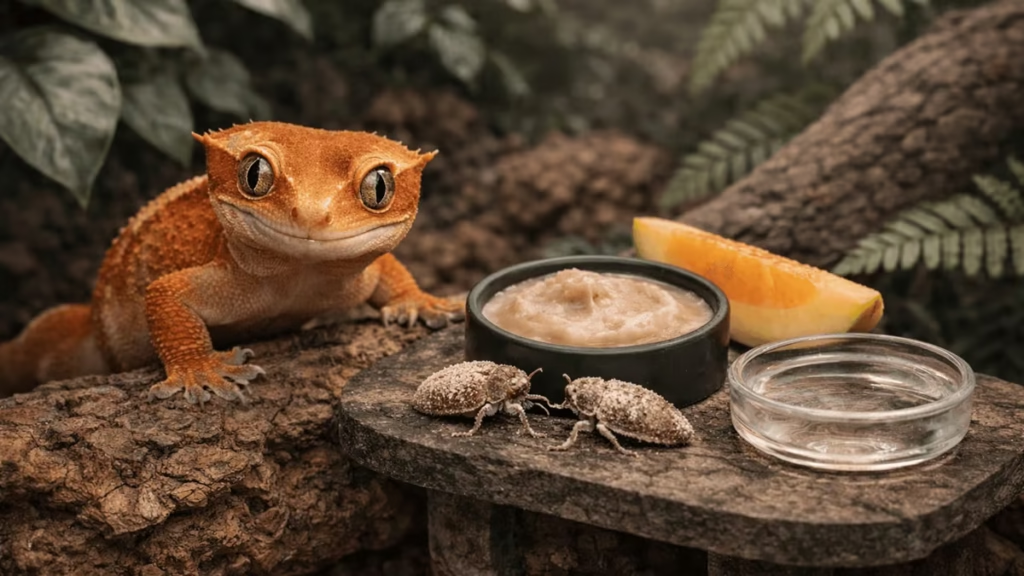
Here’s where crested geckos become dramatically easier than almost any other reptile: no insect colonies to maintain, no whole prey items to source, no complex ratios to calculate. The core of their diet comes from a jar of powder and a cup of water.
Crested Gecko Diet (CGD) – The Core
Complete crested gecko diet (CGD) is a powdered meal replacement developed specifically for this species. Quality formulas contain fruit powder, insect protein sources (whey, egg, cricket, black soldier fly larvae), vitamins, minerals, and a calcium-to-phosphorus ratio optimized for reptile health.
Mix 1 part powder to 2 parts water until you get a smoothie-like consistency: thick enough to cling to surfaces, thin enough for your gecko to lap up easily. Individual preferences vary, so if yours seems uninterested, adjust the ratio slightly and see what gets a better response.
Top CGD brands (all veterinary-approved):
- Pangea – Six flavors, beloved for consistency and feeding response
- Repashy – Original formula from 1996, multiple varieties
- Lugarti – Premium ingredients, good for picky eaters
- Black Panther Zoological (BPZ) – Used by major breeders
- Zoo Med – Widely available, three flavor options
Rotate between 2–3 flavors to prevent pickiness and keep feeding response strong. Most geckos develop a clear preference. Some refuse certain flavors entirely while demolishing others.
Feeding Schedule by Life Stage
| Life Stage | CGD Frequency | Live Insect Frequency | Portion Size |
|---|---|---|---|
| Hatchlings (0-6 months) | Daily | 1-2x weekly | Dime-sized (1/16 oz) |
| Juveniles (6-12 months) | Daily or every other day | 1-2x weekly | Nickel-sized (1/8 oz) |
| Adults (12+ months) | Every 2-3 days | 0-1x weekly | Quarter-sized (1/4 oz) |
| Breeding females | Daily | 2x weekly | 1/2 oz |
Offer CGD in a shallow dish mounted on a feeding ledge 6–12 inches above the substrate. One-ounce condiment cups work perfectly. Since cresties rarely come to ground level, elevated feeding stations align with their natural behavior.
Replace CGD every 24–48 hours, even if it hasn’t been touched. In warm, humid conditions, the mix can ferment (some geckos actually prefer this, as it mimics overripe wild fruit) or grow mold (which causes illness). When in doubt, discard it and mix a fresh portion.
Live Insect Supplementation
Even when feeding a complete CGD, live insects add genuine value: mental stimulation through the hunt, physical exercise, and faster growth in juveniles. Regular live feeding also helps prevent obesity by triggering natural activity patterns.
Safe feeder insects:
- Dubia roaches – Excellent nutrition, quiet, don’t escape easily
- Crickets – Good exercise (they hop), but noisy and smelly
- Black soldier fly larvae – High calcium, soft-bodied
- Hornworms – Hydrating treat, large and satisfying
Insects to avoid:
- Mealworms and superworms – Hard exoskeletons; ReptiFiles’ impaction research links these to digestive issues in cresties
- Wild-caught insects – Pesticide contamination risk
Size matters: Offer insects no wider than the space between your gecko’s eyes. Dust all feeders with calcium powder (with D3 if not using UVB, without D3 if using UVB) before offering.
Water
Always provide a shallow water dish mounted on a feeding ledge, refreshed daily. Cresties prefer licking droplets, but they absolutely drink from bowls too, particularly when dehydrated or immediately after a shed.
Health Monitoring: Early Warning Signs and Prevention
Crested geckos hide illness instinctively. It’s a prey-animal survival mechanism. By the time symptoms are obvious enough to notice, the condition is frequently already advanced. Regular, attentive observation is the only way to catch problems early.
Normal Health Indicators
- Active exploration at night, responsive to movement
- Strong feeding response to CGD and insects
- Complete sheds in one piece, no retained skin
- Bright, alert eyes with no sunken appearance
- Healthy weight with visible muscle tone on limbs and tail base
- Normal waste – formed fecal pellets with white urates
- Vibrant coloration that changes between day/night
- Smooth, undamaged skin without lesions or discoloration
Common Health Issues
1. Metabolic Bone Disease (MBD)
Metabolic Bone Disease develops from a deficiency in calcium or vitamin D3. The result is weakened bones, fractures, and progressive physical deformities that become harder to treat the longer they go undetected.
Watch for these early symptoms:
- Slightly soft or rubbery jaw
- Decreased appetite
- Reduced activity or climbing difficulty
- Tremors or twitching
- Lethargy
At advanced stages, the following develop:
- Swollen or curved limbs
- Kinked or twisted spine
- Unable to support body weight
- Open-mouth breathing (jaw too weak to close)
- Seizures
Prevention: Use quality CGD with optimized calcium, provide UVB lighting, dust insects with calcium powder, and maintain proper temperatures for digestion. These steps eliminate MBD risk almost entirely.
Treatment requires immediate veterinary care. Once MBD advances beyond the earliest stage, home remedies cannot reverse bone damage. Your exotic vet will likely prescribe calcium injections, oral supplements, and dietary modifications based on severity.
2. Impaction
Impaction is an intestinal blockage caused by ingesting substrate, oversized insects, or other indigestible material. Watch for these symptoms:
- No defecation for 7+ days
- Swollen abdomen
- Lethargy and appetite loss
- Straining to defecate
Prevention: Use appropriate substrate (paper towels for hatchlings, avoid loose particle substrates for small geckos), offer properly-sized insects, maintain correct temperatures for digestion, and ensure adequate hydration.
3. Dehydration
Dehydration is most commonly caused by inadequate misting, low ambient humidity, or both. Watch for these signs:
- Sunken eyes
- Wrinkled, dry-looking skin
- Retained shed (especially on toes and tail)
- Lethargy
- Reduced appetite
Prevention: Maintain 60-80% humidity during nighttime hours, provide a water dish, mist heavily in the evening, and monitor with a digital hygrometer.
4. Respiratory Infections
Respiratory infections develop from temperatures too low for healthy immune function, or from constant high humidity with no drying period between misting cycles.
Recognizable symptoms include:
- Wheezing or clicking sounds during breathing
- Mucus discharge from nostrils or mouth
- Open-mouth breathing
- Lethargy and appetite loss
Treatment requires a vet visit and a prescription antibiotic course. Prevention is straightforward: maintain proper temperature gradients and stick to a consistent humidity wet-dry cycle.
5. Floppy Tail Syndrome (FTS)
Floppy Tail Syndrome involves weakened muscles at the tail base, causing the tail to hang to one side or fall backward when the gecko is inverted. Despite common assumptions, this is primarily an environmental issue, not a genetic one.
The most common contributing causes are:
- Enclosure too small or lacking climbing structures
- Gecko sleeping in one position repeatedly (often upside-down on glass)
- Obesity reducing tail muscle use
According to ReptiFiles’ FTS research, the condition cannot be reversed but can be managed by increasing climbing enrichment and encouraging varied sleeping positions. In severe cases involving tail twisting, a reptile vet may discuss supervised autotomy.
6. Tail Loss (Autotomy)
Cresties drop their tails in response to severe stress, injury, or being grabbed. Unlike most gecko species, crested gecko tails do not regenerate. Once dropped, that tail is gone. Your gecko will be permanently tailless.
Common triggers for autotomy include:
- Rough handling
- Being grabbed by the tail
- Fighting with cagemates
- Severe stress or fright
- Tail getting caught in enclosure decorations
After a tail drop, the wound will scab over within 2–3 days. Maintain normal husbandry, keep the wound clean, and monitor for infection signs: swelling, discoloration, or discharge. The majority of cases heal without any intervention needed.
Tailless cresties live fully normal lives. They look different and may lose a small amount of climbing agility, but function is not meaningfully affected.
When to Seek Veterinary Care Immediately
- No defecation for 7+ days
- Visible deformities (kinked spine, swollen jaw, curved limbs)
- Wheezing, clicking breathing, or mucus discharge
- Severe lethargy (not responsive when gently touched)
- Refusing food for 2+ weeks (adults) or 5+ days (juveniles)
- Sunken eyes with wrinkled skin (severe dehydration)
- Weight loss exceeding 10% of body weight
- Stuck shed on toes for 48+ hours (circulation restriction risk)
- Any open wounds or bleeding
Locate an exotic vet through arav.org or herpvet.com before you ever need one. Not all vets treat reptiles, and not all reptile vets have crested gecko experience. Call ahead to confirm.
🩺 Real-World Early Detection Success:
A keeper reached out last month about her 18-month-old crested gecko showing slightly decreased appetite and sleeping more during the day. Not alarming symptoms on their own, easy to dismiss as seasonal variation. But she’d been tracking feeding response weekly in a journal and noticed the pattern building over three weeks.
We went through the health checklist together. Everything looked normal until I asked about jaw firmness. She pressed gently on the lower jaw. It was slightly softer than it should have been. Early-stage MBD.
The response was immediate: switch to quality Pangea CGD with insects, add a Zoo Med ReptiSun 5.0 UVB bulb positioned 6–8 inches from the basking branch, and book an exotic vet visit for baseline calcium bloodwork.
The vet confirmed early MBD, prescribed a 30-day course of oral calcium supplementation, and specifically praised the keeper for catching it so early. Within 6 weeks, appetite returned to normal, nighttime activity picked up, and follow-up x-rays showed meaningful improvement in bone density. The gecko is now thriving with normal feeding response, active nightly climbing, and healthy muscle tone.
What made the difference: consistent observation, knowing what normal looked like for her specific gecko, and trusting the instinct that something was off before the symptoms became undeniable. That’s how you catch it in time.
Handling and Socialization: Building Trust Safely
Crested geckos tolerate handling remarkably well for a small reptile. But “tolerate” is exactly the right word. They’re not seeking interaction the way a dog would. They’re prey animals that have learned, through repeated exposure, that captive-bred humans are not a threat.
Acclimation Period
Give your new gecko a full 14 to 21 days of zero handling after bringing them home. That 2–3 week window lets them learn the enclosure layout, find all the hides, locate food and water, and recover from the stress of relocation before you add the additional variable of handling.
During this period:
- Observe from outside the enclosure only
- Maintain quiet environment (no loud music, excessive traffic)
- Handle only for essential enclosure maintenance
- Let them approach food on their own schedule
Proper Handling Technique
After the acclimation period, start with 5-minute sessions every 2–3 days. Gradually extend to 10–15 minutes as your gecko becomes visibly more comfortable. Frequent short sessions build trust far more effectively than occasional long ones.
The technique:
- Approach slowly – Move your hand deliberately, never darting or grabbing
- Let them come to you – Place your hand palm-up in their path, allow them to walk onto it
- Support their body – Use both hands to create a secure platform
- Never grab the tail – This triggers defensive tail drop
- Stay low over soft surfaces – Cresties are powerful jumpers. unexpected leaps happen
If your gecko freezes, puffs up, or vocalizes (chirping or squeaking), end the session. Return them calmly to the enclosure and try again the following day.
The “Treadmilling” Technique
For geckos that are particularly flighty, try ReptiFiles’ treadmilling method: while the gecko sits on one hand, position your other hand 4–6 inches in front of them in a cupped shape. When they leap forward, your other hand becomes the landing surface. Switch and repeat. Most geckos settle down significantly once they realize the movement leads nowhere threatening.
An alternative approach: handle briefly during the day when they’re naturally drowsier and less reactive. This works for building early trust, but don’t make it a regular habit or you’ll disrupt their natural sleep cycle.
Handling Frequency
- Juveniles: 2-3 times per week maximum. They’re fragile and grow faster with minimal stress
- Adults: 3-5 times per week is fine if they seem comfortable. Some individuals enjoy supervised time outside their enclosure
- Breeding females: Minimize handling when gravid or recovering from egg-laying
Signs Your Gecko Enjoys Handling
- Relaxed posture, not frozen or tense
- Willing to walk onto your hand without coaxing
- Licks you (tasting, exploring)
- Doesn’t immediately bolt when you open the enclosure
- Calm breathing, no stress vocalizations
Signs to Stop Immediately
- Tail raised and waving (defensive posture)
- Chirping, barking, or squeaking vocalizations
- Dropping tail
- Frantically trying to escape
- Freezing completely motionless
- Defecating (stress response)
Always wash hands before and after handling. Reptiles can carry Salmonella bacteria that’s harmless to them but can sicken humans, especially children, elderly, or immunocompromised individuals.
Breeding Basics: Preparation and Considerations
Breeding crested geckos is not a beginner activity. It requires real financial investment, specialized knowledge, genuine ethical accountability, and a long-term commitment to caring for potentially hundreds of offspring across multiple clutches.
Should You Breed?
Before pursuing breeding, ask yourself these questions honestly:
- Do you have $2,000+ startup costs for incubators, multiple enclosures, and emergency vet care?
- Can you house 20-60+ juveniles for 6-12 months until they reach sellable size?
- Do you have buyer networks established before eggs hatch?
- Are you prepared to keep unsold geckos permanently?
- Do you understand genetics well enough to avoid producing deformities?
- Is your female at least 18 months old and 40+ grams?
Breeding females too young or too frequently leads to calcium crashes, egg binding, and premature death. Responsible breeding means the animal’s welfare comes first, before market demand or revenue.
Sexual Maturity and Sexing
Crested geckos reach sexual maturity at 15–18 months and 35+ grams, but sexual maturity and breeding readiness are not the same thing. Females should reach at least 40 grams before breeding to safely produce and pass eggs without the risk of dystocia or calcium depletion.
Sexing (determining male vs. female):
- Males: Visible hemipenal bulges at tail base, preanal pores forming a V-shape
- Females: Smooth tail base, no visible bulges or pores
Reliable sexing is difficult before 6–9 months. Most experienced breeders house juveniles separately from the start to prevent accidental pairing when sexual maturity arrives.
Breeding Season
Wild crested geckos breed seasonally, primarily during warmer months. In captivity, year-round breeding is biologically possible but not advisable. ARAV’s reproductive guidelines recommend limiting females to 2–3 clutches per year at most, with a dedicated 2–3 month rest period during winter months.
During rest periods, lower temperatures slightly to 65–72°F, reduce the photoperiod to 10 hours, and house males and females separately.
Egg Care
Females produce 2 eggs per clutch approximately every 30–45 days throughout the breeding season. Eggs are deposited in moist substrate or hide boxes. Never rotate them. Mark the top of each egg with a soft pencil before transferring to the incubator and maintain that exact orientation throughout incubation.
Incubation parameters:
- Temperature: 72-78°F
- Humidity: 80-90%
- Duration: 60-120 days depending on temp (cooler = longer)
Warmer incubation temperatures may influence sex ratios in the offspring, though this remains an active area of debate in the reptile-keeping community.
Hatchling Care
Hatchlings are fragile. House each one individually in a small 12”x12”x12” enclosure with paper towel substrate, several hides, and daily misting. Feed high-protein CGD every day and offer appropriately sized live insects 2–3 times per week.
Long-Term Commitment: Lifespan, Costs, and Legal Considerations
Crested geckos are not impulse pets. They are 15–20 year commitments. Some individuals have lived beyond 20 years under excellent care conditions.
Lifespan Expectations
Captive crested geckos live significantly different lifespans depending on the quality of care they receive:
- Average: 15-20 years
- With optimal care: 20+ years documented
- Poor husbandry: 5-10 years (premature death from MBD, dehydration, respiratory infections)
When you bring home a hatchling, you’re committing to care that may span college years, career changes, house moves, and significant life transitions. That’s not a reason not to do it. It’s a reason to plan deliberately before you do.
Annual Costs
Initial Setup Cost: $300–$600
- Terrarium: $80-200
- Lighting/heating: $50-100
- Substrate and décor: $50-100
- Thermometer/hygrometer: $20-40
- Feeding supplies: $30-50
Ongoing Annual Costs: $200–$400
- CGD and insects: $100-200/year
- UVB bulb replacement: $30-50/year
- Substrate replacement: $30-50/year
- Veterinary exam: $50-100/year
- Miscellaneous supplies: $20-50/year
Emergency Vet Costs: $200-1000+ (impaction surgery, fracture repair, advanced diagnostics)
Legal Considerations
Crested geckos are legal in the vast majority of US states and most countries, but always confirm before purchasing:
- Local regulations – Some cities/counties ban reptile ownership or require permits
- Housing restrictions – Landlords may prohibit reptiles; check lease agreements
- Import/export laws – If purchasing internationally or moving abroad
Crested geckos are not currently CITES-listed, so international trade faces no formal restrictions. That status could change if wild populations come under greater pressure in New Caledonia.
Conservation Status
The IUCN classifies crested geckos as Vulnerable in the wild, primarily due to habitat loss and pressure from introduced species like rats and ants. Captive breeding has established a large, self-sustaining pet population. Virtually every crested gecko available today is captive-bred, which significantly reduces pressure on wild populations.
Buy from ethical breeders who clearly prioritize animal health over production numbers. Wild-caught imports are rare but do exist. Avoid them.
Frequently Asked Questions
Yes, crested geckos are beginner-friendly because they eat powdered diet (no live insects) and require a moderate temperature gradient (70-75°F cool zone, 82-85°F basking spot). However, they’re heat-sensitive—temperatures above 85-86°F can cause fatal heat stroke. They’re excellent for beginners who can provide this proper gradient.
Yes, most setups require a low-wattage heat lamp. While they need a cool zone of 70-75°F, they also need a basking spot of 82-85°F at the top of the enclosure. A low-wattage halogen bulb connected to a thermostat works best, alongside low-level UVB lighting.
Mist heavily once at night (around 8-10 PM) until humidity reaches 80-100%, then let the enclosure dry naturally to 40-50% during the day. This single daily cycle gives your gecko drinking water when it’s active at night, while the dry period prevents mold and respiratory infections.
No, crested geckos don’t enjoy handling. They tolerate it. They’re solitary animals that don’t seek affection, but captive-bred geckos can learn you’re not a threat through gradual desensitization. Start with 5-minute sessions and gradually extend to 10-15 minutes as your gecko grows comfortable with handling. Always handle over soft surfaces as they’re prone to sudden jumps.
Immediate stress signs include vocalizations (chirping, squeaking), defensive tail waving, dark “fired up” coloration, and frantic escape attempts. Long-term stress shows as constant hiding, loss of appetite for 2+ weeks, weight loss, and staying dark-colored 24/7 instead of naturally changing patterns.
That’s urates — crystallized urine. Unlike mammals, crested geckos conserve water by passing solid urine instead of liquid, so healthy urates appear as a soft white deposit alongside the fecal pellet. Their color is a quick, useful health indicator: white means well hydrated, yellow or orange signals dehydration, and green, runny, or bloody waste warrants a vet visit.
Crested geckos don’t form emotional bonds the way mammals do. Reptile brains process social interaction very differently. What they can develop is trust and food association through consistent, gentle handling, learning that you’re not a threat. A gecko that’s comfortable with you will tolerate handling calmly and may associate you with feeding time, but this isn’t the same as affection.
A “happy” crested gecko shows active nighttime behavior (climbing, hunting, exploring), maintains healthy weight, has sticky feet that grip glass easily, and displays clear bright eyes. Look for absence of stress (no constant hiding, normal appetite) and presence of natural behaviors like firing up/down in color throughout the day.
Final Thoughts
Crested gecko care doesn’t need to be complicated. Focus on three core requirements: proper temperature gradients (70–85°F with warmth concentrated at the top), consistent humidity cycling (60–80% with drying periods between mistings), and quality nutrition (complete CGD plus occasional live insects). Those three factors prevent the overwhelming majority of health problems seen in captive crested geckos.
You’re asking the right questions and looking for reliable information. That already puts you ahead of most new keepers. Trust what you observe: active nighttime exploration, a consistent feeding response, and visible thermoregulation between zones are your best indicators that the setup is working. Adjust based on what your specific gecko shows you, not just what a guide tells you to expect.
These geckos are genuinely forgiving during the learning curve. Maintain the basics consistently, monitor health regularly, and correct course when something looks off, and your crested gecko can thrive for 15–20 years or more. When something isn’t right, start with temperature and humidity before looking elsewhere. Those two variables are responsible for most of what goes wrong in captive crested gecko care.
This article is for informational purposes only and is not a substitute for professional exotic veterinary advice. Every pet has unique needs based on species, subspecies, age, health status, and individual temperament. Always consult a qualified exotic veterinarian before making significant husbandry changes, especially if your pet shows signs of illness, stress, or health concerns. The author assumes no liability for outcomes resulting from the application of information provided.
Reviewed By Marcus Fernandez & Christina Koch, RVT, for clinical accuracy.Information reflects current understanding as of August 5, 2026

Sarah Jenkins is a Research-based exotic pet nutrition and health writer, specializing in evidence-based feeding practices and deficiency-prevention topics (e.g. Metabolic Bone Disease) in reptiles and small mammals. She writes Petwikia’s diet and supplementation content.