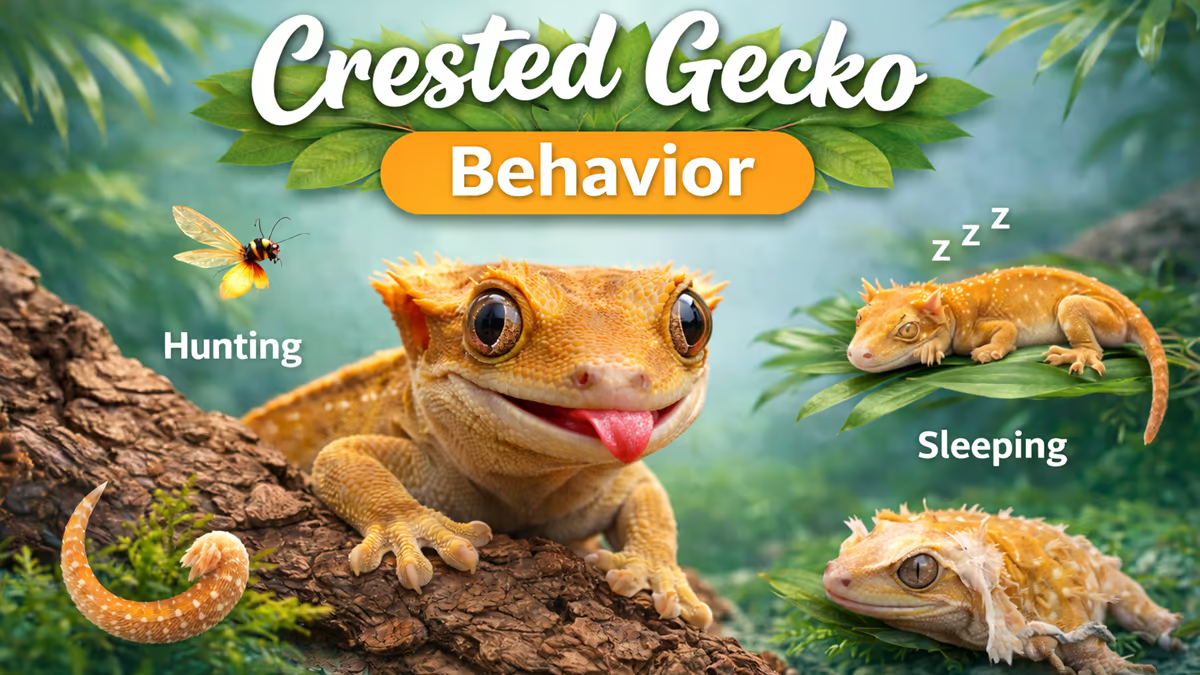
Crested gecko behavior is genuinely strange the first time you encounter it. Sleeping flat against a wall all day, jumping without any warning, changing color for no obvious reason — none of that comes with an explanation.
Once you understand what you’re actually watching, it stops being confusing and starts being one of the more rewarding things about keeping this species. This guide covers the whole picture, from where their instincts originally come from to the specific signals that tell you something’s off.
Crested geckos are crepuscular arboreal lizards, and most behaviors new owners find strange (color-changing, eye-licking, vocalizing, tail-waving, sudden jumps) are completely normal. A small number of signals point to stress or illness instead: prolonged food refusal, frantic glass surfing, or persistent hiding. Knowing which is which comes down to watching for patterns over time, not judging a single moment.
Understanding Crested Gecko Natural Behavior
Crested geckos are crepuscular arboreal lizards, and most behaviors new owners find strange — color-changing, eye-licking, vocalizing, tail-waving, sudden jumps — are completely normal. A small number of signals point to stress or illness instead: prolonged food refusal, frantic glass surfing, or persistent hiding. Knowing which is which comes down to watching for patterns over time, not judging a single moment.
Evolutionary Context: Wild vs. Captive Instincts
Crested geckos (Correlophus ciliatus) are not the kind of animal you can fully understand without knowing where they come from. Their behavioral wiring comes directly from the humid rainforests of New Caledonia, a small island nation in the southwestern Pacific Ocean. Every “weird” thing they do makes complete sense once you know that context.
In the wild, crested geckos live in the dense forest canopy, spending daylight hours tucked into leaf cover and branch crevices sleeping. When dusk falls, they emerge to forage for soft-bodied insects, ripe fruit, nectar, and pollen. They navigate entirely by low-light vision and their extraordinary sense of smell, which they exercise by flicking their tongue to collect scent particles.
Species-Specific Behavioral Traits
What makes their evolutionary history particularly compelling is this: crested geckos were thought to be completely extinct until 1994, when a tropical storm led to their accidental rediscovery. Every captive crested gecko alive today descends from that small rediscovered population. They’ve had barely three decades of captive breeding, which means their instincts are still deeply, fundamentally wild. When your gecko hides during the day, jumps unexpectedly, or won’t settle in a new enclosure for two weeks, that’s not stubbornness. That’s tens of thousands of years of survival programming.
Crested geckos have several behavioral characteristics that set them apart even among geckos. Their adhesive lamellae — microscopic hair-like structures on their toes and prehensile tail tip — allow them to cling to almost any surface, including glass. You’ll frequently find them sleeping vertically on the enclosure walls or upside down on the lid. This is entirely normal and actually a sign of comfort.
They’re also committed jumpers. In the wild, leaping between branches is how they travel, and your gecko has no concept that your living room floor is different from a forest floor. The unexpected leaps during handling aren’t aggression — they’re just arboreal instinct.
Intelligence and Cognitive Abilities
Unlike most gecko species, crested geckos cannot regenerate their tail once it’s lost. This is important because tail-dropping (autotomy) is their last-resort defense against predators. Once gone, the tail heals cleanly and the gecko lives normally — but it won’t grow back. This distinction matters for how you handle and house them.
Crested geckos are more cognitively capable than most people expect. They commonly respond differently to familiar versus unfamiliar people, and they can build associations through repetition — though the extent to which this reflects genuine recognition versus scent-based familiarity is still more nuanced than the simple framing most care guides use.
They’ll learn what time feeding happens, which hands predict food versus which predict handling, and where their preferred sleeping spots are. They’re not capable of the complex problem-solving we see in mammals, but they’re perceptive and adaptive in ways that reward patient, attentive keepers.
Normal Crested Gecko Behaviors by Category
For a deeper look at keeping your crested gecko mentally stimulated and facilitating natural behaviors, the Royal Veterinary College’s Crested Gecko Care Protocol is worth bookmarking.
Climbing and Arboreal Behaviors
Understanding normal behavioral baselines is the foundation of good gecko keeping. Before you can identify a problem, you need a clear picture of what normal actually looks like for this species — and for your specific gecko.
Crested geckos climb constantly, especially when active at night. You’ll see them scale glass walls vertically, hang from the ceiling mesh, perch on the highest branches, and jump between elevated surfaces. A gecko using its vertical space actively is a gecko expressing normal behavior.
- Climbing all vertical surfaces including glass
- Sleeping upside down or on enclosure walls
- Perching at the highest point in the enclosure
- Confident, calculated jumps between branches
- Exploring new enrichment items within the first night
What’s normal:
Feeding and Hunting Behaviors
Glass surfing is a behavior where the gecko frantically scratches and climbs the glass walls repeatedly. This is different from normal climbing. When a healthy gecko explores, they move with intention and pause. When they’re stressed, the movement turns repetitive and frantic and doesn’t stop — a pattern Chicago Exotics Animal Hospital’s crested gecko care sheet flags as one of the clearest early signs of enclosure-related stress. More on this in the behavior problems section.
Crested geckos are omnivores in the wild, eating fruit, nectar, pollen, and a variety of soft-bodied insects. In captivity, this translates to a diet of commercial crested gecko diet (CGD) powders and live insects.
Their hunting behavior is genuinely worth watching. They stalk insects in a slow, deliberate, almost cat-like fashion — tongue flicking rapidly to scent-test the air, body going perfectly still, then a lunge with surprising speed. Juveniles especially tend to show a strong hunting response.
Defensive and Escape Behaviors
What catches beginners off guard is feeding inconsistency. Crested geckos can go days without eating, eat voraciously the next night, and then turn their nose up at the exact same food they loved last week. This is genuinely normal — ReptiFiles’ crested gecko care manual documents this selective, night-to-night feeding pattern as a well-known species trait rather than a warning sign. Rotating CGD flavors and offering live feeders regularly keeps appetite engaged.
Because they evolved as prey animals, crested geckos have a full toolkit of defensive behaviors. Understanding these prevents beginners from misreading defense as aggression or illness.
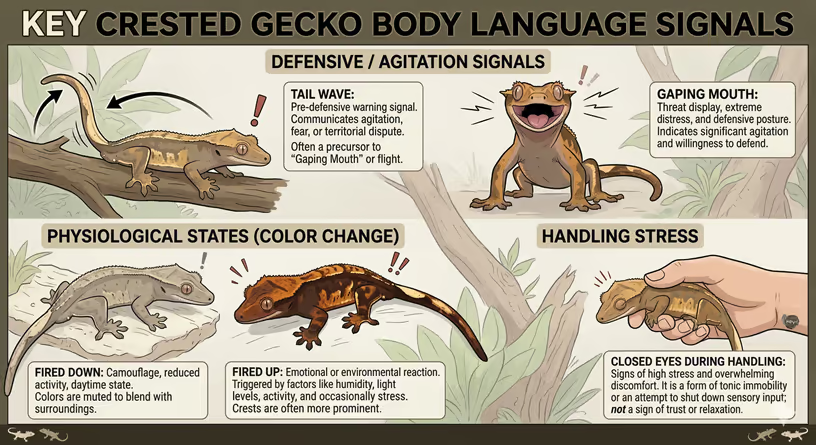
Tail waving is one of the most misunderstood behaviors I see first-time keepers react to. A crested gecko will slowly wave or vibrate their tail when they feel threatened. This is a distraction mechanism rooted in predator avoidance — one Long Island Bird & Exotics Veterinary Clinic’s crested gecko care guide lists among the standard defensive-warning behaviors seen in clinical practice. They’re drawing attention to their detachable tail, essentially saying “look here, not at my body.” It’s not aggression. It’s a clear signal that they want to be left alone.
Hissing is a more serious warning. Chicago Exotics Animal Hospital’s crested gecko care sheet notes that a hissing crested gecko feels genuinely threatened and may bite if the warning is ignored. Give them space and reduce whatever’s causing the threat.
Communication: Vocalizations, Chemical, and Visual Signals
Gaping mouth can be alarming the first time you see it. Most of the time, it’s either a yawn after waking up or a defensive display meant to look intimidating. True respiratory distress looks different — it comes with wheezing, labored movement, and lethargy alongside the open mouth.
Crested geckos are surprisingly vocal for lizards. They produce chirping, barking, and squeaking sounds. A quick series of sharp chirps during handling typically indicates distress or protest. A softer single chirp at night may just be communication. Hissing is the escalated warning before a potential bite.
| Behavior | Is It Normal? | What It Means | When to Worry |
|---|---|---|---|
| Sleeping during the day | ✅ Yes, always | Nocturnal species at rest | Only if they also won’t emerge at night |
| Licking their eyeballs | ✅ Yes | Cleaning eyes (no eyelids) | Never – this is healthy behavior |
| “Firing up” (vivid colors) | ✅ Yes | Active, excited, or slightly stimulated | Only if accompanied by stress signs |
| “Firing down” (dull colors) | ✅ Yes | Resting, relaxed, sleeping | Prolonged darkness with lethargy is a concern |
| Hanging upside down | ✅ Yes | Normal arboreal resting | Never |
| Tail waving | ⚠️ Situational | Defensive warning or mating signal | If combined with refusing food + hiding |
| Hissing | ⚠️ Situational | Serious warning, feels threatened | Persistent unprovoked hissing = vet check |
| Chirping/barking | ⚠️ Situational | Distress or communication | Persistent distress vocalizations |
| Glass surfing (frantic) | ❌ Concerning | Environmental stress | Address environmental triggers immediately |
| Complete food refusal 2+ weeks | ❌ Red flag | Illness, stress, or environmental issue | Vet required |
| Licking your hand | ✅ Yes | Identifying your scent | Never |
| Sudden unexpected jumps | ✅ Yes | Arboreal instinct | Never – handle over soft surfaces |
Daily Activity Patterns: What Your Crestie Gets Up To
The tongue-flicking you’ll see constantly isn’t just a quirk — it’s functional. Crested geckos, like all reptiles, have a Jacobson’s organ on the roof of their mouth that processes scent particles picked up by the tongue. When they lick your hand during handling, they’re identifying you. Your gecko will learn your specific scent and respond differently to you than to strangers.
Day/Night Activity Cycles
Crested geckos are essentially crepuscular. This single behavioral fact explains more of what beginners find confusing than any other piece of the puzzle.
Your crested gecko is going to sleep for roughly 12–14 hours per day, usually the entire daylight period. They’ll typically wake around dusk or when the room lights go off, and they’ll be most active in the hours after sunset and in the early morning before dawn.
Here’s what a typical daily cycle looks like in a well-kept enclosure:
During the day: Your gecko is asleep. They’ll be tucked into a plant, hide, or clinging to a branch or wall. Finding them in the same spot for hours is normal. Moving them or shining bright light in their face during this time causes stress.
At dusk: Activity begins. You’ll see tongue-flicking, repositioning, perhaps a move toward the feeding station. This is the best window for handling.
During the night: Peak activity. Climbing, exploring, hunting if insects are present, drinking water droplets from misted surfaces, and occasionally vocalizing.
Early morning: Slowing down, finding a rest spot, “firing down” into daytime coloration.
Seasonal Behavior Changes
This matters practically: if you work during the day and want to interact with your gecko, the evening is your window. Don’t try to handle a sleeping gecko during the day. You will stress them and they’ll make this very clear.
Crested geckos in both the wild and captivity undergo brumation-like cooling periods during winter months, when temperatures naturally dip. In captivity, you may notice reduced activity, slower feeding, and more time spent sleeping during cooler months. This is normal, as long as the gecko maintains healthy body weight.
Age-Related Behavior Differences
During the warmer months — and especially breeding season, typically late spring through early autumn — you’ll see increased activity, more intense “firing up,” and males in particular may show restless behavior.
| Life Stage | Age & Weight | Behavioral Baseline | Handling Quick Reference | Shedding Schedule |
|---|---|---|---|---|
| Hatchling | 0–3 months under 5g |
Fragile, highly reactive, defensive, and jumpy. Driven by survival instinct. May bite, squeak, or pose aggressively. Can jump 5–6 body lengths. | No handling for the first 2 weeks minimum. Sessions of 2–3 minutes maximum, only a few times per week after that. Hand-walk; do not grip. | Consumes its own shed skin as its first meal to reclaim vital nutrients. |
| Juvenile | 3–12 months 5–35g |
Active, curious, yet remains noticeably skittish. Displays an intense feeding response with a strong interest in hunting live insects and consuming CGD. | Sessions of 5 minutes, every 2–3 days. Gradually increase based on stress signal feedback. Trust-building can take weeks or months. | Sheds rapidly every 1–2 weeks. Appears dull and pale frequently during healthy growth phases. Full adult coloration is not yet fixed. |
| Adult | 12+ months 35g+ |
Highly predictable, settled daily routines (consistent sleeping spots, dusk feeding, nocturnal exploration). Males display seasonal breeding restlessness and chirping. | Sessions of 10–15 minutes, 3–5 times per week if the gecko is comfortable. Always read stress signals before extending. | Sheds once a month. A clean, completed shed in a single piece with no retained skin serves as a core health indicator. |
| Senior | 8+ years Up to 15–20 years |
Gradual slowdown. Decreased activity, sleep shifts, reduced appetite, muscle/weight drop, reduced skin elasticity, and potential cataracts/jaw softening. | Reduce frequency and duration based on individual tolerance. Follow their lead and respect clear boundaries if they reject contact. | Shedding slows down alongside general skin elasticity reduction. Requires twice-yearly veterinary wellness tracks from age 7–8. |
Reading Crested Gecko Body Language
Crested geckos go through four distinct behavioral phases across their lifespan — hatchling, juvenile, adult, and senior. Understanding what is normal at each stage prevents unnecessary worry and helps you respond correctly when something genuinely changes.
Relaxed and Content Postures
This is where keeping crested geckos gets genuinely interesting, because these animals communicate constantly. Once you can read their body language, you’ll spend less time guessing and more time actually enjoying them.
A comfortable, relaxed crested gecko looks like this: body weight evenly distributed across all four feet, normal resting coloration (“fired down”), eyes either closed while sleeping or casually tracking movement with no tension in the body. When active, they move with deliberate ease, pausing to tongue-flick, and voluntarily approach elevated perches or feeding sites.
The “Fire Up / Fire Down” System
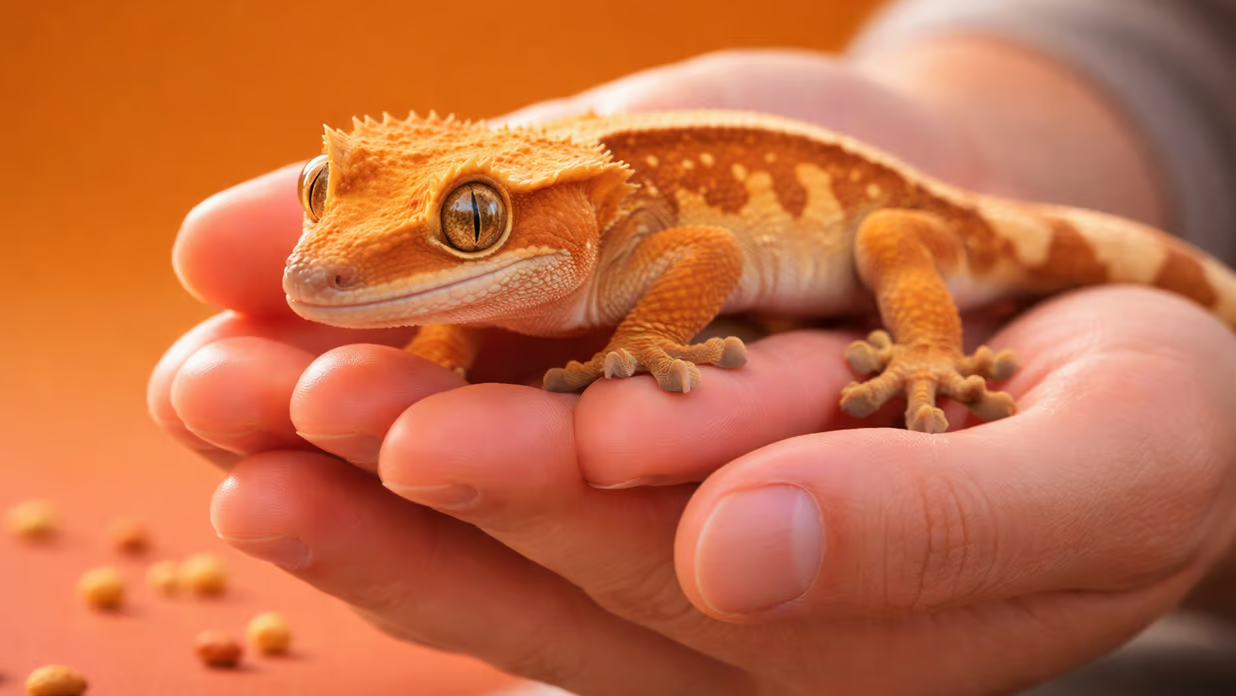
A crested gecko that has habituated to your presence will often remain still on your hand rather than immediately bolting, lick your skin to identify your scent, and show normal coloration — not stress-fired-up — during brief handling sessions.
This is one of the more fascinating aspects of crested gecko biology, and something most beginner guides don’t explain well enough.
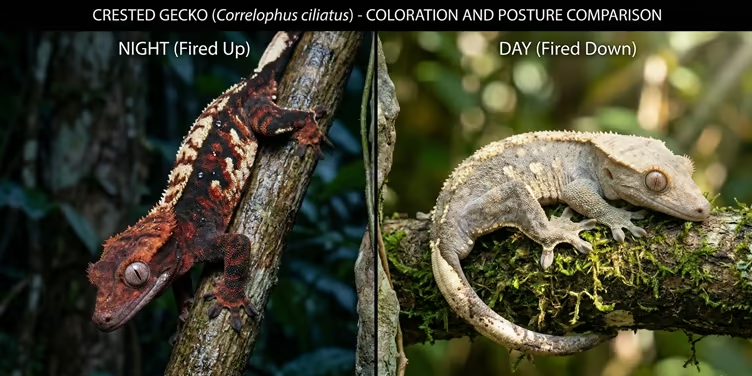
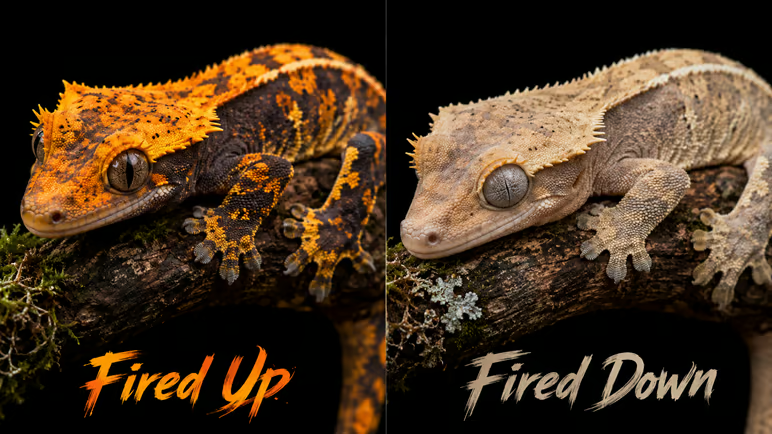
Crested geckos can shift their skin coloration dramatically. “Fired up” means vivid, saturated, high-contrast colors. “Fired down” means washed-out, muted, pale coloration. Think of it like a biological mood ring — but not a perfect one.
What causes firing up? Humidity, nighttime activity, being freshly misted, mild excitement, stress, and even just waking up. What causes firing down? Resting, sleeping, and relaxed daytime states.
crested gecko stress signs and Discomfort Signals (Early Warning)
Part that confuses beginners: firing up is NOT always stress. A gecko who fires up after a misting and then actively explores their enclosure at night is just being a healthy, active gecko. Stress-related firing up usually comes packaged with other signals: hiding in unusual spots, refusing food, tail waving, or attempting to flee during handling.
- Tail waving without active threat (being held when they don’t want to be)
- Chirping or soft barking during handling
- Closing eyes tightly when picked up (this is not contentment – it’s a stress response, like an animal playing dead)
- Rapid breathing that you can visually see their sides moving
- Firing up with a tense, rigid posture
Catching crested gecko stress signs early is the whole game. Early warning signals include:
Pre-Aggression Warning Signs
Any of these signals during handling means: gently, calmly return them to their enclosure and give them time. The goal isn’t to push through stress. It’s to keep each interaction positive and brief.
Crested geckos rarely bite without warning. The escalation is consistent:
Level 1 – mild: Stillness, eyes tracking you intently, possible gentle tail wave
Level 2 – escalating: Chirping or barking, arched back, mouth slightly open
Level 3 – serious: Hissing, wide gape, lunging posture
Level 4 – bite: Usually only if you’ve ignored Levels 1–3
Illness and Pain Indicators
Crested gecko bites are genuinely harmless to adults — no fangs, no venom — a point Swiftail Exotic Telemedicine’s crested gecko care sheet also makes when reassuring first-time keepers about handling. But a bite means you’ve pushed past every signal they gave you. Understanding the escalation ladder is how you stop it getting there.
These are the behavioral changes that actually warrant veterinary attention. Sick reptiles instinctively hide illness for as long as possible — prey animals can’t afford to appear weak — which means that by the time behavior changes become visible, there’s often a real problem already developing.
| Body Language | What It Means | Recommended Action |
|---|---|---|
| Eyes closed, relaxed grip | Sleeping (normal) | Do not disturb |
| Eyes closed tightly when held | Stress response | Return to enclosure immediately |
| Tongue flicking rapidly | Scent-gathering, curious or alert | Normal, observe |
| Licking your hand | Identifying your scent | Normal, positive sign |
| Tail waving slowly | Defensive warning | Give space, reduce stimulus |
| Tail vibrating rapidly | Higher-level defensive warning | Stop interaction |
| Gaping mouth (no hissing) | Yawn or mild display | Monitor, usually normal |
| Hissing + gape | Serious threat response | Back off immediately |
| Arched back | Defensive display, trying to look bigger | Reduce handling, check environment |
| Fired up + tense posture | Stress or overstimulation | Reduce handling, check temps |
| Fired up + actively exploring | Normal nighttime activity | Enjoy watching |
| Heavy visible breathing | Stress or possible respiratory issue | Check environment; vet if persistent |
Handling and Human Interaction
Key behavioral changes to watch for include weakness or difficulty climbing, a loss of appetite, and abnormal droppings or no stool. Long Island Bird & Exotics Veterinary Clinic’s crested gecko care guide also flags lethargy, hiding significantly more than usual, or visible deformities and kinks in the spine or limbs as possible signs of metabolic bone disease.
Truth that most beginner guides avoid saying directly: crested geckos don’t “bond” with you the way a dog or cat does. They don’t miss you. They can’t feel affection in the mammalian sense. What they can do is habituate to your presence. And that habituation — built through consistent, gentle, low-stress interactions — results in an animal that tolerates and may even seem to enjoy handling.
The quick version: approach from the side or below (never from above — that reads as predator behavior), keep early sessions short and calm, and always watch for stress signals like chirping, tail waving, or tightly closed eyes. If you see them, end the session and try again later.
Common Crested Gecko Behavior Problems and Solutions
Problem 1: Glass Surfing (Frantic Wall-Climbing)
The difference matters. When your gecko licks your hand and settles calmly on your arm, what you’re seeing is a well-habituated gecko who has learned that your scent means safety. That’s genuinely worth having — it’s just not the same thing as love, and it’s worth being clear-eyed about that distinction.
Glass surfing is the most common behavioral complaint in beginner crested gecko keeping. Your gecko frantically scratches and climbs the enclosure walls repeatedly, especially during their active hours.
The most common causes are: enclosure too small (the absolute minimum for an adult is 18” L x 18” W x 24” H, though 36” H is highly recommended as the ideal setup for vertical climbing), incorrect temperature gradient (ambient room temperatures being too high or a basking spot overshooting safe limits), reflection stress (seeing their own reflection in the glass triggers territorial/stress responses), and settling in (brand new geckos often glass surf for the first 1–2 weeks in a new environment).
What to do: Verify your temperature gradient using an infrared thermometer gun. Ensure the general ambient air (cool zone) stays between 70–75°F, while the upper basking zone under the heat bulb stays between 82–85°F. Never let any zone exceed 85–86°F, as crested geckos are highly heat-sensitive and can suffer from heat stroke. Additionally, add more plants and hides to break up open spaces, and place a background on three sides of the glass to eliminate reflections.
Problem 2: Refusal to Eat
Most glass surfing resolves within 5–7 days of environmental correction. If it persists beyond two weeks with no improvement, a vet check is worthwhile.
Short-term eating pauses are extremely common with crested geckos and rarely signal illness. Prolonged refusal is a different matter.
Normal reasons geckos skip eating: food boredom (they genuinely get tired of the same CGD flavor), shedding (they typically don’t eat much right before or during a shed), cooler seasonal temperatures (reduced metabolism = reduced appetite), and recent stress like a new enclosure or change in environment.
Concerning refusal: Not eating for more than 2 weeks for adults or 5+ days for juveniles, combined with visible weight loss or sunken eyes, requires a vet evaluation.
Problem 3: Excessive Hiding and Skittishness
A tip that makes a real difference: rotate between at least 3 CGD flavors and add live feeders (crickets or dubia roaches) 1–2 times per week. The live prey trigger hunting responses that commercial diet alone doesn’t stimulate — and I’ve seen this single change pull plenty of reluctant eaters back into a normal feeding pattern.
Some crested geckos seem terrified of everything and hide constantly. This is sometimes just individual temperament, but it can also be an environmental or handling issue.
Ask yourself: Is the gecko new (less than 4–6 weeks)? Are there other pets in the room creating visible or auditory stress? Is the enclosure positioned in a high-traffic area where movement constantly startles them? Is the gecko being handled more frequently than their stress tolerance allows?
When to Consult a Behaviorist vs. Vet
The solution is almost always the same: reduce handling frequency back to minimum, add more visual cover and hides at multiple heights, and let them establish a comfortable baseline for 2–3 weeks before re-attempting regular interaction.
If gradual patterns like excessive hiding or skittishness don’t improve after 2 to 4 weeks of consistent environmental corrections, a vet visit is needed to rule out medical causes before assuming it’s purely behavioral.
Enrichment for Natural Behaviors
Environmental Enrichment
Crested geckos are expert at masking illness. A sudden personality change — especially from a previously calm gecko becoming aggressive, or a previously active gecko becoming consistently lethargic — almost always has a medical component.
A crested gecko’s enclosure should support their natural behavioral repertoire, not just keep them alive. Vertical height is the most important factor for this species. A tall enclosure with multiple climbing paths, branches at different heights, and dense plant cover at the top creates something that approximates their forest canopy environment.
Cork bark flats and tubes work well because they’re naturalistic, safe, and geckos genuinely use them as sleeping spots. Swiftail Exotic Telemedicine’s crested gecko care sheet recommends cork bark and safe live or artificial plants as the core of an enriching enclosure. Climbing branches should be thick enough for the gecko to grip comfortably — at least as thick as the gecko’s body.
Feeding Enrichment
Hides matter too, and height matters for the hide. Provide at least 2–3 hides at different vertical levels. Crested geckos in the wild sleep in elevated leaf canopy, not on the ground. A gecko with only ground-level hides may show increased stress behaviors simply because no safe elevated resting spot exists.
Live insects aren’t just nutrition — they’re behavioral enrichment. Watching a crested gecko track and stalk a cricket activates hunting instincts that commercial diet alone can’t replicate. For geckos on a primarily CGD diet, adding dubia roaches or crickets 1–2 times per week provides meaningful cognitive and physical engagement.
Enrichment Safety Checklist
| Enrichment Type | Benefits | Safety Notes |
|---|---|---|
| Live cork bark | Natural resting, hiding | Sanitize before use to remove parasites |
| Climbing branches | Exercise, natural behavior | Ensure no sharp edges, secure so they can’t fall |
| Dense artificial plants | Cover, humidity retention, stress reduction | Rinse thoroughly; avoid small parts that could be ingested |
| Live enclosure plants | Natural environment, humidity | Research toxicity before adding any live plant species |
| Live insects (crickets, dubia) | Hunting behavior, enrichment, nutrition | Never leave crickets unattended with juveniles – they can injure small geckos |
| Cork tubes (elevated hides) | Arboreal sleeping, security | Sized to allow comfortable entry and exit |
| Misting | Triggers activity, drinking behavior, fire up | Let enclosure dry slightly between mistings to prevent mold |
Key Behavioral Insight
Insufficient misting can lead to lethargy and reduced activity. Always ensure a fresh “mist” session daily.
Behavior Myths and Common Misconceptions
“Crested Geckos Are Easy Starter Reptiles With No Specific Needs”
Elevated food dishes — crested geckos rarely descend to the floor voluntarily — and rotating feeding locations within the enclosure add novelty and foraging behavior.
This is the one that consistently sends new keepers in underprepared. Crested geckos are relatively lower-maintenance than many reptiles, but “lower maintenance” doesn’t mean low-maintenance. They need precise humidity management (misting 1–2 times daily), a tall arboreal enclosure, correct temperature ranges (they die faster from heat than cold), a rotated diet, and veterinary care from an exotic specialist, not a standard small animal vet.
“Do Crested Geckos Feel Affection?”
The behavioral consequences of “set it and forget it” keeping show up quickly: glass surfing, persistent hiding, food refusal, and weight loss are all common outcomes when environmental needs aren’t met consistently.
This is the question I get most often, and the honest answer is more specific than most guides admit. Crested geckos don’t form emotional bonds the way dogs, cats, or even some birds do. They don’t have the brain structures required for mammalian-style attachment.
What they do experience is habituation and learned association. Over time, a crested gecko learns that your scent, your voice, and the specific way you handle them predict safety rather than threat. This produces behavior that looks a lot like affection: voluntarily approaching you, settling calmly on your hand, exploring your arms with curiosity rather than trying to flee.
“My Gecko Loves Being Held Because They Close Their Eyes”
That’s not affection the way you mean it, and it’s still genuinely worth having.
“Males Can Live Together if the Enclosure Is Big Enough”
This is the opposite of what it looks like. A crested gecko that closes their eyes tightly when picked up is often in a shutdown stress response. A gecko that feels comfortable during handling keeps their eyes open, moves with relaxed curiosity, and doesn’t try to flee or make noise.
When Behavior Changes Signal Health Issues
Medical vs. Behavioral Causes
They can’t. Male crested geckos are territorial and will fight — often causing serious injury — regardless of enclosure size. Two males will always eventually establish a dominance conflict. The stress of cohabitation also causes significant health decline even before visible fighting begins. Males should always be housed separately.
The core challenge with crested gecko health is that behavioral changes are often the first and only visible symptom of illness. These animals, like all reptiles, instinctively hide signs of weakness. By the time you see obvious physical symptoms, a health issue may be well-established.
That’s why monitoring baseline behavior matters so much. You need to know what your specific gecko’s normal activity level, feeding enthusiasm, climbing frequency, and resting positions look like. Deviation from their personal baseline is always worth investigating.
Medical causes typically present as: Sudden changes, persistent changes that don’t respond to environmental correction, or behavioral changes combined with physical symptoms (weight loss, abnormal stools, skin problems).
The rule is: environmental correction first, but if no improvement in 5-7 days for acute issues like glass surfing (see the Behavior Problems section for longer-term patterns), get a vet involved.
Red Flag Behavior Combinations
Environmental/behavioral causes typically present as: Gradual changes that correlate with an identifiable environmental change (new enclosure, temperature shift, new pet in the house, handling frequency change).
- Lethargy + loss of appetite + weight loss = multiple-symptom combination requiring exam
- Won’t emerge at night for 3+ consecutive nights = highly abnormal for a nocturnal species
- Difficulty climbing or gripping surfaces = possible metabolic bone disease or neurological issue
- Persistent gaping mouth + lethargy = possible respiratory infection
- Abnormal stool or no stool for 7+ days = digestive issue
- Skin that doesn’t bounce back when gently pinched = significant dehydration
Creating a Behavior Change Log for Your Vet
Some combinations require prompt veterinary attention rather than at-home troubleshooting:
Exotic reptile vets need specific information to help you effectively. When you notice behavioral changes, start documenting.
What to record: Date and time, specific behavior observed, duration, what was happening before and after, any recent changes in husbandry or environment, feeding and waste records, and if possible, short videos. Video is genuinely invaluable for exotic vets. A 30-second clip of the concerning behavior tells them more than any verbal description.
- Seizure-like twitching, tremors, or loss of coordination → Emergency vet
- Open-mouth gasping or obvious labored breathing
- Visible injury from a fall or enclosure accident
- Prolapse (tissue visibly protruding from vent)
- Completely limp body and unresponsive to touch
- Won’t emerge at night for 3+ consecutive nights
- Complete food refusal for 2+ weeks (adults) or 5+ days (juveniles)
- Visible softening of jaw or limbs (MBD signs)
- Significant difficulty gripping surfaces
- Persistent glass surfing (longer than 2 weeks)
- Abnormal stools (watery or bloody)
- Mild appetite reduction during cooler months
- Increased hiding after an enclosure change
- Temporary reduced activity following a tail drop
- Slightly firmer or less frequent stools in isolation
Crested Geckos require specialized care that general veterinarians may not provide. If your pet shows signs of lethargy, respiratory distress, or impaction, consult an exotic animal specialist immediately.
Find a Vet Near YouUS-based: Use this ARAV finder.
Outside the US: Search for a local vet in your area Powered by Association of Reptile and Amphibian Veterinarians (ARAV)
Frequently asked Questions
The Final Verdict
Bring to your appointment: Behavior log, photos of the enclosure setup, exact model of heating and lighting equipment, temperature and humidity logs, and a recent stool sample if possible.
Crested gecko behavior stops being confusing the moment you stop seeing your gecko as a decorative pet and start seeing them as a wild New Caledonian rainforest gecko living in your home. Everything makes sense from that angle. The daytime sleeping, the nighttime acrobatics, the eyeball licking, the sudden jumps, the color changes. It all has purpose.
Focus on three things: understanding their natural activity rhythms (nocturnal, needs vertical space, needs cover), learning to read the difference between normal behavioral quirks and stress signals, and always ruling out medical causes before assuming behavior changes are environmental. These three things will make you a genuinely skilled crested gecko keeper.
Veterinary Disclaimer
This article is for informational purposes only and is not a substitute for professional exotic veterinary advice. Every crested gecko has unique behavioral patterns based on individual temperament, age, health status, and previous experience. Always consult a qualified exotic veterinarian before assuming behavioral changes are purely environmental in origin. Behavioral changes are frequently the first sign of illness in reptiles. The author assumes no liability for the application of this information.

Marcus “Leo” Fernandez has spent 20+ years breeding and handling crested geckos and other exotic reptiles, focusing on behavioral training for skittish or newly-acquired reptiles. He’s helped hundreds of first-time keepers build trust with their exotic reptiles using low-stress handling techniques. He writes Petwikia’s behavior and handling guides.