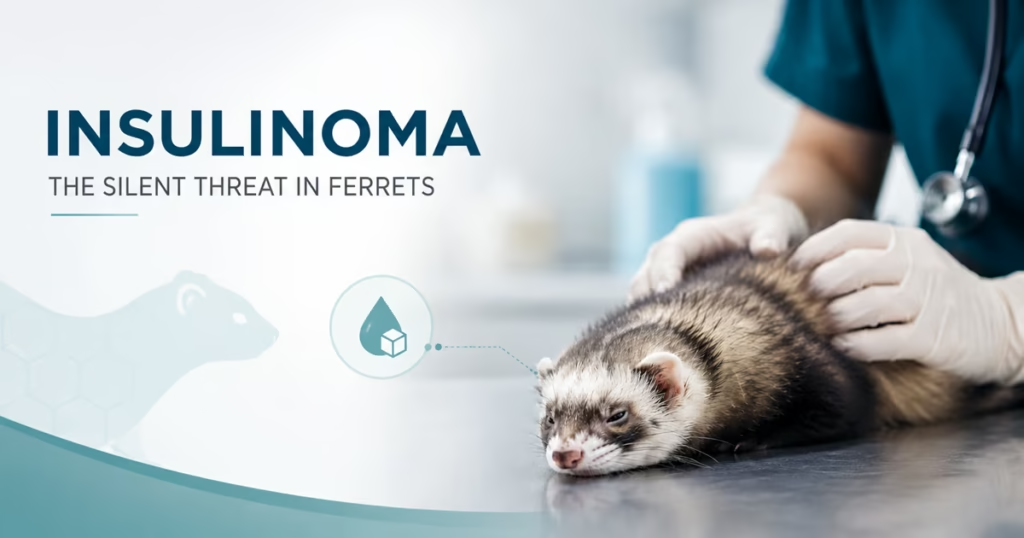
Insulinoma in ferrets is a pancreatic disease that creeps up quietly — stealing energy, balance, and quality of life well before most owners realize anything is actually wrong.
If your ferret is over 3 years old and something feels off, stop going down symptom rabbit holes online and call an exotic vet. Catching this early puts you in control — not the disease. This guide covers symptoms, diagnosis, and treatment so you know exactly what to watch for and what happens next.
Insulinoma is the most common neoplasm overall in ferrets, accounting for approximately 25% of all tumors diagnosed. It won’t go away on its own. The goal isn’t cure, it’s management. With the right treatment and diet, many ferrets live comfortably for one to two or more years post-diagnosis. Without it, you’re looking at escalating hypoglycemic seizures and a steep drop in quality of life. That’s the reality.
Check this ferret hypoglycemia emergency protocol to find more.
Why Ferrets Get Insulinoma (And Why Diet Is Directly Linked)
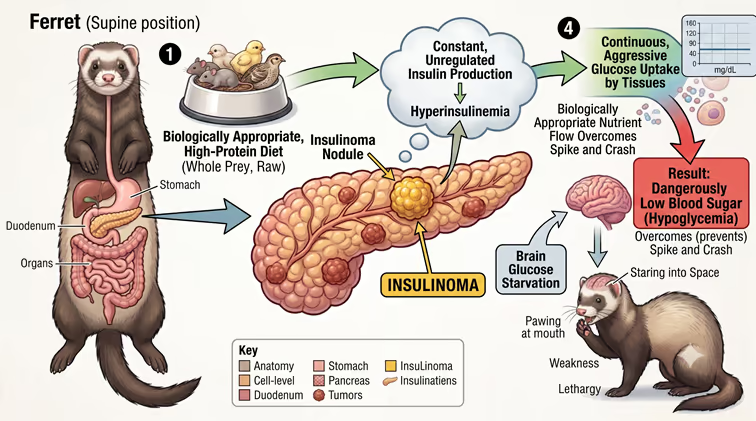
Put simply: insulinoma is a pancreatic cancer that forces a ferret’s body to overproduce insulin. The tumor doesn’t turn off. That’s the problem.
This is exactly why diet matters so much here. Ferrets are strict obligate carnivores — not by preference, but by biology. Their GI tract has a transit time of just 3–4 hours. They have no evolutionary machinery for carbohydrates. Zero complex carbs. Zero sugars. Zero fruits or vegetables. Full stop.
U.S. ferrets come from a small pool of large commercial breeders and are raised almost entirely on grain-heavy kibble. They’re massively over-represented in insulinoma statistics — likely a combination of chronic dietary factors and genetic bottlenecking from limited breeding stock.
Insulinoma is uncommon in ferrets in Europe, New Zealand, and Australia, where the typical diet is low-carbohydrate — meat scraps, poultry, fish. Compare that to the typical U.S. dry kibble, which runs anywhere from 10–45% carbohydrate. That chronic carb load over-stimulates pancreatic beta cells for years before a tumor even has a chance to form.
Kibble imprinting makes the whole situation harder. A ferret raised on carb-heavy food as a kit is genuinely difficult to transition to raw or freeze-dried raw as an adult. And if they’re already diagnosed, a single dietary slip can send blood glucose crashing within the hour.
Simple sugars cause a blood glucose spike that immediately triggers a rebound insulin surge from the tumor — crashing glucose back down fast. The American Ferret Association is direct about this: all high-sugar treats need to stop the moment you have a diagnosis.
One yogurt drop. One raisin. That’s genuinely all it takes.
Does Genetics Play a Role?
Yes — probably more than diet alone. The domestic ferret gene pool in the U.S. is extremely narrow, and genetic predisposition is a real factor. Typical onset lands around 4 years of age, and islet cell tumors likely exist subclinically for months or even years before any signs appear.
Genetics aren’t something you can change. Diet is. Start there.
Ferret Insulinoma Symptoms: What to Actually Watch For
The early signs are easy to miss — subtle enough that most owners write them off as normal aging. Don’t do that.
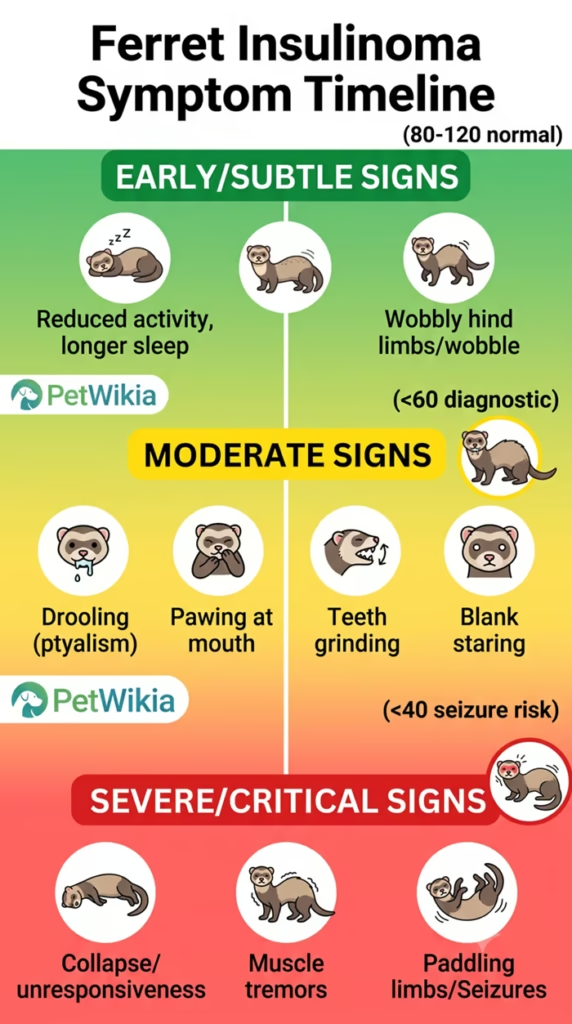
The two most common early clinical signs are lethargy and hind limb weakness — those come first. Ptyalism and pawing at the mouth are real signs too, but they’re secondary, developing as the disease progresses. If your ferret is suddenly less interested in play, sleeping more, or harder to rouse, That’s Your First Flag. Not a quirky personality thing. A Flag.
Stage 1 — Early Warning Signs
Lethargy and Reduced Activity
This is the first sign most owners miss. A reduction in activity. Sleeping longer and harder. Difficult to rouse from sleep. A ferret that used to tear around the room now barely stirs. Appetite may be normal or slightly decreased at this stage, which makes it easy to dismiss. Don’t dismiss it.
Hind Limb Weakness and Ataxia
The back legs go next. A wobble. A stumble. Sudden reluctance to climb. Owners frequently mistake this for spinal disease or normal aging—and adrenal disease is commonly present alongside insulinoma. A full veterinary workup matters. Don’t assume it’s one or the other without bloodwork. Both conditions can occur at the same time.
Ptyalism — Pawing at the Mouth
Excessive drooling and frantic pawing or rubbing at the mouth. This is a ferret experiencing nausea, numbness, or tingling from dropping blood glucose—not grooming behavior. It often appears after eating, especially foods containing simple sugars. A yogurt drop can trigger a rapid insulin release that causes blood glucose to crash.
Bruxism — Teeth Grinding
Less discussed but clinically important. Teeth clenching or grinding may occur during or between hypoglycemic episodes. If your ferret is grinding its teeth and no obvious cause is present, monitor closely, note when the last meal was given, and share that information with your veterinarian.
Stargazing, Irritability, and Glassy Eyes
As hypoglycemia worsens, mental dullness, irritability, and a glassy-eyed appearance develop. Stargazing—the ferret holding its head tilted upward—is a recognized neurological sign. Sudden aggression in an otherwise calm ferret may also occur because the brain is not receiving enough glucose.
Stage 2 — Active Hypoglycemic Episode
Blood glucose below 60 mg/dL is confirmed hypoglycemia in ferrets. Normal range is 80–120 mg/dL. Anything trending below 80 deserves attention. Below 60 after a 3–4 hour fast with clinical signs is diagnostic for insulinoma. Below 40–50 mg/dL, the seizure risk is high. Write those numbers down and put them somewhere you’ll actually find them.
At this stage, things escalate quickly — collapse, tremors, full seizure activity, and loss of consciousness if glucose isn’t brought up fast.
This is the part that gets ferrets killed by well-meaning owners. Standard human handheld glucometers are not validated for ferrets. A 2013 JAVMA study of 52 ferrets found human glucometers underestimated blood glucose by an average of 34 mg/dL compared to lab values. A home reading of 52 mg/dL could actually be 85 mg/dL—or it could genuinely be 52. There is no reliable way to know at home.
The AlphaTrak veterinary glucometer (calibrated for small animals) is the recommended device for home ferret glucose monitoring. Even then, any concerning or unexpectedly low reading should be confirmed with a laboratory blood test performed by an exotic veterinarian.
Stage 3 — Full Seizure
Paddling limbs, jaw clenching, complete unresponsiveness. If it’s gotten here, you needed to be at an emergency vet ten minutes ago. Prolonged seizure activity in ferrets can cause dangerous overheating — heat stroke territory — as well as brain damage. This is not a situation for waiting. Go to the emergency protocol now.
How Is Insulinoma Diagnosed in Ferrets?
Diagnosis is straightforward. Blood work — specifically, a fasting blood glucose measurement taken after a 3–4 hour fast.
Below 60 mg/dL with clinical signs is considered diagnostic for insulinoma. A result of 60–70 mg/dL is suspicious when paired with symptoms. Most exotic vets run a full CBC/chemistry panel alongside glucose to check liver function and rule out concurrent adrenal disease — which shows up in the same age group all the time.
Some vets also run an insulin assay alongside glucose. Normal ferret insulin is 4.88–34.84 μU/mL (35–250 pmol/L). Elevated insulin with confirmed hypoglycemia is essentially diagnostic. Not every clinic has this test in-house — it may need to go to an external lab, so ask ahead.
Insulin-to-glucose ratios were used in the past for diagnosis. That approach is no longer recommended — too many false positives make it unreliable. If an older-school vet is leaning on that method, it’s worth pushing back.
Abdominal ultrasound can sometimes identify pancreatic nodules, but frequently comes back unremarkable — tumors are often too small to see. In one study of 23 ferrets with confirmed insulinoma, ultrasound only caught nodules in 5 of them. That’s a detection failure rate of roughly 78%. A clean ultrasound rules nothing out. Clinical signs combined with fasting blood glucose is the diagnostic combination that actually matters.
If your vet is recommending a standard dog-and-cat blood panel for insulinoma monitoring, get a second opinion from an exotic specialist.
Surgery vs. Medication: What Your Exotic Vet Should Actually Tell You
There are two treatment paths for insulinoma, and the outcomes between them differ substantially.
The Treatment Comparison
📌All dosages below are drawn from peer-reviewed veterinary literature and must be confirmed with a licensed exotic vet before any home application. Never adjust or begin medication based on this table alone.
| Treatment Approach | How It Works | Realistic Outcome |
|---|---|---|
| Nodulectomy + Partial Pancreatectomy | Surgical removal of pancreatic nodules along with part of the pancreas. Performed under general anesthesia by an experienced exotic animal veterinarian. |
Best surgical outcome available.
Mean survival: 668 days. Mean disease-free interval: 365 days. Does not cure insulinoma—tumor recurrence is common. (Weiss, Williams & Scott, 1998; 66 ferrets) |
| Nodulectomy Alone | Removes only visible pancreatic nodules without removing surrounding pancreatic tissue. |
Mean survival: 456 days. Mean disease-free interval: 234 days. Lower long-term success because microscopic tumors often remain. |
| Prednisolone | A glucocorticoid that raises blood glucose by stimulating gluconeogenesis and reducing insulin sensitivity. May also have mild anti-tumor effects. |
0.5–2 mg/kg PO every 12 hours. Alcohol-free formulations are preferred. Effective first-line medical treatment. Monitor for weight gain, increased thirst, urination, and coat changes. |
| Diazoxide | Suppresses insulin secretion from pancreatic beta cells while increasing glucose production in the liver. | Start at 5–10 mg/kg PO every 12 hours and gradually increase up to 30 mg/kg PO every 12 hours if necessary. Often added when prednisolone alone is no longer effective. Possible side effects include vomiting, diarrhea, and poor appetite. |
| Famotidine | An H2-receptor blocker that helps reduce stomach acid, nausea, and poor appetite associated with hypoglycemia. |
2.5 mg/kg PO every 24 hours. Frequently prescribed alongside prednisolone to improve gastrointestinal comfort. |
| Medical Management Only (No Surgery) | Uses prednisolone and/or diazoxide without surgical intervention. |
Mean survival: 186 days. Mean disease-free interval: 22 days. Appropriate for older ferrets, those with significant concurrent disease, or when surgery is not feasible. |
Surgery doesn’t cure insulinoma. It buys time. That’s the honest reality of it.
Up to 52–53% of ferrets remain hypoglycemic even after surgery and end up on medical management anyway. Disease-free intervals post-surgery range from 0 to 23.5 months. Zero to twenty-three. That range says everything about how unpredictable this disease really is.
Surgery makes the most sense for otherwise healthy ferrets under 6 years old caught early in disease progression. For older ferrets or those dealing with concurrent adrenal disease, starting with medical management is a completely defensible — often preferable — approach.
What About Octreotide?
Octreotide is a somatostatin analog that directly inhibits insulin secretion from the tumor. Reported dosage is 1–2 μg/kg q8–12h subcutaneously. It’s a third-line option — use in ferrets is limited, and not all insulinomas respond to it. If prednisolone and diazoxide aren’t cutting it, it’s worth asking your exotic specialist whether octreotide is a reasonable next step.
Post-Diagnosis Monitoring Schedule
After the initial diagnosis, recheck blood glucose every 7 days until readings above 80 mg/dL are consistent. Once stable, follow-up glucose checks every 3–6 months are recommended to catch recurrence early. Any medication dose change warrants a prompt recheck. This disease doesn’t wait patiently between appointments.
Dietary Management: The Long-Term Survival Protocol
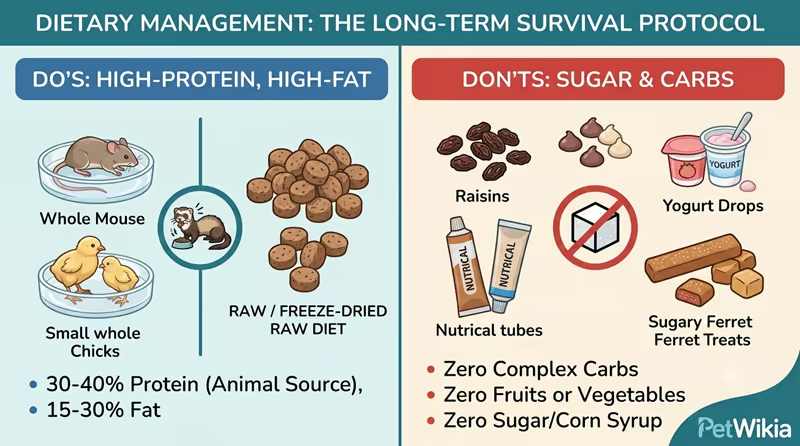
Diet won’t shrink the tumors. But it does control how often episodes happen — and that’s what keeps your ferret stable between vet visits. Most owners underestimate this part until they’ve watched their ferret go down after a “tiny treat.”
The Goal: maintain stable blood glucose via frequent, high-protein, high-fat, zero-sugar meals.
The Baseline Minimum: 30–40% protein, all from animal sources. Maintenance requires at least 15–20% fat, with premium and raw diets ideally hitting 20–30%. For an insulinoma-diagnosed ferret, aim higher than maintenance. Current therapeutic guidance puts the target at 42–55% protein and 20–30% fat, with carbohydrates kept strictly below 10–15% of total diet — and biologically, as close to 0% as possible. The 30–40% protein number is a floor. Not a goal.
What to Feed
- Raw or freeze-dried raw ferret diet — best option for blood glucose stability
- Whole prey (mice, chicks) where accepted — biologically appropriate and zero sugar
- Grain-free high-protein kibble as a last resort — check every label obsessively. Zero plant proteins, zero corn, zero fruit. Wysong Epigen 90 Digestive Support is one commonly cited grain-free option
Food must be available at all times. Free-feeding stabilizes blood glucose far better than any scheduled meal plan. Ferrets naturally eat 8–10 times a day — at minimum, refresh food every 4 hours, especially before play sessions and right after waking. Put it in multiple spots around the enclosure so a weak ferret doesn’t have to travel far to reach it.
What to Never Feed
Zero complex carbs. Zero sugar. Zero fruits. Zero vegetables. No exceptions whatsoever.
Foods to Never Feed a Ferret with Insulinoma
- Raisins
- Yogurt drops
- Nutrical (corn syrup-based)
- Peanut butter
- Bananas or any fruit pieces
- Semi-moist ferret foods high in simple sugars
- Any treat containing sugar, fructose, corn syrup, or molasses
“But it’s only a tiny piece…”
Even a very small amount of simple sugar can rapidly raise blood glucose. The insulin-producing tumor immediately responds by releasing even more insulin, causing blood sugar to crash again.
A sugary treat can trigger the very hypoglycemic episode you are trying to prevent.
What to Do During a Hypoglycemic Episode: Step-by-Step
If your ferret is wobbly, unresponsive, tremoring, or seizing — this is the protocol. Right now.
- Stay calm. Ferrets escalate when you panic. You’re not helping them if you’re shaking.
- Do NOT put anything in the mouth of a ferret that is actively seizing. Aspiration risk is real and serious.
- If the ferret is conscious and able to swallow: rub a small amount of corn syrup, Karo syrup, or honey directly onto the gums. Do not pour liquid into the mouth. The goal is mucosal absorption, not swallowing.
- Once mildly stabilized and fully conscious: offer a small high-protein meal. Oxbow Carnivore Care mixed with water is a good option. It’s easily digestible, high-protein, and designed for sick small mammals.
- Get to an emergency exotic vet immediately regardless. Home stabilization is a bridge. It is not treatment.
At the clinic, expect: IV catheter placement, a slow bolus of 50% dextrose (0.25–2 mL, titrated to effect), then maintenance IV fluids with 5% dextrose. If seizures continue despite IV glucose, midazolam (0.2–0.5 mg/kg IV) or diazepam (1–2 mg IV to effect) may be needed. This is exactly why “wait until morning” is never the right call.
A blood glucose reading of 48 mg/dL at 11pm is an emergency. Not a “keep an eye on it overnight” situation.
📌 Exact dextrose and anti-seizure dosing with the treating exotic vet — these are titrated per individual case, not a fixed home reference.
When to Go to the Vet NOW — Red Flags
- First-ever seizure or collapse
- Seizure lasting more than 2–3 minutes
- No response to gum glucose within 5 minutes
- Multiple episodes in 24 hours
- Sudden onset severe ataxia in a previously stable ferret
- Unresponsiveness after an episode (extended post-ictal state)
- Body temperature drop – hypoglycemic ferrets can become hypothermic rapidly
Don't wait for morning. Ferrets decline fast.
Prognosis and Realistic Expectations
Insulinoma is a progressive disease — there’s no plateau. Tumors grow, new nodules form, and medication doses need adjustment as the disease advances.
Here’s what the peer-reviewed data actually shows (Weiss, Williams & Scott, 1998 — 66 ferrets, histologically confirmed insulinoma):
- Medical management only: mean survival 186 days (approximately 6 months)
- Nodulectomy alone: mean survival 456 days (approximately 15 months)
- Nodulectomy + partial pancreatectomy: mean survival 668 days (approximately 22 months)
Those are averages. Some ferrets beat them by a wide margin; others don’t get close. Survival on medical management alone ranges from as few as 5 days to over 500, depending on the disease stage at diagnosis, what else is going on health-wise, and how tightly diet and medication are managed.
Some ferrets stabilize well on prednisolone for a year or more and barely seem sick day-to-day. Others escalate fast. The disease won’t tell you which category your ferret falls into. The bloodwork will — which is why regular monitoring isn’t optional. Recheck blood glucose every 7 days after any medication change. Every 3–6 months once stable. More often if signs come back.
Your ferret won’t tell you when things are getting worse. The bloodwork will.
Frequently Asked Questions

Sarah Jenkins is a Research-based exotic pet nutrition and health writer, specializing in evidence-based feeding practices and deficiency-prevention topics (e.g. Metabolic Bone Disease) in reptiles and small mammals. She writes Petwikia’s diet and supplementation content.