
Ferrets are misunderstood more consistently than most small animals. New owners usually get the affection part right from the beginning. The specific details — diet, housing, vaccines, daily routine — are where care quietly goes off track. None of it is complicated once it’s laid out clearly, and that’s exactly what this guide does.
Ferrets are obligate carnivores that need 30–40% animal protein and a minimum of 15–20% fat is required for maintenance, while premium diets, raw diets, or therapeutic diets optimally provide 20–30% fat. They need a multi-level cage, at least 2–4 hours of free roaming every single day, and vaccinations against distemper (booster interval varies, ask your vet) and rabies (annual). Add a yearly vet check (twice a year after age 5), and you’ve covered the four things that matter most to your ferret’s long-term health.
What Every New Ferret Owner Should Know About Ferret Care First
Ferrets make excellent companions for the right owner. They’re not the right fit for every household, and it’s worth being clear about that before you commit.
With good care, your ferret will most likely live 6–7 years. That’s a genuine long-term commitment — not a low-effort first pet. They require daily interaction, a specialist carnivore diet, and an exotic-trained vet. Exotic vet visits cost more than standard dog or cat appointments, so factor that into your budget before you bring one home.
For adults or older teenagers willing to commit the time and budget — yes, ferrets are a strong choice. Households with very young children or small prey animals like guinea pigs, rabbits, or birds need to think carefully before adding a ferret. Ferrets are obligate predators by instinct, and domestication doesn’t change that.
Most beginner guides skip this part: Ferrets recognize familiar people, learn to associate your voice and presence with safety and food, develop strong personalities, and play with a level of energy that honestly never gets old. Once you understand how to take care of a ferret properly, their care becomes something you enjoy, not just a daily task you get through.
Is a Ferret the Right Pet for You? Here is the Quick Guide for Beginners
What Do Ferrets Eat? The One Diet Rule That Changes Everything
Your ferret is an obligate carnivore. That one fact shapes every feeding decision you’ll make.
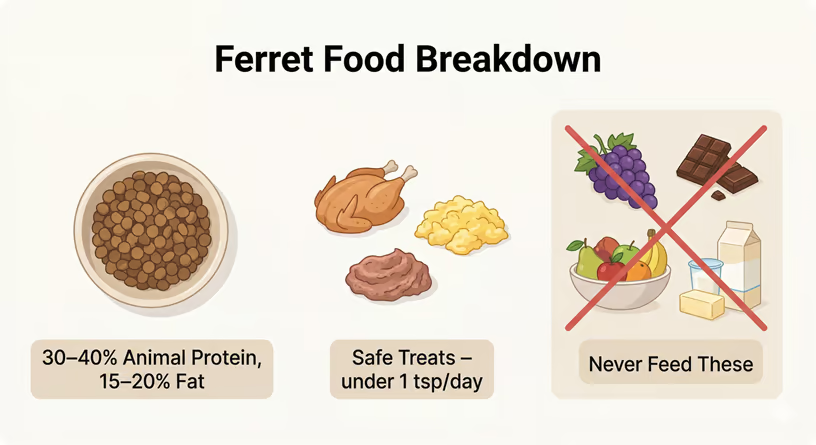
Unlike dogs, cats, or guinea pigs, ferrets cannot extract meaningful nutrition from plant-based food. Their digestive tract is extremely short — food moves through in just 3–4 hours. Every meal needs to be dense with high-quality animal protein. A healthy ferret diet contains 30–40% animal protein and 15–20% fat, with carbohydrates and fibre held strictly below 10–15%. The biological ideal is as close to 0% as possible.
Quality Kibble: Your Ferret’s Daily Foundation
A quality ferret-specific dry kibble is the most reliable way to meet those nutritional requirements. When reading the ingredient label, the first ingredient must be real meat — chicken, turkey, or lamb. If corn, rice, peas, potato, or any grain appears near the top of the list, that product isn’t suitable for your ferret.
One more thing: don’t portion out meals on a schedule. Leave food available all the time. Your ferret has a fast metabolism and naturally eats small amounts throughout the day, around 8 to 10 times typically. They self-regulate well and won’t overeat on a proper carnivore diet.
Safe Treats to Give Your Ferret
Cooked, unseasoned chicken or turkey in small pieces, a little scrambled egg, or a meat-based paste are all appropriate treats. Keep the total under 1 teaspoon per day to avoid disrupting their base diet.
Foods You Should Never Give Your Ferret
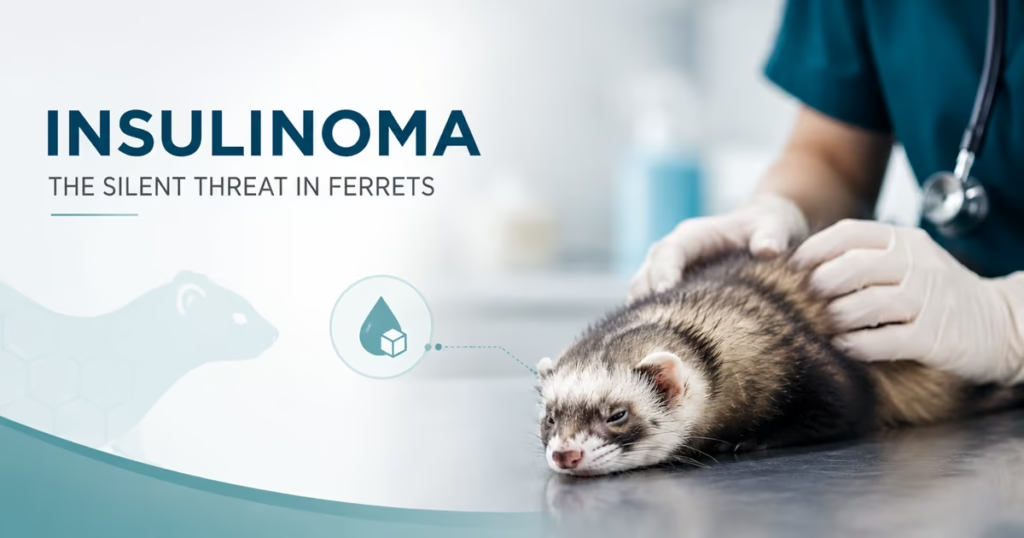
This list matters. Never feed your ferret anything sugary — fruit, raisins, grapes, dairy, avocado, chocolate, or anything with xylitol. Ferrets are drawn to sweet flavors, which makes this a genuine hazard for owners who haven’t been warned. These foods are directly linked to insulinoma (pancreatic tumors) and other serious conditions over time. Vegetables, grains, and plant-based proteins have no place in a ferret’s diet — they provide nothing useful and cause real damage.
Real-World Scenario
Sam brought home a young ferret kit and noticed she wasn’t touching the ferret kibble. But she was happily eating from a standard grocery-store cat food left out nearby. Sam figured food is food.
The problem: that cat food had only 22% protein, 8% fat, and corn as the second ingredient — well below what a ferret needs. Over five to six weeks, the ferret’s coat went dull and her energy dropped noticeably.
The fix, following NC State Veterinary Hospital’s ferret nutrition guidelines, was a slow 7–10 day transition—which is the standard timeline for a straightforward kibble-to-kibble swap—by mixing the two foods in gradually increasing amounts. Within three weeks, her coat improved and energy came back fully.
Setting Up the Right Home for Your Ferret
Most new owners underestimate what ferret housing actually involves. The cage is where your ferret sleeps. But the majority of a ferret’s active life happens outside that cage. Both parts need to be right.
What Size Cage Does Your Ferret Actually Need?
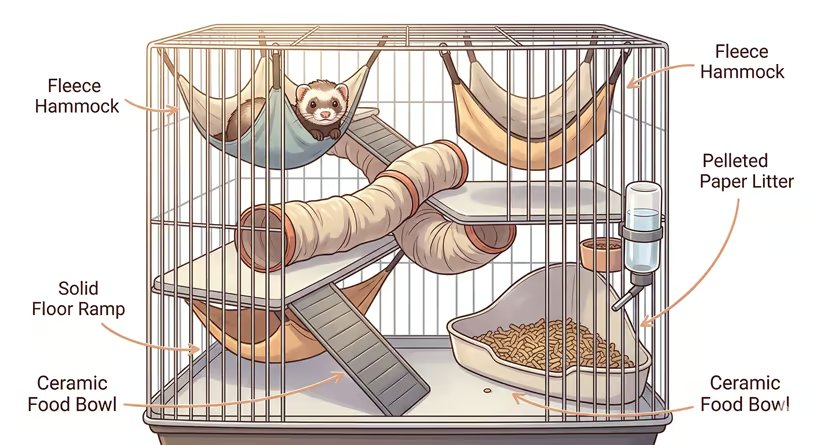
The absolute minimum for one ferret is 24″×24″×18″ — but treat that as a floor, not a target. The Merck Veterinary Manual recommends aiming for 3ft×3ft×2ft when space allows. If you can go larger from the start, do it — ferrets use every inch. Multi-level cages with ramps, hammocks, and shelves are significantly better than a single flat level. Ferrets climb and explore vertically; give them space to actually do that.
Things to avoid in your ferret’s cage:
- Wire or wooden floors — wire hurts their paws; wood soaks up urine and can’t be cleaned properly
- Cedar or pine shavings — contain compounds that are toxic to ferrets
- Clumping cat litter — serious respiratory risk if your ferret breathes it in
- Rubber, foam, or latex items — your ferret will chew these, and swallowed rubber is one of the most common causes of GI obstruction needing emergency surgery
Use fleece fabric or old cotton cloth for bedding — wash it weekly. Fill a corner litter box with pelleted paper litter and make sure it has high sides. Ferrets back into corners when they toilet, so placement matters more than most new owners expect.
Temperature and Ferret-Proofing Your Home
Keep your ferret’s environment between 65–75°F (18–24°C) as the daily target. Sustained temperatures above 80°F (27°C) are dangerous — heat stress develops fast at this threshold, particularly in humid conditions, and can turn fatal in as little as 10 minutes.
Every room your ferret can access needs to be properly ferret-proofed before they’re let out. Block gaps behind fridges and washing machines. Remove all rubber and foam items from the space. Keep dryer doors closed — ferrets have been seriously injured inside unguarded appliances. It takes real effort to do it the first time. After that, it’s done.
2–4 hours outside their cage every single day is non-negotiable. Ferrets confined without adequate exercise and interaction develop real behavioral problems. This is not optional care.
| Care Area | What You Need to Do | How Often | Important Notes |
|---|---|---|---|
| Diet | High-protein kibble (30–40% animal protein), available always | Constant access | No fruits, vegetables, sugar, or grains — ever |
| Treats | Cooked unseasoned meat or egg only | Max 1 tsp per day | Nothing sweet — not even “natural” sweeteners |
| Cage size | Min. 24″×24″×18″ for one ferret | Permanent setup | Multi-level strongly preferred |
| Free roaming | Supervised time in ferret-proofed space | 2–4 hours every day | Always supervised — not optional |
| Temperature | Below 75°F target, never above 80°F | Always | Heatstroke risk above this — no exceptions |
| Nail trimming | Small animal nail clippers | Every 2–3 weeks | Keep styptic powder nearby |
| Ear cleaning | Gentle wipe with vet ear solution | Once a month | Cotton ball only — no swabs inside the canal |
| Bathing | Only when genuinely dirty | Monthly maximum | Ferret-specific shampoo only |
| Litter box | Pelleted paper litter, corner placement | Spot-clean daily | Never clumping cat litter |
| Vet check | Full exotic animal vet exam | Yearly (twice yearly after age 5) | Find your exotic vet before you need them urgently |
| Distemper vaccine | Kit series then annual boosters | Annually | Stay at clinic 20–30 min after each shot |
| Rabies vaccine | Per vet schedule | Annually | Not on the same day as distemper |
Grooming and Your Daily Ferret Care Routine
Something that surprises almost every new owner: your ferret does most of their own grooming, and doesn’t need frequent baths. Actually, bathing too much makes things worse. When you strip the natural oils from their skin, their body responds by producing even more of those oils, which makes that musky ferret smell stronger, not weaker. Monthly bathing is the absolute maximum, using ferret-specific shampoo only.
Ferret Grooming Tips That Actually Make a Difference
Nail trimming every 2–3 weeks is not optional. Overgrown nails catch on hammocks, bedding, and cage ramps — when they tear, it hurts. Use small animal nail clippers and keep styptic powder close in case you clip near the quick. If your ferret won’t hold still, put a small smear of meat-based paste on a smooth surface. That buys you a solid 60-second window, which is enough time to get the job done.
Ear cleaning once a month prevents wax buildup and reduces ear mite risk. Use a vet-approved ear cleaning solution and a cotton ball. Nothing goes inside the ear canal — cotton balls on the outer surface only.
Coat brushing during shedding season — typically spring and autumn — reduces loose fur and lowers hairball risk. Hairballs cause the same kind of digestive problems in ferrets that they cause in cats.
Your Daily Ferret Care Routine — Step by Step
A consistent daily ferret care routine takes less time than most people expect. Here’s what the routine actually looks like:
- Step 1 — Morning check (5 minutes): Top up food and give fresh clean water. Spot-check the litter box. When your ferret is awake, notice whether they seem alert and curious. Bright eyes and active movement during their awake windows are your everyday health baseline.
- Step 2 — Afternoon or evening: Free roaming (2–4 hours): Let your ferret out into their ferret-proofed space. Play with them, hold them, let them explore. This is the most important part of their day — treat it as a non-negotiable daily commitment, not a bonus for when you have spare time.
- Step 3 — Evening check (2 minutes): Make sure the cage is securely latched. Take a quick look at your ferret — coat condition, eyes clear, breathing easy, moving normally. This takes less than two minutes and catches problems before they become serious.
- Step 4 — Weekly: Wash all cloth bedding. Do a full litter box clean and disinfect. Wipe down the cage surfaces. Rotate or refresh enrichment items like tunnels and toys.
Vaccinations, Vet Visits, and Spotting Health Problems Early
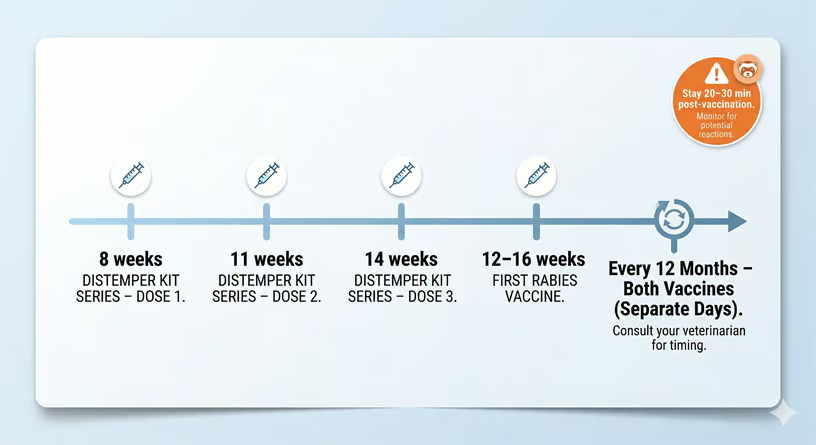
Veterinary care is the area where new owners most consistently underestimate the commitment — and where cutting corners carries the most serious consequences.
Find an exotic animal vet before you need one urgently. Not every clinic sees ferrets. Searching for a specialist during a midnight emergency is a situation worth avoiding entirely. Ferret owner communities and local exotic animal clubs are reliable sources for recommendations.
Your Ferret’s Vaccination Schedule
Every ferret needs two vaccines:
Canine distemper is nearly 100% fatal in ferrets. Kits receive the vaccine series at 8 weeks, 11 weeks, and 14 weeks. After the initial series, booster frequency depends on the specific product used — the Merck Veterinary Manual notes boosters may be given every 1–3 years depending on the vaccine. Don’t assume annual is the default. Confirm the correct interval with your exotic vet based on what they stock.
Rabies vaccination is legally required for pet ferrets in many jurisdictions. The first dose is given at 12–16 weeks of age, followed by yearly boosters.
Ferrets have a higher reaction rate than most animals. Give vaccines on separate days.
How Often Does Your Ferret Need to See the Vet?
Annually until your ferret reaches 4–5 years old, then twice yearly after that. Adrenal disease and insulinoma develop at very high rates in older ferrets, and both conditions respond significantly better to early detection than late diagnosis. Many exotic vets also recommend blood glucose testing twice a year for middle-aged and senior ferrets.
How to Tell If Your Ferret Is Healthy Or Not
A healthy ferret has bright, alert eyes when awake, a smooth and full coat, a consistent appetite, and regular, firm droppings. Sleeping 14–18 hours a day is completely normal — it catches almost every new owner off guard the first time. If your ferret is warm, has a pink mouth, and is breathing steadily, they’re not sick. They’re in deep sleep.
Two Critical Early Warning Signs in Older Ferrets
These are the most common serious conditions affecting ferrets over three years old.
Look for gradual hair loss (starting on the tail or body, not the head), a stronger musky odor, or unusual tiredness. In females, vulvar swelling is a key indicator.
Action: Usually not a same-day emergency—schedule a vet appointment within a few days.
Watch for weakness, excessive drooling, pawing at the mouth, blank staring, or brief collapse. These signs indicate low blood sugar and can be triggered by stress or missed meals.
Action: Requires immediate, same-day urgent care. This is not a wait-and-see situation.
The musky ferret smell comes from skin glands, not poor hygien. Over-bathing is actually the bigger mistake, since it strips natural oils and triggers the skin to produce even more scent in response.
Ferrets can become dangerously picky. If their favorite brand goes out of stock, they might refuse food entirely. From kithood, deliberately rotate between 2-3 quality protein sources to build a flexible palate.
Ferrets sleep so deeply they often appear lifeless. Trust the signs: If they are warm, have a pink moist mouth, and are breathing steadily (even if slowly), they are just dreaming.
Ferrets naturally back into corners—it’s an instinct, not stubbornness. Don’t fight it. Put a litter box in every corner initially, then gradually remove the ones they use least.
- No food for 12+ hours: High insulinoma/low blood sugar risk.
- Blood Sugar Emergency: Pawing at mouth, drooling, weak legs, or blank staring.
- Respiratory Distress: Open-mouth breathing, wheezing, or eye/nose discharge.
- Potential Blockage: No droppings for 12+ hours with signs of straining.
- Heatstroke: Sustained temperatures above 80°F especially in humidity — panting, drooling, or collapse require emergency cooling & vet contact.
- Mobility: Sudden weakness in back legs or difficulty walking.
- Adrenal Disease: Hair loss on the tail or body in ferrets over 3 years old.
Wrap up
Ferret care is genuinely straightforward once the four foundations are in place: a protein-first diet, proper housing with daily free roaming, a relationship with an exotic vet, and those two essential vaccines. Get those right and you’ve covered the vast majority of what your ferret needs.
Researching before you commit puts you ahead of most first-time ferret owners. Watch what you see every day. A healthy ferret is active during awake periods, eating consistently, producing normal droppings, and genuinely curious about their environment. Those are your actual daily health indicators — concrete things to observe, not abstract things to worry about.
Frequently Asked Questions About Ferret Care
This article is for informational purposes only and does not replace professional exotic veterinary advice. Every ferret has unique needs based on their age, individual health, and environment. Always speak to a qualified exotic or small mammal veterinarian before making significant changes to your ferret’s diet, housing, or care — especially if your ferret is showing any signs of illness. The author takes no responsibility for outcomes based on the information provided here.
REVIEWED BY: Christina Koch, RVT, for clinical accuracy. Current Standards Verification: August 5, 2026
Sarah Jenkins is a Research-based exotic pet nutrition and health writer, specializing in evidence-based feeding practices and deficiency-prevention topics (e.g. Metabolic Bone Disease) in reptiles and small mammals. She writes Petwikia’s diet and supplementation content.