Walk into any Petco, grab a bag with a ferret on the front, and you feel like you’re doing the right thing. The label says corn meal, chicken by-product, soy protein. Your ferret eats it without hesitation. Looks fine from the outside.
But for a lot of owners, that bag is the whole diet plan. No label deep-dive. No research. Just a ferret picture on the front and a shelf at eye level.
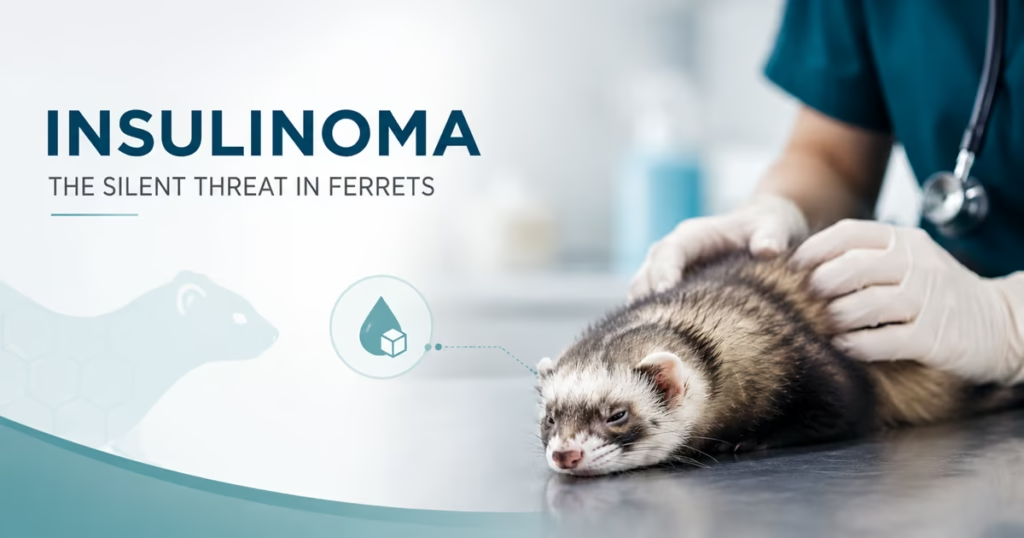
Then at age four — sometimes three — you’re sitting in an exotic vet’s office hearing the word insulinoma. The vet is being as kind as they can, but what they’re actually telling you is: this was years in the making.
Ferrets are obligate carnivores that need at least 30-40% animal protein and 15-20% fat from real meat, not plants. Premium and raw diets can push fat as high as 20-30%. Their GI tract clears food in just 3-4 hours, so any carbohydrates in the bowl cycle through constantly instead of being digested slowly. The short version: feed named meat, skip corn and pea protein, and read every label like it’s trying to trick you, because often it is.
The longer answer — which kibble brands actually pass, how to read a label without getting played, and what to do when your ferret refuses everything except Marshall — is all below.
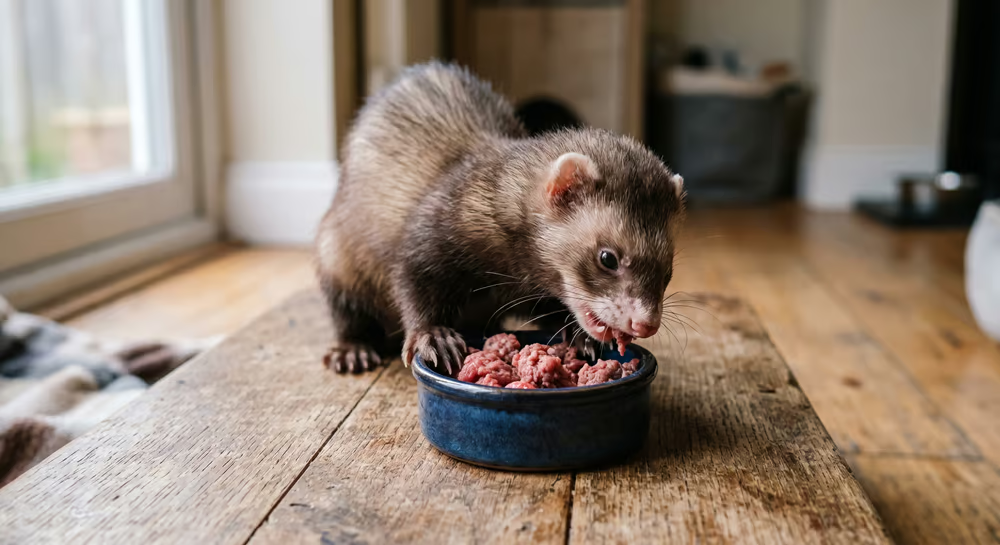
What Ferrets Actually Need to Eat (And Why Their Body Is Built Differently)
Here’s the part most new ferret owners don’t absorb until something goes wrong: ferrets aren’t just “meat-preferring.” Their biology literally cannot thrive on anything else.
Obligate Carnivore — What That Actually Means
Definition — Obligate Carnivore: An animal whose metabolism is hardwired to derive essential nutrients exclusively from animal tissue. Not mostly meat. Not meat-plus-some-plants. Animal tissue only. The enzymes, the gut structure, the whole system — built for prey.
Cats get labeled obligate carnivores too, and a lot of people still feed them grain-heavy kibble for years without obvious disaster. Ferrets don’t work that way. Their system is faster, less forgiving, and more tightly specialized than a cat’s.
A ferret has 34 teeth built for tearing meat. No grinding molars anywhere. Their digestive enzymes are tuned for protein and fat — not starch, not fiber, not the pea protein some manufacturer decided was a clever way to inflate a label.
The 3–4 Hour GI Clock and Why It Matters
Definition — GI Transit Time: The time between eating and elimination. In ferrets, this is 3–4 hours. For context, humans average 24–72 hours. Dogs run 8–10 hours.
That 3–4 hour window is the part most people completely underestimate.
A dog eating low-quality kibble absorbs a slow, ongoing insult to their system. A ferret eating corn-based filler runs that same insult through their entire GI tract multiple times a day. Every single day. The pancreas fires back at each carb surge with an insulin spike. Keep doing that for three years and you’ve laid the groundwork for insulinoma, one of the most common cancers diagnosed in domestic ferrets over the age of three.
The exact cause isn’t settled. Researchers have proposed that chronic carbohydrate exposure is a contributing factor — repeated insulin spikes from a high-carb diet stressing the pancreas over time. It’s a leading theory, not a confirmed mechanism, and diet alone doesn’t explain every case.
Here’s the part that should make you look twice at whatever bag you’re holding right now: ferrets eat 8–10 small meals a day because their metabolism requires constant fuel. That 3–4 hour clock means they’re essentially never not digesting. Whatever’s in the bowl is always working on them.
So no. There’s no “just a little corn meal.” The only question that matters is: does this ingredient belong in a mustelid’s body, or doesn’t it.
Ferret Diet Macros: The Numbers You Need to Know
Skip the vague estimates. These are the real numbers you actually need:
- Protein: 30–40% minimum. Animal sources only.
- Fat: A minimum of 15–20% is required for maintenance, while premium diets, raw diets, or therapeutic diets optimally provide 20–30%.
- Carbohydrates: The biological ideal is as close to 0% as possible. When using commercial high-protein ferret kibble, carbohydrates should strictly remain below 10–15%.
That’s the whole framework. Everything else is commentary.
Two nutrients that rarely get enough attention: taurine and arachidonic acid. Taurine is an amino acid ferrets can’t synthesize in adequate amounts on their own — they need it from muscle and organ meat. In cats, taurine deficiency is well-documented to cause a serious heart condition called dilated cardiomyopathy. Ferret-specific research on this is more limited, but because their physiology is similar, exotic vets apply the same precaution and recommend a diet with adequate taurine from real meat.
Arachidonic acid is an omega-6 fatty acid found in animal fat — and ferrets can’t convert it from plant sources the way some other mammals can.
Both nutrients show up naturally in any properly meat-based diet. Both disappear the moment you start replacing animal protein with pea protein and corn gluten. Which is exactly what the cheap kibbles do.
Macro Comparison Table
| Diet Type | Protein % | Fat % | Carb % | Taurine Present | Verdict |
|---|---|---|---|---|---|
| Whole Prey / RMBs | ~55–65% | ~20–30% | ~0% | Yes (natural) | Gold standard |
| Freeze-Dried Raw | ~55–65% | ~18–28% | ~1–3% | Yes (natural) | Best practical option |
| Premium Kibble (Wysong) | ~60% | ~18% | 0-3% | Added | Acceptable — read label |
| Mid-tier Kibble | ~32–36% | ~15–18% | ~20–30% | Sometimes added | Marginal — use caution |
| Marshall Premium | ~30–32% | ~15–18% | ~25–35% | Sometimes added | Survival food, not nutrition |
Note: Kibble figures are approximate ranges based on published guaranteed analysis data. Verify current labels before publishing — manufacturers reformulate without notice.
One thing that table can’t show you: bioavailability. A kibble listing 36% protein is not the same thing as a raw diet listing 36% protein. Processed protein from rendered by-products and plant isolates absorbs very differently than protein pulled from actual muscle tissue.
A ferret’s gut is short and fast. It doesn’t have time to wrestle nutrients out of heavily processed ingredients.
Wysong earns its spot on that table because it uses higher-quality protein sources and doesn’t lean on plant proteins to pad the numbers. It’s still kibble. But it’s a kibble that at least understands what a ferret actually is.
You can check best freeze-dried raw ferret food review here if you want a deeper breakdown of specific brands.
Kibble vs. Raw vs. Whole Prey — Honest Breakdown
Here’s an honest look at all three.
Kibble: Convenient, Compromised, and Sometimes Fine
Kibble isn’t the enemy. It’s a tool.
The problem is how most owners use it — as the entire diet, forever, because it’s cheap, shelf-stable, and the pet store said it was fine. That’s where things go sideways.
Evaluating Marshall Kibble: A Macro-Nutrient Perspective
Honestly, Marshall kibble is the McDonald’s of ferret food.
It keeps them alive. That’s a different thing from nutrition. Three specific reasons:
- Protein percentage scrapes the minimum requirement — barely clearing the floor, not building toward optimal health.
- Carb load is significant — corn and grain-based fillers that a ferret’s 3–4 hour GI tract processes as a constant sugar drip.
- Protein sources include by-products and plant isolates — ingredients a ferret’s gut was never designed to handle.
If Marshall is genuinely all that’s in the budget right now, use it. But go in knowing exactly what you’re trading for convenience.
Fixed Verdict: Sub-optimal — Although it meets the bare minimum legal requirements for protein (30%), it relies heavily on plant-based fillers, making it a lower-quality choice compared to premium high-protein (40%+) kibbles.
Wysong: A Different Conversation
Wysong and Marshall are not in the same conversation.
Higher named-meat content, a better fat profile, and far less ingredient-splitting — meaning the label actually reflects something closer to what’s in the bag.
Still kibble. Still processed. Still not the best you can do.
But it’s the kibble that at least understands what a ferret is.
If you’re committed to kibble, Wysong is where you start.
But Here’s What Nobody Tells You: Kibble Imprinting
Ferrets imprint on food. Hard, and early.
A kit raised on Marshall doesn’t just prefer it — their brain has filed that specific texture, smell, and flavor profile under “food.” Everything else registers as not-food. Put a piece of raw chicken in front of an imprinted ferret and they’ll walk straight past it. Repeatedly.
That’s merely frustrating when you’re trying to upgrade their diet. It becomes a real medical problem when they get sick.
Sick ferrets go off food. A ferret dealing with insulinoma, ECE, or adrenal disease needs highly digestible, high-quality protein to support recovery. If the only thing that ferret will accept is Marshall kibble — the exact food that contributed to the problem — everyone is stuck. You, the vet, and the ferret.
Going back through ferret owner accounts in exotic vet forums and community groups, this pattern shows up constantly. Owner followed pet store guidance to the letter. Ferret got sick. Ferret refused everything else. Recovery options narrowed fast.
Diet diversity from the start isn’t a nice-to-have. It’s preventive medicine.
Freeze-Dried Raw: The Practical Middle Ground
For most ferret owners, freeze-dried raw is the practical answer. Protein density often hits 55–65% from actual named meat sources. No cooking, shelf-stable, and palatable enough that even some heavily imprinted ferrets will come around to it with enough patience.
It costs more than kibble. That’s the honest barrier for a lot of people. But the math looks different once you price out insulinoma treatment.
Whole Prey and Raw Meaty Bones
Gold standard. Closest to what a mustelid actually evolved eating. Whole prey — mice, chicks, rabbit pieces — provides complete nutrition including organs, bone, and connective tissue in the ratios a ferret’s body expects. Protein bioavailability is as high as it gets.
Raw meaty bones (RMBs) like chicken wings and turkey necks also support dental health in a way that no kibble ever will.
The downsides are real: sourcing, storage, safe raw meat handling, and bacterial contamination risk — Salmonella and E. coli are legitimate concerns, especially in a household with immunocompromised members. This approach takes research and real discipline.
According to the American Ferret Association, a varied diet that includes whole prey and raw options most closely mirrors natural mustelid nutrition.
Not every owner can pull it off logistically. But if you can, it’s worth learning how.
How to Read a Ferret Food Label (Manufacturers’ Tricks)
The standard advice: check the first ingredient. If it says chicken, you’re good.
That advice is incomplete. Manufacturers know it, and some of them count on you not knowing it.
Rule #1: Ingredients Are Listed by Weight, Heaviest First
Simple in theory. The heaviest ingredient goes first. So if chicken is at the top, there’s more chicken by weight than anything else in the bag.
That’s how it’s meant to work.
The Splitting Trick
Here’s what cheaper brands worked out: split one ingredient into multiple sub-forms, and each individual entry looks smaller than it really is — even when the combined weight of all those sub-forms outweighs the meat at the top of the list.
A label might read:
Ingredients
As listed on the bag — in order of weight
- Meat Chicken by-product meal Listed first. Looks fine.
- Corn #1 Corn meal Split entry 1 of 3
- Plant Corn gluten meal Split entry — also corn
- Plant Pea protein Inflates protein % on label
- Corn #2 Ground corn Split entry 2 of 3 — still corn
- Plant Soy protein isolate Inflates protein % on label
Chicken is first. Looks fine at a glance.
Now count the corn entries:
Three separate listings — one ingredient split apart
Chicken is the first ingredient. 32% protein. Sounds like it passes.
A significant portion of that protein is from plants — peas, soy, corn gluten. Not meat.
Why this matters for ferrets specifically
A ferret cannot properly use plant protein the same way it uses animal protein. And because a ferret’s GI tract moves food through in just 3 to 4 hours, those plant ingredients don’t get processed as protein at all. They get processed as a carbohydrate load. Repeatedly. Every single day.
Three separate listings for what is functionally one ingredient. Combined, those three corn entries likely outweigh the chicken sitting at the top. They’re split precisely so that no single corn entry looks alarming on its own.
Why the Protein Percentage Lies
Pea protein and soy protein isolate serve a second purpose: they pad the crude protein percentage on the guaranteed analysis panel.
So the label reads 32% protein. Sounds like it clears the requirement.
But here’s what that number doesn’t tell you: a significant portion of that protein comes from plants. Peas, soy, corn gluten. Not meat.
A ferret cannot use plant protein the same way it uses animal protein. And because their GI tract moves food through in just 3 to 4 hours, those plant ingredients don’t get processed as protein. They get processed as a carbohydrate load. Repeatedly. Every single day.
Legal. Common. A problem for every ferret eating it.
So What Are You Actually Looking For?
Four rules. That’s it.
Rule 1
Named meat in the first position.
Chicken, turkey, duck, rabbit. Not “poultry by-product meal.” Not “meat meal.” Named. Specific. Animal.
Rule 2
No corn, soy, or pea protein anywhere.
Not third on the list. Not sixth. Nowhere. These ingredients have no business in a ferret’s bowl regardless of where they appear.
Rule 3
No sugar, molasses, or fructose.
Any sweetener is a direct pancreatic insult. Ferrets are attracted to sweet flavors and manufacturers exploit this.
Rule 4
Animal-based fat source only.
Chicken fat is fine. Vegetable oil is not. Fat source matters as much as protein source.
If a bag fails any one of these four checks, put it back. The front of the packaging is marketing. The ingredient list is the truth.
If a bag fails any one of these four checks, put it back. The front of the packaging is marketing. The ingredient list is the truth.
P.I.R. Scenario: The “Premium Upgrade” That Wasn’t
Picture this. Owner has a four-year-old ferret showing early bloodwork changes — fasting glucose is creeping low, vet mentions insulinoma risk. Owner panics, googles, decides to upgrade from Marshall to a “premium natural ferret food” they found at an independent pet store.
The Upgrade
New bag. Better marketing. Higher price point. First ingredient: deboned chicken.
Initial Reaction
They feel good about it. Ferret eats it fine.
Six Months Later
Same bloodwork trend. Nothing improved.
What the front of the bag says
- Meat Deboned Chicken
- Meat Chicken Meal
What the full list reveals
- Meat Deboned Chicken
- Meat Chicken Meal
- Plant Pea Protein
- Starch Chickpea Flour
- Starch Tapioca Starch
- Plant Dried Peas
The owner upgraded the marketing. Not the diet.
This is not a hypothetical. It’s a pattern. And it’s why reading labels past the first ingredient matters more than the brand name on the front of the bag.
Ferret Treats — What’s Safe and What Sends Them to the Vet
What’s Actually Safe
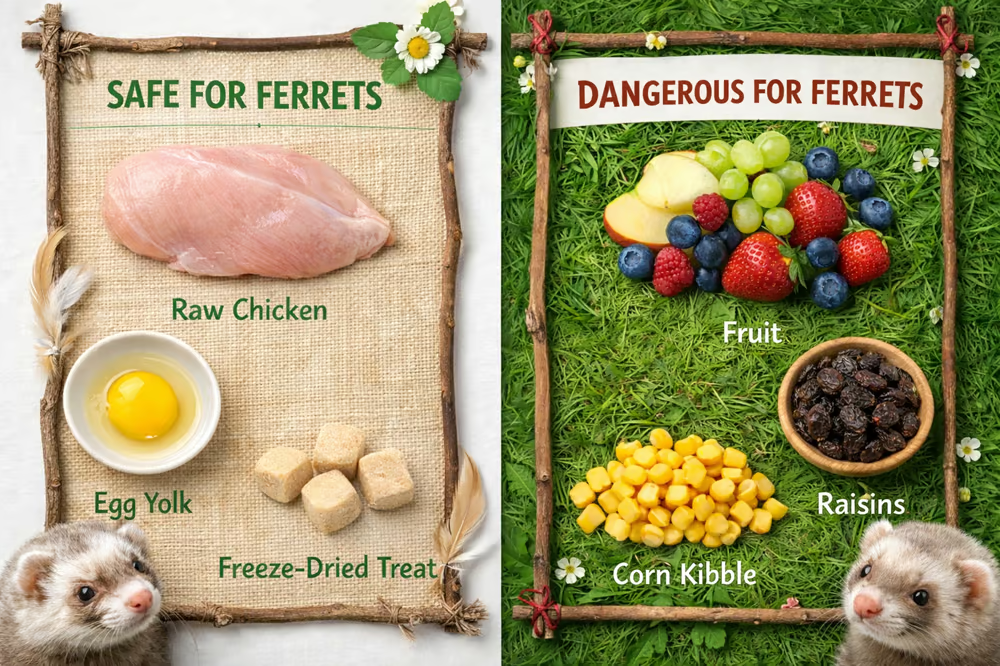
Freeze-dried meat treats. One ingredient only. Chicken, duck, turkey, or rabbit — nothing added, no seasoning, no mysterious “natural flavors.” For most ferrets, this is the go-to treat answer that actually makes sense.
Raw egg yolk. Keep the amount small, and stick to once or twice a week at most. It’s a solid fat source and most ferrets go after it enthusiastically. One thing to know: raw egg whites contain avidin, which interferes with biotin absorption. Yolk only — or a fully cooked whole egg on occasion. Raw whites by themselves aren’t a good idea.
Small raw meat pieces. Think thumbnail-sized — a small piece of raw chicken, turkey, or rabbit. That’s genuinely all it takes. No cooking needed, and absolutely no seasoning, ever.
Meat-based baby food. Handy to have around for sick ferrets or ones going through a food transition. But read the label before you buy — some brands sneak in onion powder, which is toxic to ferrets. Plain chicken or turkey puree with nothing else added is what you’re looking for.
What Sends Them to the Vet
Raisins
Acute renal failureSkip it — this one’s a precaution, not a proven safe amount.
Raisins are a precautionary no for ferrets. The kidney-damage link is well-proven in dogs but only anecdotal in ferrets — the real risk isn’t confirmed. Because outcomes can be severe, treat any ingestion as an emergency.
- Skip the raisin.
- Skip the raisin bread.
- If it happens anyway, call your exotic vet — don’t wait for symptoms.
Fruit in General
Insulin damage over timeYes, ferrets will eat it. Yes, they seem to enjoy it.
That doesn’t make it safe.
The sugar content triggers an insulin spike in a pancreas that is already under chronic dietary stress. A dime-sized piece of banana fed daily to a three-year-old ferret isn’t cute enrichment. It’s accelerating a disease process that may already be quietly underway.
The ferret looks fine. The damage doesn’t announce itself until it’s already done.
Anything With Xylitol
Kills fastThis one kills fast.
Xylitol is an artificial sweetener that appears in more pet products than most owners expect. It hides in “natural” treat formulas, flavored supplements, and products that look completely harmless on the shelf.
- Check every single ingredient list.
- Every time.
- No exceptions.
Dairy
GI stress, lactose intolerantFerrets are lactose intolerant.
The result is not usually fatal but it is unpleasant, messy, and puts unnecessary stress on a GI tract that is already working hard.
There is no nutritional reason to feed dairy to a ferret. None.
The Pattern Across All Four
None of these are edge cases. None of them require a large amount to cause harm.
The common thread: ferret owners give these things because the ferret wants them. Ferrets also want to squeeze behind the washing machine. Wanting something and being safe with it are not the same thing.
The “Just a Little Bit” Myth
Here’s the thing most people don’t want to hear: there is no safe amount of sugar for a ferret with early-stage insulinoma. And you probably don’t know whether your ferret has early-stage insulinoma. Bloodwork might not catch it yet. They might look completely fine.
Pancreatic damage from chronic carb and sugar exposure accumulates silently. By the time symptoms appear — the glazed look, the pawing at the mouth, the sudden weakness — the tumor is already there.
So when someone says “just a tiny piece of fruit as a treat won’t hurt,” what they’re actually saying is “I haven’t seen the damage yet.”
Those are two very different things.
Transitioning Your Ferret’s Diet Without a War
If you’ve read this far, you’re probably looking at your ferret’s Marshall kibble bag a little differently. Good. Now here’s the part that matters: don’t just swap it out tomorrow.
Abrupt diet changes cause GI upset fast in ferrets. Diarrhea, food refusal, stress — and in a ferret with any underlying health issue, that stress genuinely matters. Going slow is actually faster in the long run.
The Reality of an Imprinted Ferret
If your ferret was raised on one food from kithood, expect real resistance. Not “sniffs it and walks away” resistance — we’re talking “will genuinely go hungry rather than touch this foreign object” resistance.
Don’t read hunger strikes as proof they hate the new food. Their brain simply hasn’t categorized it as food yet. That takes repetition and time. While a standard kibble-to-kibble switch might only take 7 to 10 days, transitioning a deeply imprinted ferret to a fundamentally new diet (such as raw food) requires a minimum of four to eight weeks.
The Soup Method
This is the standard transition technique and it works. Take the new food — freeze-dried raw, better kibble, whatever the target is — and make a slurry with warm water. Mix in a small amount of the current food.
Ratio Shift — Every Few Days
Why warm water works
The warm water releases smell — which is actually how ferrets evaluate food more than taste. Getting the scent of the new food into their nose repeatedly, in a context they associate with eating, rewires the imprint gradually.
Best case
Some ferrets move through this in two weeks.
Typical case
Some take two months. Be patient. Don’t rush the ratio shifts.
Hardest case
The ones raised exclusively on Marshall kibble from a mass breeder — the ones who’ve never seen a piece of actual meat — those take the longest.
Practical Timeline
- Week 1-2: 80% current food, 20% new food, served as soup.
- Week 3-4: 50/50. Watch stool consistency. Loose stool means slow down, not stop.
- Week 5-6: 20% current food, 80% new food.
- Week 7+: Full transition. Keep a small amount of old food on hand for the first few weeks in case of stress-related refusal.
Note: For ferrets deeply imprinted on a single kibble brand since birth, this process may extend to 8 weeks (2 months) or longer. Do not rush the ratio shifts if your ferret shows complete food refusal; consistency and patience are the only ways to rewire their scent-based food recognition.
When to Get the Vet Involved
If your ferret goes more than 4–6 hours without eating during a transition, call your vet. Anorexia lasting 12 hours is commonly treated as a life-threatening emergency by exotic vets — a ferret’s fast metabolism makes it especially vulnerable to hepatic lipidosis when food intake stops. A ferret not eating isn’t being stubborn. Hepatic lipidosis can develop quickly in small mammals that go without food. And if something underlying is driving the refusal, you need to find out.
Ferret Diet Red Flags — When to Call the Vet
Ferrets hide illness well. By the time something is obvious, it has usually been building for a while. These are the signs that mean stop waiting and call an exotic vet today.
Warning Signs
Insulinoma Warning Signs
These symptoms cluster around low blood sugar — which is what happens when a pancreatic tumor starts overproducing insulin.
- Pawing at the mouth or drooling. This is nausea from hypoglycemia. Not a dental issue. Not something they ate. Pawing at the mouth in a ferret is an insulinoma red flag until proven otherwise.
- Glazed eyes, staring into space. Owners sometimes describe this as their ferret “zoning out.” It’s a hypoglycemic episode. It can escalate to seizure.
- Sudden weakness in the hindquarters. Wobbly back end, difficulty standing. Again — hypoglycemia, not aging, not a sprain.
- Unexplained weight loss despite normal or increased appetite. The metabolism is dysregulated. The food isn’t being used properly.
Diet Connection
ECE and the Diet Connection
Epizootic Catarrhal Enteritis — ECE — is a viral GI disease that hits ferrets hard. Bright green, slimy, “birdseed” stool is the signature sign. It’s viral in origin, but a ferret whose diet has chronically stressed their GI tract and immune system is less equipped to fight it.
Recovery from ECE almost always requires dietary intervention — highly digestible protein, often in soup form, fed frequently. This is another situation where an imprinted ferret who won’t eat anything except their usual kibble becomes a serious clinical problem.
Emergency
The Food Refusal Emergency
A ferret that suddenly stops eating is not being picky.
Ferrets graze constantly because their metabolism requires it. A ferret that walks away from food — especially one that has always eaten reliably — is telling you something is wrong. Pain, nausea, obstruction, systemic illness.
Quick Reference Checklist
Call the vet if you see any of the following
Frequently Asked Questions
Medical Disclaimer
This article is written for informational purposes by a Exotic Pet Nutrition Writer and does not constitute veterinary medical advice. Ferret health conditions including insulinoma, ECE, and adrenal disease require diagnosis and treatment by a licensed exotic animal veterinarian.
REVIEWED BY: Christina Koch, RVT, for clinical accuracy.
Sarah Jenkins is a Research-based exotic pet nutrition and health writer, specializing in evidence-based feeding practices and deficiency-prevention topics (e.g. Metabolic Bone Disease) in reptiles and small mammals. She writes Petwikia’s diet and supplementation content.