
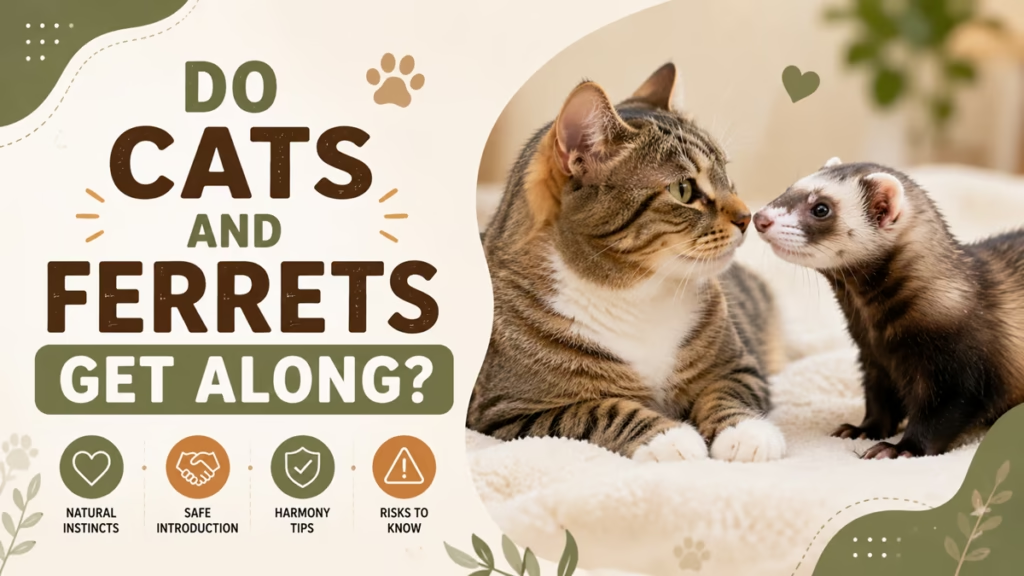
Ask ten ferret owners, ‘Do cats and ferrets get along?’ and you’ll get ten different answers. I’ve fostered ferrets into homes with everything from geriatric tabbies to kittens still losing their baby teeth, and the honest answer is: it depends on the two animals in front of you. Most ferrets and cats can get along well and even become genuine playmates, since they’re closer in size than people expect and share a lot of the same instincts. But “usually” isn’t “always,” and getting there safely means understanding exactly where the risk sits.
Ferrets and cats get along in most households, and it comes down to three things: size match, individual temperament, and a slow, supervised introduction. A healthy adult ferret weighs roughly 1 to 4 pounds, while the average house cat weighs 8 to 12 pounds, which is a gap that matters more than most guides admit. With a proper two-to-four-week introduction, most pairs settle into real friendship or calm, supervised coexistence.
📌 Good to Know: Exotic pet laws vary by state — California and Hawaii restrict pet ferret ownership, for example. If you don’t already have a ferret, verify current rules with your state’s department of agriculture or wildlife agency before bringing one home, as the initial setup and ongoing ferret costs require careful planning.
This guide is for general education about introducing ferrets and cats safely. It isn’t a substitute for a hands-on temperament assessment by an exotic-experienced vet or a professional behaviorist, especially if either animal has a bite or attack history.
Why Ferrets and Cats Actually Get Along More Often Than You’d Think
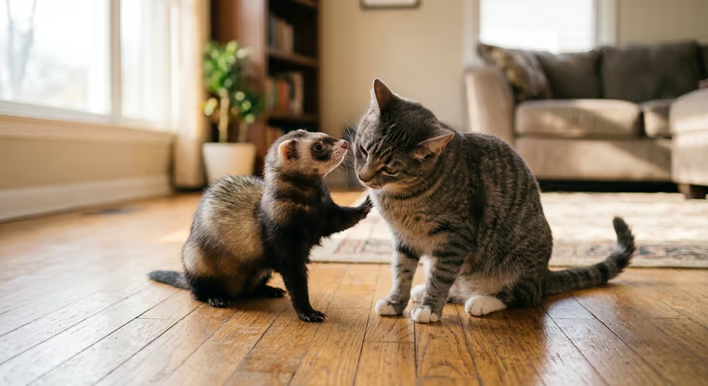
Ferrets and cats share enough biology and temperament that they read each other as peers rather than as predator and prey, which is exactly why this pairing works better than ferrets with almost any other common pet. That’s not a coincidence. It comes down to two things: size and instinct.
The size comparison nobody puts in actual numbers
Most articles wave a hand at “cats are bigger” without ever saying by how much. Here’s the actual gap.
Ferret and Cat Weight Comparison
| Animal | Typical Adult Weight | Notes |
|---|---|---|
| Female ferret (jill) | Up to 2.5 lb | Smaller, narrower head |
| Male ferret (hob) | Up to 4 lb | Larger, more muscular build |
| Average domestic cat | 8–12 lb | Varies significantly by breed |
Adult ferrets and normal cats are not the same size. Depending on the individual animals, a cat can outweigh a ferret by two to twelve times. The most significant gap is found between a small female ferret and a large cat.
In my observation, many ferret owners mistakenly assume cats and ferrets are in the same weight class. This real difference in size is precisely why matching their sizes matters more when introducing them, rather than just assuming, “They are both predators, they will be fine.” That incorrect assumption is exactly where introductions go wrong.
Shared instincts that make the pairing work
Beyond size, ferrets and cats run on remarkably similar internal clocks. Both are obligate carnivores, meaning their bodies are built to process meat, not plant matter, and both are crepuscular — most active at dawn and dusk, which is when you’ll typically see the most interest (and the most mischief) between them.
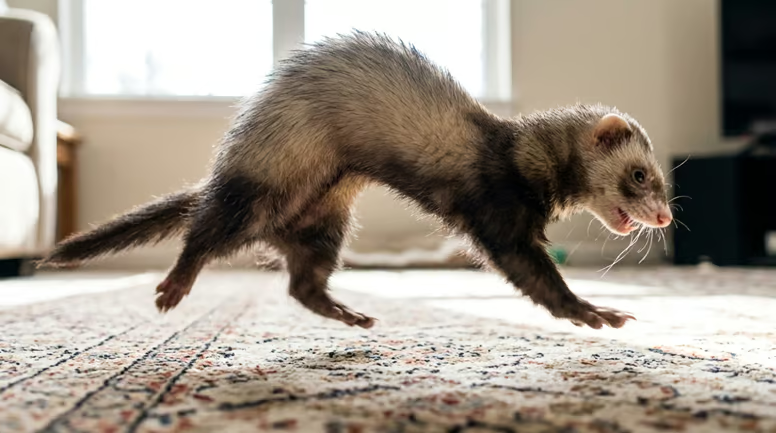
They also share a play style. A ferret’s “weasel war dance,” that stiff-legged, bouncing sideways hop, looks alarming to someone who’s never seen it. It’s actually an invitation to play, not a threat display, and cats generally read it correctly within a session or two. Because both animals are predators rather than prey species, neither one instinctively panics at the sight of the other the way a rabbit or guinea pig would.
For a veterinary-backed overview of ferret behavior, see the PMC review on ferret care and husbandry.
When a Ferret and Cat Pairing Is Risky (Read This Before You Introduce Them)
Three specific situations turn a normally safe pairing into a genuinely risky one: a very young kitten, a cat with a strong prey drive, and a senior or health-compromised animal on either side. Skip past these and you’re introducing on hope rather than good odds.
Kittens under 12 weeks
A kitten under about 12 weeks old is small enough that a ferret’s hunting instinct can genuinely switch on. This isn’t about temperament or “a mean ferret.” It’s size-triggered. A 12-week-old kitten typically weighs around 2.5 to 3.5 pounds, which is close to, or even under, a full-grown male ferret’s weight. That means the size gap that normally keeps a ferret from seeing a cat as prey can shrink dramatically, or disappear entirely, with a young kitten.
Wait until the kitten is closer to its adult size, generally past 4 to 5 months old, before starting introductions. If you already have both and the kitten is young, keep them fully separated (not just supervised, actually separated) until the kitten has grown.
This is the mismatch I see rescue applicants miss most often — they picture ‘kitten’ as automatically the more vulnerable-looking animal, then bring home an eight-week-old and a full-grown hob and assume size will sort itself out. It won’t, not on its own.
Cats with a high prey drive
If your cat has a track record of killing birds, mice, or other small animals outdoors, that same drive doesn’t automatically switch off indoors. A ferret’s scent doesn’t register as “prey” the way a rodent’s does, which helps, but it isn’t a guarantee. A cat that hunts hard and often is a genuinely different introduction case than a laid-back indoor cat who’s never caught anything in its life.
If your cat stalks, crouches, and fixates on the ferret with a hard stare and a twitching tail during any introduction stage, that’s predatory focus, not curiosity. Stop the session immediately and don’t resume without a much slower, longer barrier-stage first — or consider that this particular pairing may not be safe to pursue.
Senior or health-compromised animals
An older ferret (generally past 6 years old) or a senior cat with reduced mobility, vision, or hearing has less ability to read warning signs quickly or physically get away if something startles them. That doesn’t rule out a new pairing, but it does mean going slower, keeping sessions shorter, and watching more closely for signs of stress like reduced appetite or hiding, which can show up hours after a session rather than during it.
How to Read Their Body Language Before You Move Forward
Before any introduction stage moves forward, both animals need to be showing relaxed, curious body language — not just “not actively fighting.” Tolerance and calm aren’t the same thing, and mistaking one for the other is the most common reason introductions get rushed.
Loose, relaxed posture, casual sniffing followed by wandering off, and a ferret’s playful war dance are all green lights. So is a cat choosing to stay in the room instead of leaving.
Hissing, flattened ears, a puffed tail, or claws-out swatting from the cat — and a hard latching bite (not a play nip), frozen “ready to pounce” stillness, or screeching from either animal — all mean stop immediately. Separate them calmly, don’t punish either animal, and go back a stage next time. None of these signs mean the pairing is doomed. They mean you moved a step too fast.
The Week-by-Week Introduction Plan
A safe introduction takes roughly two to four weeks done properly, moving in four stages: scent swapping, barrier meetings, supervised contact, and gradually earned free time. Rushing this is the single biggest cause of failed pairings — not incompatible animals, but a good pairing pushed too fast.
Week 1 — scent before sight
Before they ever see each other, let them get used to each other’s smell. Swap bedding between the ferret’s cage and the cat’s favorite napping spot. Feed them on opposite sides of a closed door, so the smell of the other animal becomes associated with something good rather than something threatening. This sounds like a skippable step. It isn’t — a cat that’s already familiar with a new smell reacts far less defensively at first sight.
Week 2 — meeting through a barrier
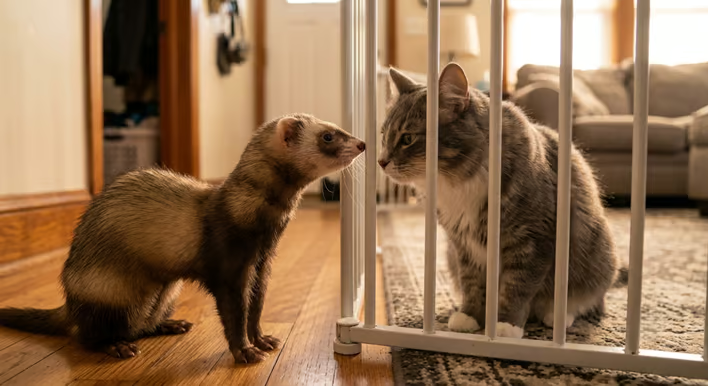
Let them see each other with something solid between them: a baby gate, a playpen panel, or the ferret safely in its cage with the cat allowed to approach and sniff. Keep these sessions short, five minutes or less to start, and end on a calm note every time, even if that means ending early. Repeat daily until both animals are relaxed and mildly bored by the sight of each other rather than fixated on it.
Week 3 — first supervised contact
This is the first real meeting, and it should be brief and controlled. Hold the ferret yourself, or have a second person hold the cat, and allow a short, close sniff, seconds, not minutes. A harness and leash on the ferret gives you an extra layer of control here. End the session while it’s still going well, not when things start to go sideways.
Week 4 and beyond — earning off-leash time
Once several restrained sessions in a row have been calm, allow short bouts of free interaction on neutral ground with both of you watching closely. Keep the cat’s escape routes open (a chair, a shelf, anywhere it can jump to feel safe) and make sure the ferret has somewhere small to retreat into if it wants space. Extend the sessions gradually.
Some pairs are trustworthy unsupervised within a month. Plenty of others take considerably longer, and a meaningful number of owners simply never stop supervising, which is a completely reasonable long-term choice, not a failure.
Living Together Day to Day: Food, Litter, and Shared Space
Once a ferret and cat are living together, two everyday hazards cause more problems than the introduction itself ever does: shared food bowls and shared litter boxes. Neither looks dangerous day to day, which is exactly why they get overlooked.
Why cat food and ferret food can’t be swapped long-term
A ferret stealing a bite of the cat’s food occasionally isn’t an emergency. A ferret living on cat food is a different story. Ferrets are obligate carnivores with a much higher protein and fat requirement than cats. Most cat food contains more plant-based filler than a ferret’s digestive system is built to handle. Long-term, that mismatch shows up as poor coat condition, weight problems, digestive trouble, and can even increase the risk of serious metabolic diseases like ferret insulinoma.
Feed them in separate rooms or on a schedule where one isn’t around while the other eats. Don’t leave a shared bowl of either food out unattended.
The litter box hazard most owners don’t know about
This is the detail nearly every guide glosses over: clumping clay cat litter is genuinely dangerous for ferrets. Ferrets nose into and sometimes mouth their litter out of simple curiosity, and clumping clay litter reacts with moisture, meaning it can clump inside a ferret’s digestive tract if ingested, which is commonly associated with a serious intestinal blockage. The fine dust these litters produce can also irritate a ferret’s respiratory tract.
Use a paper-based, non-clumping litter for the ferret’s own box, and keep it somewhere the cat’s clumping litter is genuinely inaccessible — not just discouraged, actually blocked off.
If your ferret starts refusing food, straining without producing stool or seems lethargic and hunched, that’s a potential blockage and it needs same-day attention from an exotic-experienced vet, not a wait-and-see approach. A general small-animal vet may not have the specific experience ferret digestive emergencies require.
Vomiting, straining in the litter box with little or no output, a hunched posture, or refusing food for more than a few hours in a ferret are all signs that warrant same-day veterinary attention — don’t wait to see if it resolves on its own.
What To Do If They Don’t Get Along
Not every pairing works out, and that’s worth saying plainly, because most guides gloss over it. If repeated sessions consistently produce hissing, hard bites, or genuine fear rather than caution, it’s reasonable to stop pushing the friendship and manage them as separate-space housemates instead, each with their own room or zone, fed and enriched independently, with supervised, controlled interaction only if and when you choose to try again later. That’s not a failure on your part or theirs. Plenty of perfectly happy multi-pet households run on parallel lives rather than shared ones.
Ultimately, if you are still wondering, ‘do cats and ferrets get along,’ the answer is yes — but it depends entirely on their individual personalities, your patience, and taking introductions one slow step at a time.
If you’re mid-introduction right now, what’s actually telling you more, the moments they’re curious about each other, or the moments one of them tenses up?
Frequently Asked Questions
DISCLAIMER
This guide covers general introduction principles for ferrets and cats and isn’t a substitute for a professional temperament evaluation, especially in households with a bite history, a high-prey-drive cat, or a very young kitten. When in doubt, consult an exotic-experienced vet or a certified animal behaviorist before proceeding.

Nadia Voss is an exotic small-mammal keeper and rescue volunteer with over a decade of experience fostering and rehabilitating domestic mustelids and various pocket pets. Her hands-on rescue work focuses on designing species-appropriate enclosures and managing multi-pet household dynamics. She writes Petwikia’s small-mammal care and behavior guides.