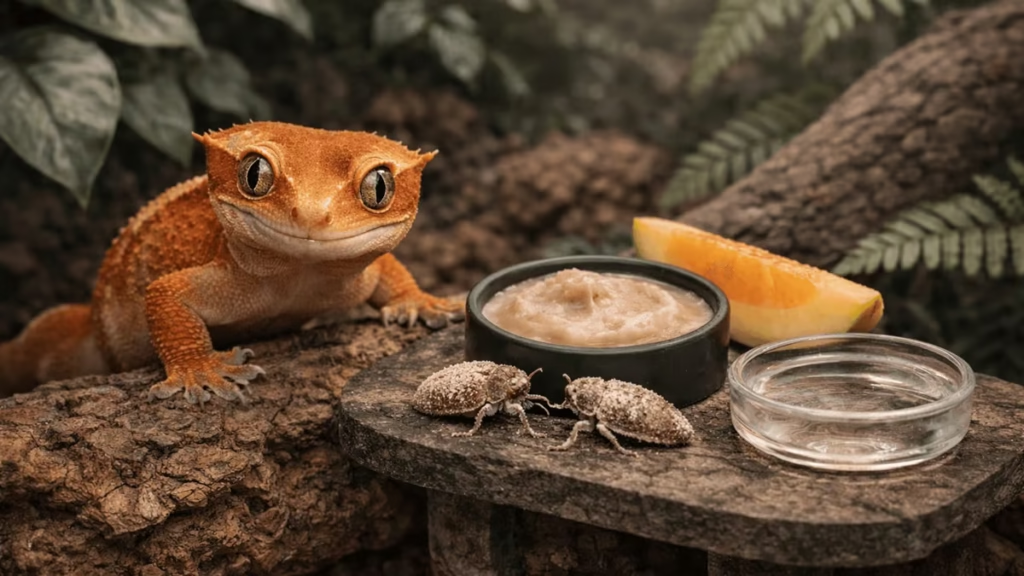
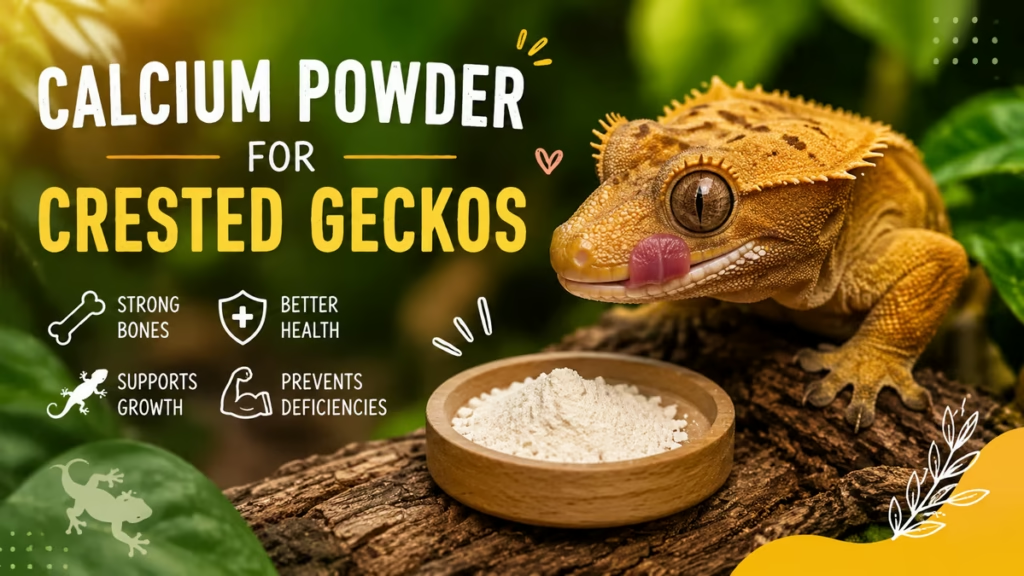
Calcium powder for crested geckos isn’t the blanket requirement most people assume it is. Two nearly identical tubs sit on the shelf — one with D3, one without — and the label won’t tell you which actually applies to your gecko. A lot of keepers end up over-supplementing without realizing a quality complete gecko diet already covers the calcium side of things. The powder earns its place the moment live insects enter the feeding rotation, and not really before that.
Calcium supplementation for crested geckos is simpler than the supplement aisle makes it look. The type of food your gecko eats, the insects you offer, and whether your enclosure has UVB lighting are the three variables that determine everything — which powder to use, how often to use it, and when you don’t need it at all. Get those three factors right and the rest follows naturally.
Here’s how each of those three variables works, and what it means for your gecko’s setup.
Why This Matters More Than It Seems
Crested geckos can’t synthesize vitamin D3 from sunlight the way a basking lizard does — especially indoors. In the wild, their calcium and D3 come from a varied diet of fruit, nectar, and insects, along with whatever incidental UV exposure filters through the rainforest canopy. Bring one into captivity and you have to reconstruct that entire system from scratch. Calcium is the part that falls apart first when a keeper misses a step.
A gecko’s blood calcium needs to stay within a narrow, tightly regulated range — often described in hobbyist and vet-adjacent sources as roughly 1% of blood volume — because calcium isn’t just structural. It drives muscle contractions, nerve signaling, and heart function. Bones are where the calcium lives; the rest of the body is where it works.
When dietary calcium consistently falls short, the body starts pulling from the skeleton to keep those systems running. Keep that up long enough and you get metabolic bone disease (MBD) — one of the most common and most preventable conditions in pet reptiles.
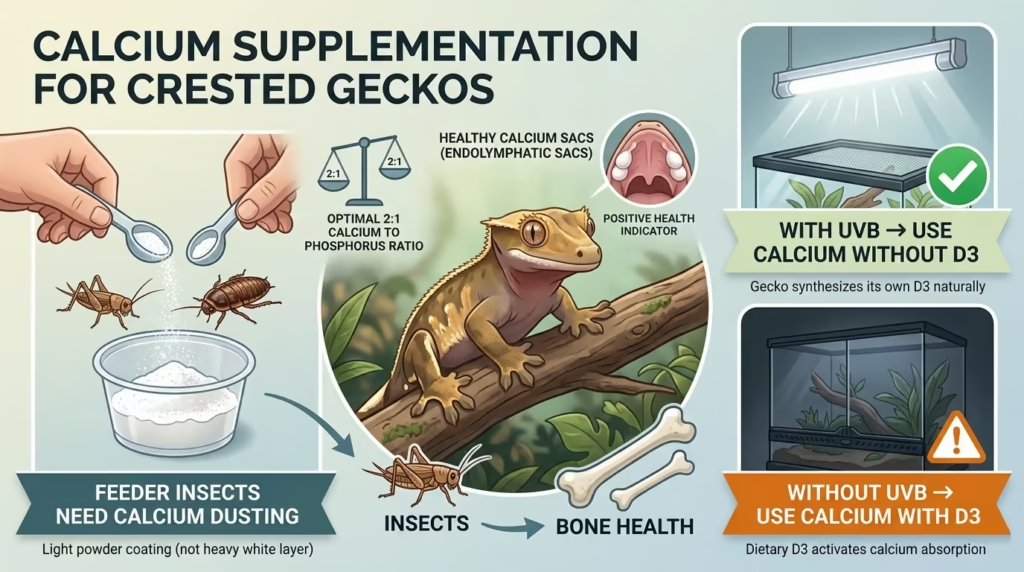
Here’s something most keepers don’t know: you can check your gecko’s calcium reserves without any equipment at all. Look at the roof of its mouth and you’ll find two pale, oval-shaped pouches just behind the upper jaw — those are the endolymphatic calcium sacs. Plump, white sacs are what you want to see. Flat, faded, or barely visible sacs can be an early sign that reserves are running low, well before any structural bone changes appear.
Do Crested Geckos Need Calcium Powder With CGD?
Here’s where a lot of advice gets muddled, so let’s be direct: a quality complete gecko diet like Repashy Crested Gecko MRP or Pangea is already formulated with a calcium-to-phosphorus ratio that’s already close to the 2:1 target reptiles need. Tipping extra calcium powder into that mix doesn’t make it safer — it just disrupts a ratio that was already working, and over-supplementation brings its own set of problems.
This is the part that surprises people: more calcium isn’t automatically better. A gecko that eats only CGD and never touches a live insect usually doesn’t need the supplement tub at all. The exception is breeding females — they burn through calcium fast during egg production and often do well with a shallow dish of plain calcium (no D3) left in the enclosure so they can self-regulate as needed.
The powder becomes non-negotiable the moment live insects enter the feeding rotation.
The Insect Problem: Why Dusting Isn’t Optional
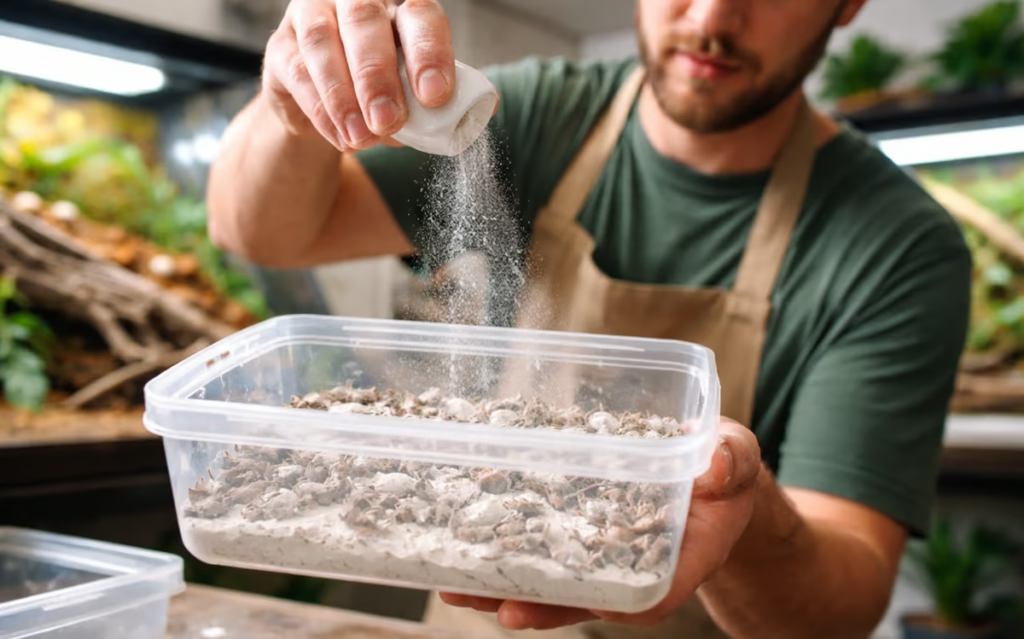
Feeder insects like crickets and dubia roaches come with a calcium-to-phosphorus ratio that’s backwards for reptile needs — sometimes as lopsided as 1:15 in favor of phosphorus. Offer them without correction and they’re actively working against calcium balance rather than contributing to it. Dusting isn’t optional here. It’s the fix for a nutritional deficit that’s baked into the insect itself.
The technique is simpler than most guides make it sound. Drop the feeders into a small bag or deli cup, add a light pinch of calcium powder, give it a gentle shake until there’s a thin, even coating on the insects, and offer them immediately. The goal is a light dusting — not a bug that looks like it’s been dredged in flour.
Calcium With D3, or Without? The UVB Question Decides It
Getting it wrong has real consequences. Click below to see the precise rule for your setup.
Stacking a D3 supplement on top of an already-strong UVB setup is a mistake worth flagging specifically, because it feels like extra insurance when it’s actually extra risk. Hypervitaminosis D, from too much D3, causes the body to absorb more calcium than it can use, which can lead to soft tissue calcification and kidney stress. More is not a safety margin here. It’s a different problem.
How Often: A Schedule by Life Stage
“Dust every insect feeding” is the safest catchall to follow, but how that plays out day-to-day shifts with your gecko’s age and diet setup.
| Life Stage | If Diet Is CGD-Only | If Diet Includes Insects |
|---|---|---|
| Juveniles (under 12 months) | No extra calcium typically needed if CGD is high quality | Dust every single insect feeding |
| Adults / Sub-adults (12-18+ months) | No extra calcium typically needed | Dust insects 2 to 3 times per week |
| Breeding females | Provide a shallow dish of plain calcium (no D3) available at all times | Dust every insect feeding, plus the calcium dish |
For baby and juvenile crested geckos under 12 months old, dusting every single insect feeding isn’t optional — it’s what supports the rapid skeletal development happening at that age and keeps Metabolic Bone Disease (MBD) from gaining a foothold. In practice, juveniles end up dusted more often than adults not because the rule is stricter, but simply because they’re eating insects more frequently to fuel all that growth.
Signs Your Gecko Might Be Calcium Deficient
Noticing something off with a gecko that depends entirely on you is a genuinely unsettling feeling, and a wavy or kinked tail tip is usually the first thing keepers spot and immediately spiral over. Worth taking a breath. A mildly wavy tail on its own — especially in a young gecko — isn’t automatically Metabolic Bone Disease (MBD). Plenty of hatchlings have naturally kinked tails that have nothing at all to do with calcium.
When dietary calcium consistently falls short of the body’s metabolic requirements, skeletal density is systematically stripped to support vital organ function — a condition called Metabolic Bone Disease (MBD)
What actually warrants concern is a pattern of symptoms showing up together — not a single isolated quirk:
Soft, rubbery, or receding lower jaw
Jaw loses firmness or shape
The lower jaw may feel pliable when gently touched, or appear to be pulling back or shrinking relative to the upper jaw — a sign of bone density loss in early to mid stages.
Visibly bowed, swollen, or curved limbs
Limbs look bent or enlarged
Long bones in the legs or arms may show visible curvature or swelling — structural changes caused by weakened or malformed bone tissue that can no longer support normal load.
Reluctance to climb or grip
Avoids movement that was normal before
When a crested gecko that previously climbed freely begins to hesitate, slip, or avoid gripping branches, it often indicates pain or weakness in the limbs or feet caused by bone softening.
Lethargy or noticeably reduced appetite
Low energy and less interest in food
General sluggishness and a drop in feeding drive can accompany many conditions, but alongside other signs in this list, they point toward systemic metabolic stress.
Tremors or loss of coordination
Shaking or unsteady movement
Involuntary muscle tremors or inability to move in a controlled way signal that the condition has progressed significantly and requires urgent veterinary attention.
Flattened or barely visible endolymphatic sacs
Calcium deposits in mouth gone or flat
Healthy crested gecko store calcium in visible white sacs inside the mouth. When these appear flat or absent, it indicates the body is actively depleting its calcium reserves.
If you’re seeing two or more of these at the same time, that’s the moment to stop guessing and get an exotic vet on the phone rather than experimenting with supplement adjustments yourself. MBD almost always builds from months of small supplementation gaps — not from one missed dusting session — so catching it early genuinely matters.
Two or more deficiency signs appearing together, any sign of tremors or loss of coordination, or a noticeable change in appetite alongside weak movement are reasons to contact an exotic veterinarian promptly rather than waiting to see if things improve.
Gut-loading your feeder insects for 24 to 48 hours before offering them does more for calcium balance than people give it credit for. A well-fed insect brings more nutritional value to the table before the calcium powder even gets involved, which means your dusting works with a better baseline instead of trying to compensate for an empty, undernourished feeder.
What Happens If You Give a Crested Gecko Too Much Calcium Powder?
Most keepers fixate on the risk of too little calcium. Too much is the quieter side of the same problem, and it’s worth knowing about because the symptoms look nearly identical to deficiency — which makes it easy to overcorrect in exactly the wrong direction.
When calcium intake exceeds what the body can use, blood calcium levels rise abnormally — a condition called hypercalcemia.
Symptoms of Calcium Overdose
- Wavy or kinked tail — one of the earliest and most recognisable signs
- Lethargy and reduced activity — gecko stops climbing or exploring normally
- Loss of appetite — refuses both CGD and insects
- Muscle weakness or trembling — caused by disrupted electrolyte balance
- Dehydration — especially when excess D3 is present alongside over-supplementation
- Trace mineral deficiencies — high calcium physically blocks absorption of zinc, magnesium, and iron in the gut
Over-supplementation usually occurs when calcium is added to a complete CGD diet (which already contains the correct amount), when free-feeding a calcium dish that contains D3, or when both a multivitamin and a separate calcium with D3 are used simultaneously. If you suspect overdose, stop all supplementation immediately and consult a reptile vet.
Can You Leave Calcium Powder in a Crested Gecko’s Enclosure for Them to Eat Freely?
A free-feed calcium dish is a genuinely useful practice — and pretty widely used — but the type of calcium you put in it matters more than most guides bother to explain.
The Rule is Simple: the dish always gets plain calcium without vitamin D3. When you dust insects on a schedule, you control how much goes in. A dish sitting in the enclosure has no dose control whatsoever — your gecko licks from it whenever it feels like it, as much as it wants.
Plain calcium without D3 is self-limiting in practice — the body handles excess calcium carbonate reasonably well. D3 is a different story. It’s fat-soluble, it builds up in the liver over time, and a dish containing D3 left in the enclosure indefinitely creates a slow toxicity risk that won’t be obvious right away but compounds quietly across weeks and months.
Put the dish up high rather than on the floor. Crested geckos are arboreal animals — they spend the vast majority of their time climbing, so a dish mounted on a branch or magnetic ledge is far more likely to actually be found and used than one sitting at ground level. Swap out the calcium every one to two weeks, or sooner if it gets damp or clumped, since moisture kills bioavailability.
How to Set Up a Calcium Dish Correctly
-
Choose the right calcium: Use only phosphorus-free, pure calcium carbonate powder without vitamin D3 (e.g., Repashy Supercal NoD or Zoo Med Repti Calcium without D3).
-
Use a tiny dish: A bottle cap or very small shallow dish works perfectly. Start with just a small pinch — enough to see, not a heap.
-
Place it high up: Crested geckos are arboreal. Mount the dish on a branch or wall ledge — they are far more likely to discover and use it at height than on the enclosure floor.
-
Refresh regularly: Replace the calcium powder every 1–2 weeks or sooner if it becomes damp, clumped, or contaminated. Wet calcium loses its bioavailability.
-
Especially important for breeding females: Laying females frequently seek out and consume calcium independently, making a free-feed dish particularly beneficial during breeding season.
Crested geckos are actually pretty decent at self-regulating plain calcium intake — they tend to lick from the dish when their body signals a need for it. That instinct is worth having working in your favor, but it’s not reliable enough to replace a structured dusting schedule. The free-feed dish is a safety net between feedings, not a stand-in for consistent supplementation.
Common Mistakes Worth Avoiding
A lot of calcium problems aren’t actually calcium problems. They’re setup and structure problems that just happen to show up as calcium symptoms.
- Adding calcium powder to a complete CGD bowl without a specific reason to do so
- Using a D3 supplement on a gecko that already has strong UVB coverage
- Dusting insects so heavily they look frosted instead of lightly coated
- Skipping gut-loading and expecting the powder to compensate on its own
- Treating early MBD symptoms as something to monitor for a few more weeks instead of a vet visit
Most Commonly Asked Questions
Calcium management is a crucial piece of your gecko’s health puzzle, but it’s part of a bigger picture. If you are setting up a new habitat or just starting out, don’t miss the full overview for a thriving pet.
Crested Gecko Care SheetBottom Line
Calcium powder for crested geckos earns its place in one specific spot: on feeder insects, not mixed into the CGD bowl. The complete diet handles the heavy nutritional work. UVB lighting determines whether the powder you reach for needs D3 or not. Keep the dusting light, stay consistent with gut-loading, and watch for symptom patterns rather than isolated quirks.
A gecko that’s climbing normally, eating consistently, and showing a solid jawline with visible calcium sacs is a gecko that’s being taken care of correctly.
DISCLAIMER
This article is for informational purposes only and isn’t a substitute for professional exotic veterinary care. Every gecko’s needs vary based on age, health history, UVB access, and diet. Always consult a qualified exotic veterinarian before changing your pet’s supplement routine, and especially if you notice signs of metabolic bone disease.
REVIEWED BY: Christina Koch, RVT, for clinical accuracy.
Sarah Jenkins is a Research-based exotic pet nutrition and health writer, specializing in evidence-based feeding practices and deficiency-prevention topics (e.g. Metabolic Bone Disease) in reptiles and small mammals. She writes Petwikia’s diet and supplementation content.