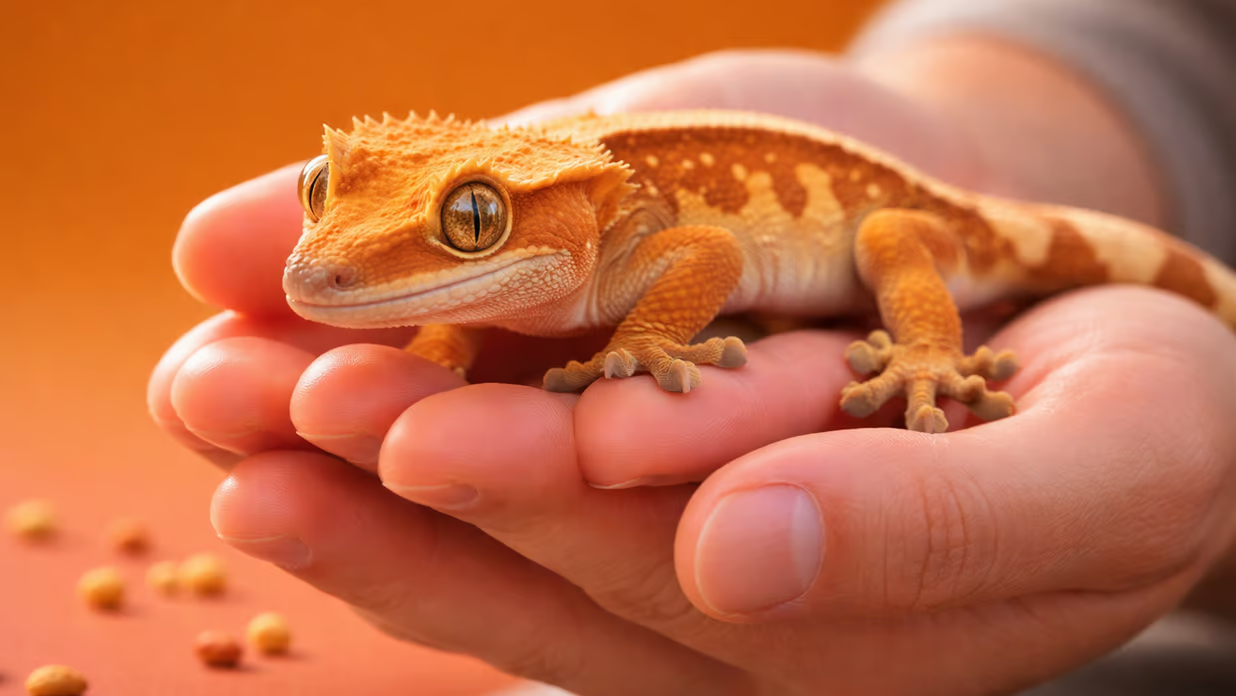
So you finally got your first crested gecko and you’re excited to start crested gecko handling. But every time you open the enclosure, your little guy shoots to the back corner like you’re a giant predator. When you do manage to scoop him up, he bounces frantically between your hands, whips his tail around, and lets out that adorable rubber-duck squeak (which actually means “please put me down!”).
Here’s what most new crestie keepers don’t realize. Those defensive behaviors aren’t permanent. With the right approach, your jumpy gecko can become a calm, handleable pet within 4-8 weeks. The key isn’t forcing interaction. It’s understanding how arboreal geckos perceive threat and methodically building their trust through predictable, choice-based exposure.
Here’s the proven protocol:
Crested gecko handling follows 4 phases over 4-8 weeks: Settling-In (2-3 weeks hands-off), Hand Presence (week 4-5), First Touch & “Treadmilling” (week 6-7), and Routine Handling (week 8+). Each phase has specific success criteria you must meet before advancing. Rush the process or skip phases, and you’ll trigger regression or worse, permanent tail loss. Follow this protocol consistently with 5-minute sessions every other day. Most cresties reach basic handling tolerance within 6-8 weeks. Success comes down to three things. Those are Patience, proper body support, and learning to read their stress signals.

Understanding Crested Gecko Handling
Let’s clear up the biggest misconception right away. Your crested gecko will never “love” being handled the way a dog enjoys belly rubs. Cresties lack the neurological complexity for attachment or affection. When we talk about a tame crested gecko, we’re describing an animal that’s learned you’re not a predator. That’s it. They’ve habituated to your presence and handling through repeated, non-threatening exposure, not because they’ve bonded with you emotionally.
This distinction matters because chasing emotional connection leads to over handling. Research in reptile cognition shows geckos process handling as a neutral event at best, a stressful event at worst. They don’t seek your company. They tolerate your interaction when you do it right.
Habituation vs. Training – The Critical Difference
Training implies teaching specific behaviors through reward systems. Dogs learn “sit” because treats follow. Crested geckos don’t work that way. You’re not training them, you’re desensitizing them to handling through gradual exposure. This process is called habituation. Your gecko’s nervous system learns to stop reacting when nothing bad happens.
Each calm handling session teaches your gecko: “Hand appears, nothing bad happens, hand leaves.” After enough repetitions, the defensive response diminishes. The gecko doesn’t “choose” to trust you consciously. Its nervous system simply stops triggering flight-or-fight responses when you approach.
Realistic Timeline Expectations for Crested Geckos
Most crested geckos guides throw around vague timelines like “a few weeks” or “be patient.” That’s useless. Here’s what actually happens with proper protocol:
Phase 1: Settling-In (Weeks 1-3) Your gecko hides constantly, refuses to eat in your presence, and may fire up (brighten colors) when you approach. This is normal. Don’t attempt handling. Just exist near the enclosure during feeding and misting.
Phase 2: Hand Presence (Weeks 4-5) Still hand in enclosure, no grabbing. Gecko should progress from fleeing immediately to ignoring your hand within 7-14 days. Some individuals take longer. Arboreal species often need 3 weeks at this phase.
Phase 3: First Touch & Movement (Weeks 6-7) Initial handling sessions of 5 minutes every other day. Expect jumping, tail wagging, and squeaking for the first 5-10 sessions. That’s the hardest part for most keepers. It feels like you’re stressing them out (you are, mildly), but this controlled exposure is necessary for habituation.
Phase 4: Confident Handling (Week 8+) Gecko tolerates 15-20 minute sessions without stress displays. Moves calmly between hands, may even pause to lick you (scent-gathering, not affection). You’ve reached the goal.
Individual variation is massive. Some cresties hit Phase 4 in 4 weeks. Others plateau at Phase 3 for months. Genetics, early handling history, and individual temperament all factor in. If your gecko isn’t progressing on this timeline, you haven’t failed—you may just have a naturally shy individual.
Defining Success – What “Handleable” Actually Looks Like
A fully tamed crested gecko:
- Doesn’t flee when you open the enclosure
- Remains calm (normal coloration, relaxed posture) during 15-20 minute handling
- Moves deliberately between hands rather than frantic jumping
- Resumes normal behavior (exploring, eating) within 10 minutes of being returned to enclosure
A fully tamed gecko does NOT:
- Seek you out for interaction
- “Enjoy” handling in any measurable way
- Stop being arboreal (they’ll still jump—it’s hardwired)
- Tolerate unlimited handling duration
If your gecko meets those first four criteria, you’ve succeeded completely. Everything beyond that is asking for more than their neurology allows.
The Foundation – Critical Prerequisites Before ANY Handling
Skip this section and you’ll waste weeks fighting preventable problems. A stressed, sick, or improperly housed crested gecko will never habituate to handling. You can’t tame your way out of bad husbandry.
Perfect Husbandry is Non-Negotiable (Verification Checklist)
Before Phase 1 even begins, run through this crested gecko care checklist. One “no” means you fix that issue before moving forward.
Temperature:
- [ ] Daytime: 72-78°F (ambient)
- [ ] Nighttime: 68-72°F
- [ ] NEVER exceeding 80°F (heat stress threshold for cresties)
- [ ] Verified with digital thermometer, not analog stick-on
Humidity:
- [ ] 60-80% during evening/night (misting period)
- [ ] Drops to 40-50% during day (crucial dry-out period)
- [ ] Verified with digital hygrometer
- [ ] No constant 100% humidity (causes respiratory infections)
Enclosure Setup:
- [ ] Minimum 18x18x24″ for adults (height is critical—they’re arboreal)
- [ ] Dense foliage in upper two-thirds of enclosure
- [ ] Multiple perches at different heights
- [ ] At least 3 hiding spots (cool, warm, humid)
- [ ] Elevated food/water dishes
Location:
- [ ] NOT in high-traffic area or bedroom (nocturnal activity will wake you)
- [ ] Away from windows (temperature fluctuations, no direct sun exposure)
- [ ] Away from household pets that might stress the gecko
If you checked “no” for any temperature, humidity, or enclosure items, fix those immediately. A gecko kept at 82°F, misted once daily, in a 10-gallon horizontal tank will never tame properly because they’re in survival mode, not learning mode.
The Mandatory Settling-In Period (2-3 Weeks Hands-Off)
This isn’t optional or negotiable. New arrivals need 14-21 days of zero handling to establish baseline security. During this period, your gecko’s stress hormones are already elevated from transportation, new sounds, new smells, and territorial insecurity. Adding handling on top creates chronic stress that manifests as feeding refusal, immune suppression, and behavioral shutdown.
What to do during settling-in:
- Feed on normal schedule (every 2-3 days for adults)
- Mist as scheduled (daily or twice daily)
- Speak softly during maintenance (voice association begins here)
- Observe from 3-6 feet away (don’t stare directly into enclosure)
What NOT to do:
- Open enclosure except for feeding/misting
- Rearrange decorations
- Introduce new tankmates (if you have multiple, though solo housing is strongly recommended)
- Attempt any handling “just to check on them”
Success markers at 2-3 weeks: By day 14-21, your gecko should be eating normally, thermoregulating (moving between zones), and emerging during active hours (evening/night). If they’re still hiding 23+ hours daily or refusing food, extend settling-in another week.
Further Study
For an exhaustive breakdown of CGD brands, insect gut-loading protocols, supplementation schedules by life stage, and troubleshooting picky eaters, continue your research below.
Complete Crested Gecko Diet GuideHealth Assessment – When to Pause and See a Vet
Sick geckos are defensive geckos. Before starting any handling protocol, verify your crestie is healthy.
RED FLAGS requiring exotic vet visit:
- Weight loss or visible hip bones (sign of wasting)
- Lethargy during active hours (should be active at night)
- Mouth gaping unrelated to handling (possible mouth rot)
- Labored breathing or wheezing
- Runny or discolored feces lasting more than 48 hours
- Visible injuries, stuck shed on toes/tail
- Kinked spine or limb deformities (possible MBD)
YELLOW FLAGS requiring close monitoring:
- Slight color dulling (could be pre-shed, not stress)
- Decreased appetite (if persists beyond 1 week, see vet)
- Minor shedding issues (increase humidity first)
Never attempt to tame a gecko showing red flags. Handle only for veterinary transport. A gecko in pain or illness perceives all interaction as threatening, and forced handling can literally kill them through stress-induced cardiac events.
Stress Indicator Recognition – Is Your Crestie Ready?
Even with perfect husbandry and health clearance, you need to assess current stress levels before beginning handling. Watch your gecko during evening hours for three consecutive nights. Document what you see.
READY FOR PHASE 1 🟢
- Emerges from hide within 30-60 minutes of lights-off
- Explores enclosure actively (climbing, jumping between perches)
- Feeds readily when food is presented
- Normal coloration (not fired up constantly)
- Aware of your presence but doesn’t flee when you’re 3+ feet away
NOT READY 🔴
- Hides 23+ hours daily
- Fires up (color brightens) whenever you approach
- Refuses food for 2+ feedings
- Glass surfing or frantic pacing
- Tail wagging at nothing (generalized stress, not handling-specific)
If you’re seeing red light behaviors at the 2-3 week mark, something’s wrong with environment or health. Don’t proceed. Troubleshoot husbandry first, then reassess in another week.
Reading Crested Gecko Body Language – Your Most Critical Skill

You can’t tame what you can’t read. Understanding crested gecko behavior through body language and vocalizations is your most critical skill. Miss the signals, and you’ll push them past tolerance into defensive panic, or worse, trigger permanent tail loss.
The 5-Level Stress Escalation Ladder
Gecko stress isn’t binary (calm or terrified). It’s a ladder with five distinct rungs. Learning to recognize each level tells you exactly when to advance, pause, or back off during handling.
Level 1: Awareness (Minimal Stress)
Observable signs:
- Alert posture, head raised
- Eyes tracking your movement
- Tongue flicking (scent-gathering, not stress)
- Body remains relaxed, normal coloration
Meaning: “I see you. I’m monitoring the situation, but I’m not alarmed.”
Your action: This is perfect. Continue whatever you’re doing. Level 1 is your target during all handling sessions.
Level 2: Discomfort (Mild Stress)
Observable signs:
- Slight color brightening (firing up begins)
- Body tensing (muscles no longer loose)
- Subtle retreat (backing up slowly, not fleeing)
- Freezing in place (stress freeze common in cresties, easily mistaken for calm)
Meaning: “You’re too close. I’m uncomfortable but not panicking yet.”
Your action: Slow your movements. Maintain current distance. Don’t advance until gecko returns to Level 1. This level is common in Phase 2-3 and usually resolves in 2-5 minutes if you stop escalating.
Stress freeze looks like calm to beginners. The difference: calm geckos have relaxed muscles and normal coloration. Frozen geckos are tense, bright-colored, and motionless. If you see freeze, you’re at Level 2 minimum, possibly Level 3.
Level 3: Warning (Moderate Stress)
Observable signs:
- Tail wagging or shaking (side-to-side movement)
- Vocalizations (squeaking, chirping sounds)
- Mouth gaping (open mouth, no lunging)
- Full firing up (maximum color contrast)
- Rapid directional changes (looking for escape routes)
Meaning: “Back off immediately or I will escalate to defensive action.”
Your action: STOP. Freeze your hand position. Don’t retreat suddenly (that can trigger chase response), but don’t advance. Wait 30-60 seconds. If gecko doesn’t calm to Level 2, end the session. Return to enclosure gently.
This is your red line during taming. Sessions that repeatedly push geckos to Level 3 cause sensitization (they get MORE defensive over time, opposite of habituation).
Level 4: Defensive Action (High Stress)
Observable signs:
- Jumping frantically (escape attempts, not exploratory movement)
- Tail thrashing violently
- Lunging or quick directional strikes (usually doesn’t connect)
- Defecation/urination (fear response)
- Heavy breathing (visible chest expansion)
Meaning: “I feel cornered. I must escape or defend myself.”
Your action: Immediately but calmly return gecko to enclosure. Don’t jerk hand away if they’re mid-jump—this can cause injury. Wait 48 hours before next session. When you resume, drop back one phase.
If you’re regularly seeing Level 4, you’re moving too fast through the protocol or your gecko has handling trauma. Pause all handling for 1 week, then restart at Phase 1.
Level 5: Extreme Defense/Tail Drop (Severe)
Observable signs:
- Sustained lunging or biting attempts
- Spinning or whipping movements
- TAIL DROP – gecko voluntarily detaches tail
Meaning: “This is life-or-death. I’m sacrificing my tail to survive.”
Your action: If tail drops, immediately place gecko in enclosure without further handling. Clean up dropped tail (it will continue moving for several minutes. This is normal). Do NOT attempt to “help” the gecko or apply anything to the wound. Monitor for signs of infection (redness, swelling, discharge).
Recovery protocol: Zero handling for 3-4 weeks minimum. When you restart, begin at Phase 1 even if gecko was previously tame. Many cresties become more defensive post-tail-drop because they’ve learned the behavior “works.”
Tail drop is almost always preventable. It happens when you ignore Level 2-4 warnings or grab the tail directly. Cresties who drop tails during handling typically had multiple warning displays you missed.
Species-Specific Body Language: Crested Gecko Edition
Unlike snakes (which hiss) or monitors (which tail-whip), crested gecko behavior includes unique tells you won’t see in other reptiles. Learning these species-specific signals separates successful taming from perpetual stress.
| Behavior | What It Looks Like | Stress Level | Action Needed |
|---|---|---|---|
| Firing Up | Colors brighten dramatically, dark parts darker, light parts lighter | Level 2-3 | Slow approach, assess other signs |
| Firing Down | Colors dull to pale tan/gray | Level 1 (rest mode) | Normal during day, concerning if constant at night |
| Tail Wag | Side-to-side swishing motion, tail held over back | Level 3 | Stop advancing immediately |
| Squeaking/Chirping | Rubber-duck sound, usually during handling | Level 3 | Return to enclosure |
| Licking | Tongue flicks on hand/arm | Level 1 | Normal scent-gathering, not affection |
| Leaping | Jumping from hand to hand OR away | Level 1-4 (context-dependent) | See below |
The Jumping Dilemma: Crested geckos are hardwired to jump. It’s how they navigate trees. Not all jumping means stress. Context matters.
Calm jumping (Level 1):
- Deliberate, controlled leaps
- Gecko pauses between jumps
- Lands on hands, doesn’t try to leave your grip entirely
- Normal coloration maintained
Stress jumping (Level 4):
- Frantic, erratic leaps in any direction
- No pausing, continuous escape attempts
- Fired up colors
- Accompanied by tail wagging or squeaking
If you can’t tell the difference yet, assume all jumping is stress until you’ve completed 10+ sessions and learned your individual gecko’s baseline.
Calm Body Language – Success Indicators
When your gecko shows these signs during handling, you’re doing it right:
- Relaxed posture: Body loose, not tense, legs slightly splayed
- Normal coloration: Not fired up, natural daytime or nighttime colors
- Exploratory movement: Slow, deliberate climbing on hands and arms
- Tongue flicking: Scent-gathering behavior, indicates curiosity
- Pausing: Gecko stops moving, sits calmly on hand for 10+ seconds
- No vocalizations: Silent handling = comfortable handling
You won’t see all of these in Phase 3. But by Phase 4 (week 8+), a fully tamed crestie should display most of them during every session.
Phase 1: Settling-In (Weeks 1-3) – Building Foundational Safety
I know you’re eager to hold your new gecko. Don’t. The fastest way to create a permanently defensive crestie is to start handling too soon. Mastering crested gecko handling starts with patience, not action. This phase isn’t passive. You’re actively building associations between your presence and safety.
Daily Protocol and Session Structure
Duration: 10-15 minutes daily, every day
Time: Evening, as lights turn off (when cresties naturally become active)
Location: Sit 3-6 feet from enclosure
What to do:
- Approach enclosure calmly, no sudden movements
- Speak softly (optional, but helps with voice association)
- Perform evening maintenance: mist enclosure, refill water, present food
- Remain near enclosure for 10-15 minutes while gecko emerges
- Engage in calm activity (reading on phone, quiet conversation)
- Leave without attempting any interaction with gecko
Advanced technique – Hand-feeding initiation (optional): If your gecko is comfortable eating in your presence by day 10-14, you can introduce tong-feeding insects. Hold insect with feeding tongs 2-3 inches from gecko. Let THEM approach and take it. Never hand-feed directly (teaches hand = food, causes future bite issues).
Success Criteria and When to Advance
Don’t move to Phase 2 until ALL of these are true for 3 consecutive days:
- ✅ Gecko emerges from hide within 30 minutes of your presence
- ✅ Continues normal activity (climbing, exploring) while you’re nearby
- ✅ Feeds readily during scheduled feeding times
- ✅ No firing up when you approach within 3 feet
- ✅ Normal coloration maintained during your presence
Typical timeline: Most cresties hit these markers by day 14-21. Some take 28+ days, especially wild-caught or rescue animals with handling trauma.
Troubleshooting Common Phase 1 Issues
“Still hiding after 3 weeks”
Possible causes:
- Enclosure placement (too much noise, light, or traffic)
- Temperature outside comfort zone (verify with digital thermometer)
- Not enough hides (need minimum 3)
- You’re watching too intently (geckos sense being stared at)
Solutions:
- Move enclosure to quieter location
- Add more foliage/hides in upper portion of tank
- Reduce time spent observing to 5 minutes, increase distance to 6+ feet
- Extend Phase 1 another 2 weeks
“Defensive when I open enclosure for feeding”
This is normal. Opening the enclosure = entering their territory. Most cresties fire up or retreat during feeding for the first 2-3 weeks. What matters is whether they RESUME normal activity after you close the enclosure.
If defensive displays PERSIST for 10+ minutes after you leave:
- Your approach is too fast (slow down door opening to 3-5 seconds)
- Feed at a different time (some cresties are territorially defensive at specific hours)
- Feed from top access point if using front-opening terrarium (less threatening)
Phase 2: Hand Presence (Weeks 4-5) – Introducing Your Scent
Your gecko now tolerates your existence outside the tank. This is where crested gecko handling begins transitioning from observation to interaction. Time to introduce the thing that’ll eventually hold them: your hand. This phase has the highest failure rate because impatient keepers grab instead of just being present.
The “Still Hand” Technique and Why It Works
The principle is simple: your hand becomes part of the landscape. Just another branch in the tree. Cresties need to learn your hand isn’t a predator, isn’t food, isn’t threatening. It just exists.
Step-by-Step Protocol
Before EVERY session:
- Wash hands with unscented soap (food smells trigger bite responses)
- Wait 5 minutes for hands to return to room temperature (cold hands feel alien)
- Open enclosure slowly (3-5 second lid movement)
During the session (10 minutes):
- Rest hand palm-down in neutral zone – NOT near gecko, NOT near favorite perch
- Hand position: flat, fingers together, relaxed (not tense or hovering)
- Place hand on substrate or low branch (geckos perceive at-ground-level as less threatening than mid-air hand)
- DO NOT MOVE for the entire 10 minutes
- If gecko approaches, don’t react (no finger movements, no hand adjustment)
- If gecko climbs on hand, remain still for 30-60 seconds, then gently tilt hand to encourage them to step off
- End session by slowly withdrawing hand (3-5 second movement to exit)
Frequency: Daily for first week, every other day for second week
Common Mistakes
Mistake 1: Chasing with hand If gecko retreats when you put hand in, new keepers instinctively move hand closer (“I’ll just get a little closer to make it easier for them”). This is predator behavior. Predators chase. Branches don’t chase.
Fix: Keep hand in original position even if gecko is on opposite side of tank. Let THEM decide when to investigate.
Mistake 2: Moving fingers during session Even tiny finger movements signal “this thing is alive and might grab me.” Keep hands dead still.
Fix: If you get an itch or need to adjust position, remove hand from tank entirely, reset, then reintroduce.
Mistake 3: Putting hand near favorite spots Your gecko has 2-3 preferred perching locations. Blocking those spots with your hand creates territorial stress, not habituation.
Fix: Map out where gecko spends most time during first 3 nights of Phase 2. Place hand in least-used area.
Success Criteria and Advancement Signs
Advance to Phase 3 when ALL of these occur during hand presence sessions:
- ✅ Gecko ignores hand completely (doesn’t flee, fire up, or watch it constantly)
- ✅ Investigates hand voluntarily (approaches, licks, or climbs on it at least once)
- ✅ Maintains Level 1 body language entire session
- ✅ No defensive displays when hand enters or exits tank
Typical timeline: 7-14 days. Nervous individuals may need 21 days.
Species-Specific Modifications for Arboreal Cresties
Standard reptile taming protocols put hands at substrate level. That doesn’t work well for crested geckos. They’re arboreal. They spend 90% of time in upper portions of tank.
Modification: After first 3-4 sessions at substrate level, move hand to mid-level perch. Rest hand on branch or secured vine 12-18 inches above substrate. This meets them in their comfort zone.
Why it matters: Forcing arboreal species to interact at ground level adds unnecessary stress. They perceive ground as exposed territory where predators strike.
Phase 3: First Touch & Movement (Weeks 6-7) – The “Treadmilling” Method

This is where most keepers mess up. They’ve gotten the gecko comfortable with a still hand, then suddenly grab. That’s like learning to trust a stationary car, then having it suddenly accelerate at you. The key to Phase 3 is working WITH the crestie’s instinct to jump, not fighting it.
The Choice Method vs. Scoop Method – When to Use Each
Crested geckos have strong opinions about handling initiation. Some will voluntarily approach hands (rare). Most prefer to be scooped (common). A few will tolerate neither and need alternate methods (5-10%).
Choice Method (Preferred for Calm Individuals)
When to use: If your gecko climbed on your hand voluntarily during Phase 2
Success rate: High (80%+) for geckos showing exploration behavior
Protocol:
- Place hand in tank at familiar spot (same location used in Phase 2)
- Wait for gecko to approach and climb on
- When gecko is mid-hand (not near edges), slowly tilt hand upward 30 degrees
- This encourages gecko to move toward wrist to maintain grip
- Very slowly lift hand 2-3 inches off perch
- Hold position for 30 seconds
- Lower back to original perch
- Let gecko step off voluntarily
Duration: Start with 30-second lifts, increase by 15 seconds each session
Scoop Method (Standard for Most Cresties)
When to use: If gecko avoided hand during Phase 2 or froze instead of investigating
Success rate: Moderate (60-70%) for geckos with normal defensive responses
Protocol:
- Approach gecko from SIDE, never from above (above = predator approach)
- Position both hands in L-shape: one hand behind gecko, one in front
- Gently “herd” gecko onto front hand by slowly bringing rear hand closer
- Support entire body: one hand under chest, other supporting hindquarters
- Lift smoothly and slowly (take 3-5 seconds to fully lift)
- Immediately begin “treadmilling” (see next section)
Grabbing from above. Cresties’ predators (birds, snakes) attack from above. Approaching from above triggers maximum defensive response. Always approach horizontally.
The “Treadmilling” Technique – Working with Jump Instinct
Here’s what makes crested geckos different from terrestrial lizards: they’re hardwired to leap. In the wild, they travel by jumping branch to branch. When you hold them, they’re not trying to escape (usually)—they’re trying to “travel” to the next perch.
Fight this instinct, and you get frantic jumping, tail drop, and stress. Work WITH it, and you get calm handling.
The Treadmilling Method:
Think of your hands as an infinite tree. As gecko prepares to jump from one hand, you place your other hand 2-3 inches in front where they’re aiming. They land on that hand. Repeat as they prepare to jump again. This creates a loop: gecko constantly moves forward, but never actually goes anywhere.
Hand positioning:
- Keep hands horizontal (parallel to ground)
- Maintain 2-3 inch gap between hands
- Non-dominant hand is “landing pad,” dominant hand is “launch pad”
- Rotate roles with each jump
What you’ll see in early sessions (first 5-10):
- Rapid jumping (gecko may make 10+ jumps in first minute)
- Tail wagging between jumps
- Occasional squeaking
- Fired-up coloration
This is normal. You’re not harming them. They’re mildly stressed but learning that jumping doesn’t end in escape OR being grabbed forcefully. After 5-7 sessions, jumping frequency decreases as gecko learns hands are “safe trees.”
What you’ll see in later sessions (session 10+):
- Slower, more deliberate movement
- Pausing on hands for 5-10 seconds between jumps
- Normal coloration returns
- Occasional tongue flicking (scent-gathering)
Body Support Rules for Crested Geckos
CRITICAL – NEVER GRAB THE TAIL
This can’t be emphasized enough. Crested gecko tails detach when grabbed, squeezed, or pulled. Unlike leopard geckos or bearded dragons, crestie tails do not regenerate. Ever. Once dropped, your gecko is permanently tailless.
Proper support technique:
Position 1 – The Platform (preferred for calm geckos):
- Hand flat, palm up
- Gecko rests on palm, all four feet touching hand surface
- No grasping, no cupping, completely open hand
- Your hand is a platform, not a restraint
Position 2 – The Gentle Cradle (for jumpy geckos):
- Palm up, fingers slightly curved (not curled tight)
- Thumb and index finger create gentle “walls” along gecko’s sides
- Never close fingers around body
- Think “guiding” not “holding”
What NOT to do:
- ❌ Cup hands around gecko (they feel trapped)
- ❌ Hold tail for stability (causes tail drop)
- ❌ Squeeze body (causes panic)
- ❌ Restrain limbs (can break delicate toes)
Falling protocol: Since cresties WILL occasionally leap away from hands entirely, always handle over soft surface. Sit on bed, couch, or carpeted floor. Keep handling height LOW (6-12 inches max above surface). If gecko does fall, don’t panic-grab—let them land and calmly re-scoop.
Session Duration and Frequency Guidelines
Phase 3 sessions:
- Week 6: 5 minutes every other day
- Week 7: 7-10 minutes every other day
- Increase duration only if gecko shows calm jumping or pausing between jumps
Maximum: 15 minutes per session, even for calm individuals Minimum rest: 48 hours between sessions (never daily in Phase 3)
Why every other day? Reptiles need recovery time to process habituation. Daily handling during Phase 3 creates chronic stress without giving nervous system time to reset. You’ll actually SLOW taming progress.
Success Criteria and Common Setbacks
The most critical milestone in crested gecko taming happens here. This is where most keepers see breakthrough progress or plateau.
Advance to Phase 4 when:
- ✅ Gecko tolerates 10-minute sessions without constant jumping (3-5 jumps max)
- ✅ Pauses on hands for 10+ seconds between movements
- ✅ Level 1-2 body language throughout session (no Level 3+)
- ✅ Returns to normal behavior within 5-10 minutes of being returned to enclosure
Common setbacks:
“Musking during every pickup”
Crested geckos occasionally defecate or urinate when startled. This is a mild defense mechanism.
Solution: Keep paper towel handy. Clean calmly without reacting. Continue session for 2-3 minutes AFTER musking (don’t teach them “poop = freedom”). Most cresties stop this behavior within 10-15 sessions.
“Tail wagging gets worse, not better”
Analysis: You’re advancing too fast or handling during shed/breeding season.
Solution:
- Check for pre-shed indicators (dull color, cloudy eyecaps)
- If shedding, pause all handling until 48 hours post-shed
- If not shedding, drop session duration to 3 minutes
- Increase rest period to 3-4 days between sessions
“Dropped tail during session”
Immediate response:
- Calmly place gecko back in enclosure
- Don’t apply anything to wound (it will heal naturally)
- Remove dropped tail from tank (it will continue twitching for 10-20 minutes)
- Monitor gecko for infection signs over next 2 weeks
Recovery protocol:
- Zero handling for 4 weeks minimum
- When restarting, begin at Phase 2 (hand presence), not Phase 3
- Accept that gecko may never reach same comfort level as before
- Many post-tail-drop cresties remain permanently defensive
Phase 4: Routine Handling (Week 8+) – Solidifying Trust
Your gecko now tolerates brief handling sessions without major stress. You’ve learned the fundamentals of handling a crested gecko safely. Time to build consistency and extend duration to the maximum safe threshold: 15-20 minutes.
Establishing Predictable Sessions (Timing, Duration, Location)
Cresties thrive on routine. Random handling at random times creates unpredictability, which equals stress. Structure matters.
Optimal timing:
- Evening, 30-60 minutes after lights-off
- When gecko is naturally active (you’ll see them moving around enclosure)
- NOT during feeding time (creates food-aggression)
- NOT during daytime hours (disrupts circadian rhythm)
Session structure:
- Minutes 0-2: Slow pickup using scoop method, allow gecko to settle
- Minutes 3-12: Treadmilling or hand-to-hand movement, let gecko set pace
- Minutes 12-15: Slow movement, encouraging gecko to pause on hands
- Minutes 15-18: Return to enclosure, place gecko on favorite perch
- Post-session: Observe for 5 minutes to confirm they resume normal behavior
Frequency: 2-3 times per week MAXIMUM
More frequent handling doesn’t equal stronger habituation. Over-handling causes:
- Chronic stress (elevated cortisol even when not being handled)
- Feeding refusal
- Lethargy or hyperactivity (both stress responses)
- Regression to defensive behaviors
When NOT to Handle
Even tame geckos have off-limits periods where handling causes undue stress:
Absolute no-handling periods:
- Shed cycle: Eyes cloudy/skin dull = pre-shed. No handling until 48 hours after shed completes
- First 48 hours post-feeding: Digestion is energy-intensive; handling can cause regurgitation
- Visible illness: Lethargy, abnormal breathing, diarrhea, weight loss
- Post-tail drop: 4+ weeks recovery time needed
Proceed with caution periods:
- Breeding season: Males become territorially aggressive (typically spring/summer)
- After enclosure changes: New decorations, substrate changes create territorial stress
- Heatwaves: If temps exceed 80°F, all handling should pause (heat stress risk)
Long-Term Maintenance Protocol
Congratulations !! you have a tame crested gecko. Now the goal is maintaining that habituation level without regression.
Maintenance schedule:
- Handle 1-2 times per week minimum (less than this = habituation fades)
- Keep sessions 10-15 minutes (no need for 30+ minute sessions)
- Continue treadmilling technique even when gecko is calm (prevents them from feeling restrained)
Handling gaps to avoid: Don’t go 4+ weeks without any handling. Life happens (vacations, busy work periods), but extended gaps cause partial regression. You won’t restart from zero, but expect 2-3 sessions of rehabituation after month-long breaks.
Success Criteria – What “Fully Tamed” Looks Like
You’ve reached the endpoint when your gecko consistently displays:
- ✅ Calm during enclosure opening (no fleeing, may approach door)
- ✅ Tolerates 15-20 minute sessions without defensive displays
- ✅ Moves deliberately between hands (slow, controlled jumps OR pausing)
- ✅ Level 1 body language throughout (normal color, relaxed posture)
- ✅ Resumes normal enclosure activity immediately after being returned
- ✅ Can be handled by multiple trusted people without regression (though primary handler should always be present)
What a fully tamed gecko does NOT do:
- Seek out interaction (they don’t have that drive)
- Tolerate unlimited handling time (20 minutes is the safe maximum)
- “Enjoy” handling in measurable ways (tolerance ≠ enjoyment)
- Stop being arboreal (they’ll always prefer vertical space and jumping)
If your gecko meets those six success criteria, you’ve hit the ceiling of what’s neurologically possible for the species. Anything beyond that is anthropomorphizing.
Crested Gecko-Specific Handling Nuances
General reptile taming protocols miss critical species-specific details. Cresties have unique needs due to their arboreal nature, sticky toe pads, and semi-prehensile tails.
Arboreal Handling Modifications
Standard reptile handling advice assumes ground-dwelling species. Cresties live in trees. That changes everything.
Handling surface matters: When you’re treadmilling, keep hands at chest height (4-5 feet off ground for average adult). This mimics their natural elevation. Handling at waist-height or below triggers ground-level stress responses.
Vertical climbing allowance: Don’t fight their instinct to climb upward. If gecko consistently moves up your arm toward your shoulder, let them. Your forearm and shoulder create a tall “branch” they feel secure exploring. Just keep movements slow and be ready to recapture if they jump.
The “perch stick” technique (optional): Some keepers use a handheld branch during handling. Place thin branch (1/2-3/4 inch diameter) near gecko. Let them grip it, then slowly move branch to transfer gecko from tank to hands. This works well for particularly shy individuals who won’t accept direct hand-scooping.
Understanding the Sticky Toe Pads
Crested geckos have lamellae (microscopic hair-like structures) on their toes that create van der Waals forces. Translation: they stick to nearly everything. This affects handling in two ways:
Grip strength: You’ll feel their grip on your skin. Especially if you have dry hands. This is normal, not aggression. Don’t pull them off forcefully. Wait for them to release naturally, or gently slide a finger under their toes to break suction.
Escape capability: Unlike other geckos that might fall if they jump from your hands, cresties can stick to walls, glass, furniture. If they do escape during handling, don’t chase. Freeze. Let them perch on whatever they landed on. Approach slowly from side, offer hand, and many will voluntarily climb back on (the “hand as tree” association from Phase 2-3 pays off here).
Tail Awareness During All Interactions
I’ll say it one more time because it’s that critical: never touch, grab, or restrain the tail.
Beyond obvious grabbing mistakes, watch for these accidental tail-drop triggers:
Pinch points: When treadmilling, ensure tail has clearance between hands. If you bring hands too close together while gecko is transitioning, tail can get pinched between palms = stress response = possible drop.
Startling from behind: If gecko is on your forearm facing away from you, and you make sudden movement behind them, their instinct is to whip tail. If tail hits your body/hand during that whip, they might perceive it as “grabbed” and drop it.
Prevention: Always handle in well-lit area so you can see tail position. Give tail 2-3 inches clearance from all hand positions.
The Jumping Instinct – Detailed Breakdown
Since jumping is the most unique aspect of crestie handling, let’s dive deeper into reading different jump types:
Exploratory jumps (Level 1 stress):
- Gecko pauses, assesses distance
- Jumps in controlled arc
- Lands deliberately on target hand
- Immediately grips and settles
- This is what treadmilling eventually produces
Uncertain jumps (Level 2 stress):
- Brief pause, then jump
- May miss intended hand (spatial miscalculation due to stress)
- Immediately prepares to jump again upon landing
- Shows slight color brightening
- This is normal in sessions 5-15
Panic jumps (Level 3-4 stress):
- No pause, immediate leap
- Direction is “away from hand” not “toward specific target”
- Often accompanied by tail wag or squeak
- May jump repeatedly (5+ times in 30 seconds)
- Fired-up coloration
- This means session should end
If you’re getting panic jumps regularly, you’ve misread earlier stress signals or advanced too quickly through phases.
Advanced Troubleshooting – Real-World Problems and Solutions
Even with perfect crested gecko handling protocol execution, you’ll hit snags. Here’s how to handle the 6 most common taming roadblocks with proven solutions.
Scenario 1: “Won’t Tame After 12+ Weeks”
Analysis: You’ve followed every phase, hit every timeline, but your gecko still fires up and flee-jumps during every session. What’s wrong?
Possible causes:
- Genetic temperament: Some individuals are neurologically defensive regardless of habituation
- Early trauma: Wild-caught or mishandled juveniles may have ingrained fear responses
- Medical pain: Subtle health issues (arthritis, impacted femoral pores, parasites) cause defensive behaviors
- Sensory issues: Some cresties react to specific cologne, lotion, or soap residue on hands
Solutions:
Test 1 – Handler elimination: Have someone else (ideally someone gecko has never met) attempt one session using your exact protocol. If gecko is calmer with stranger, you may have inadvertently created negative association (too-fast movements you’re not aware of, specific scent, voice pitch).
Test 2 – Medical checkup: Schedule exotic vet visit. Request fecal parasite exam and physical assessment. Pain causes defensiveness in reptiles that doesn’t match typical stress patterns.
Test 3 – Acceptance: Some cresties max out at “tolerates 5-minute health checks” and never progress further. If your gecko:
- Shows Level 3+ stress after 20+ proper sessions
- Has clean health bill
- Is defensive with all handlers
This may be their temperament ceiling. Forcing further taming causes suffering, not progress.
Decision point: After 12 weeks with no advancement past Phase 3, you need to decide: is this gecko a display animal or do you keep trying? There’s no shame in having an observation-only pet.
Scenario 2: “Regressed After Being Fully Tame”
Analysis: Your gecko was perfectly handleable for 2+ months. Suddenly they’re back to Level 3 defensive displays during pickup.
Common triggers:
Trigger 1 – Seasonal breeding behavior: Males become territorially aggressive during breeding season (varies by region, typically spring-summer). This is hormone-driven, not training-related.
Solution: Reduce handling to minimum (monthly health checks only) during breeding season. When hormone levels normalize (usually 8-12 weeks), resume normal schedule. Most geckos return to baseline tameness within 2-3 sessions.
Trigger 2 – Shedding stress: If gecko is mid-shed, they’re in pain (skin pulling tight, vision impaired). Defensive response returns temporarily.
Solution: No handling during shed. Wait 48 hours post-shed, then resume. One session is usually sufficient to reestablish tameness.
Trigger 3 – Enclosure trauma: Did anything change in their tank? New decorations, substrate, hide placement, even cleaning products can create territorial stress that manifests as handling regression.
Solution: If possible, return enclosure to previous configuration. If that’s not feasible, give gecko 1 week to re-acclimate before handling. Then restart at Phase 2 (hand presence) for 3-4 sessions before resuming normal handling.
Trigger 4 – Handling gap: Life got busy. You haven’t handled your gecko in 6-8 weeks. Habituation fades without maintenance.
Solution: NOT full regression to Phase 1. Start at Phase 3 (scoop and treadmill). Usually takes 3-5 sessions to return to previous comfort level.
Scenario 3: “Bites During Every Pickup”
Analysis: Unlike defensive jumping or tail wagging, actual biting is rare in crested geckos. They’re not large enough to inflict serious damage, but repeated biting means something’s seriously wrong with your approach.
Bite types to distinguish:
Food-response bite:
- Occurs when hand smells like fruit, insects, or gecko diet
- Gecko lunges at finger rapidly
- Usually releases immediately upon realizing finger isn’t food
Solution: Wash hands thoroughly before every session. Switch to fragrance-free soap. Never handle within 2 hours of preparing their food.
Defensive bite:
- Gecko displays Level 3 warnings first (tail wag, mouth gape)
- Bite is preceded by visible tension
- May hold bite briefly or repeatedly strike
Solution: You’re ignoring warning signs. Review stress ladder. Stop advancing when you see Level 2-3 signals. Drop back to Phase 2 for 1-2 weeks.
Pain-response bite:
- Occurs when you touch specific body area (often hip/pelvic region)
- Gecko may be fine during hand presence, only bites during pickup
- No other defensive displays beforehand
Solution: Exotic vet visit immediately. Pain-response biting indicates injury or illness. Common causes: metabolic bone disease, egg binding (females), impacted femoral pores.
Post-bite protocol:
- Don’t jerk hand away (can injure gecko’s jaw)
- If holding bite: blow gently on face OR place hand in enclosure so gecko can release and retreat
- Clean wound (crestie mouths carry bacteria)
- Wait 48 hours before next session
- When resuming, start session with hand presence only (Phase 2), not pickup
Scenario 4: “Constant Squeaking During Sessions”
Analysis: Your gecko sounds like a rubber duck every time you pick them up. Sometimes squeaking accompanies handling (meaning “put me down”), but constant vocalizing is stress communication.
Frequency patterns:
Normal squeaking:
- 1-2 squeaks at initial pickup (mild protest)
- Silence for remaining session
- May squeak once when being returned to tank
- This is tolerable Level 2-3 stress, resolves with habituation
Problem squeaking:
- Multiple squeaks per minute
- Occurs throughout entire session
- Accompanied by Level 3+ body language
- Persists beyond session 15+
Solutions:
Reduce session duration: Cut sessions to 3 minutes. Squeaking is communication: “This is too much.” Respect it.
Test different approach angles: Some cresties tolerate side-scoop but vocalize with front approach or rear approach. Try different entry vectors.
Check hands temperature: Cold hands feel threatening (reptiles associate cold with death). Warm hands for 2-3 minutes before pickup.
Accept temperament limit: If squeaking persists after trying all modifications, this gecko may max out at “tolerates brief health checks.” Not all cresties become silent, calm handlers.
Scenario 5: “Refuses to Eat After Handling”
Analysis: You had a 10-minute session. Returned gecko to tank. Three days later, they still haven’t touched their food. This is over-handling stress manifest as appetite suppression.
Immediate response:
- Stop all handling for 7 days minimum
- Verify temperature and humidity are optimal
- Offer favorite food (if using Pangea, try different flavor)
- Reduce other stressors (cover one side of tank, minimize room traffic)
Timeline for appetite return:
- Healthy gecko: Eating resumes within 5-10 days of no handling
- Stressed gecko: May take 2-3 weeks
- If still not eating at 3 weeks: Vet visit required (may have underlying illness)
Prevention modifications when restarting:
- Sessions every 3-4 days (not every other day)
- Maximum 5 minutes duration
- Monitor feeding response: if they skip even one meal after handling, you’re overdoing it
Long-term management: Some cresties have sensitive stress responses to handling. These individuals need:
- Weekly handling maximum (not 2-3x weekly)
- 5-minute sessions only
- No handling within 72 hours after feeding
This doesn’t mean you failed. It means your individual gecko has lower handling tolerance threshold. Adjust expectations accordingly.
Scenario 6: “Fine with Me, Defensive with Family”
Analysis: You can handle your crestie for 15 minutes without issue. Your partner/roommate/parent tries, and gecko immediately fires up and flee-jumps.
Why this happens: Trust is handler-specific, not generalized. Your gecko has habituated to YOUR scent, YOUR movement patterns, YOUR voice. New person = new potential threat.
Solution pathway:
Step 1 – Passive presence (secondary handler): Secondary handler does Phase 1 protocol for 5-7 days while you’re present. They sit near tank during feeding/misting. Gecko learns their presence = safe.
Step 2 – Transferred handling: YOU handle gecko normally. While gecko is calm on your hands, secondary handler slowly approaches from side. They don’t touch—just observe at 2-3 feet for 2-3 minutes. Repeat for 3-5 sessions.
Step 3 – Hand bridge: You scoop gecko normally. Hold hands out with gecko on your palms. Secondary handler places their hand palm-up 2 inches from yours, creating a “bridge.” Let gecko voluntarily step onto their hand. If gecko retreats, don’t force. Remove secondary hand, try again next session.
Step 4 – Direct handling: Secondary handler attempts scoop method. You remain present and visible. If gecko shows Level 3+ stress, have secondary handler place gecko on your hands immediately. Try again in 2-3 days.
Timeline: Secondary handlers usually achieve basic handling capability in 2-4 weeks if following this protocol.
Children as handlers: Children under 12 should not handle cresties unsupervised. Ever. Their movements are unpredictable, reaction times slower, and understanding of stress signals underdeveloped. If child wants to handle: parent must be within arm’s reach, child sits on floor/bed, sessions kept to 3-5 minutes max.
Common Taming Myths Debunked
The internet is full of terrible crestie handling advice. Let’s correct the most damaging myths before they ruin your taming progress.
Myth 1: “Handle Daily to Tame Faster”
The claim: More exposure = faster habituation. Handle your gecko every single day for 20-30 minutes to build trust quickly.
The reality: Daily handling creates chronic stress that SLOWS habituation or prevents it entirely. This is the #1 mistake that sabotages crested gecko taming efforts. Reptile nervous systems need recovery time to process habituation.
Reptile nervous systems need recovery time to process habituation. Each handling session elevates cortisol (stress hormone). In healthy habituation, cortisol spikes during session, returns to baseline within 2-4 hours after. This teaches the reptile: “Stress event happened, no harm occurred, stress resolves.”
Daily handling doesn’t allow cortisol to return to baseline between sessions. You create chronically elevated stress hormone levels, which manifests as:
- Feeding refusal
- Immune suppression
- Defensive behaviors that worsen over time (opposite of habituation)
- Metabolic disorders
The science: Research on reptile stress responses shows optimal habituation occurs with 48-72 hour gaps between exposure events. This applies across species from snakes to lizards to chelonians.
Correct approach: Every other day (Phase 3-4) or every 3-4 days (particularly sensitive individuals).
Myth 2: “They’ll Learn to Love You”
The claim: With enough handling, your crestie will bond with you emotionally and seek out your company.
The reality: Crested geckos don’t have the neurological structures for emotional bonding, attachment, or affection.
The limbic system (emotional processing center in mammalian brains) is rudimentary in reptiles. They can’t form emotional bonds. What looks like “affection” (approaching you, remaining calm on your hands) is habituation and scent recognition.
When your gecko “voluntarily” climbs on your hand, they’re not seeking connection. They’re recognizing: “This scent = safe. This object = climbable surface. No threat detected.”
Why this myth is dangerous: Keepers who expect emotional bonding over-handle, misinterpret stress behaviors as “playing,” and feel rejected when the gecko doesn’t “reciprocate” affection.
Correct approach: Appreciate habituation for what it is. Your gecko has learned you’re not a threat. That’s the ceiling of relationship depth. Anything beyond that exists in your mind, not theirs.
Myth 3: “Feed by Hand to Build Trust”
The claim: Hand-feeding insects or gecko diet creates positive association with your hands, speeding up taming.
The reality: This teaches “hand = food” which leads to food-aggression and bite responses.
Cresties have poor eyesight and rely heavily on scent. When your hand carries food odor, they can’t distinguish between finger and prey item. Result: lunging strikes at fingers during future handling.
Additional risk: Aspiration. If you’re holding insect near gecko’s mouth and they strike, there’s risk of partial inhalation of substrate or debris. This can cause respiratory infection.
Correct approach: Always use feeding tongs. Keep hands and food completely separate in the gecko’s association map.
Exception: During Phase 2, some keepers use tong-feeding with hand nearby (2-3 inches away) to build positive association with hand presence during feeding. This is acceptable IF hand never touches food and gecko never takes food directly from fingers.
Myth 4: “Never Use Tools – It Prevents Bonding”
The claim: Using hooks, containers, or gloves during handling is “cheating” and prevents the gecko from learning to trust you.
The reality: Tools are legitimate aids that can prevent traumatic incidents, especially during early phases.
For particularly defensive or rescued cresties with handling trauma, a snake hook can be invaluable:
- Creates distance during initial pickup (reduces Level 4 panic responses)
- Prevents handler nervousness that geckos detect
- Allows controlled gecko movement without restraint
When tools are appropriate:
- Rescue geckos with unknown handling history
- Geckos who have dropped tails due to past handling trauma
- Handlers who are nervous about being bitten or jumped on
Tool use protocol: Use tool for pickup, transition to hands within 30-60 seconds. Tool gets gecko out of “defensive territory” (their enclosure), hands take over for actual handling session.
Goal: Phase out tool use by session 10-15. If you’re still needing hook at session 20+, gecko may have temperament limits that make bare-hand handling inadvisable.
Myth 5: “Babies Are Easier to Tame”
The claim: Get a hatchling (under 3 months) and start handling immediately. They’ll never develop defensive behaviors.
The reality: Mixed truth with serious risks.
True part: Hatchlings have less negative handling history and can habituate faster IF done properly.
False part: Hatchlings are more fragile, flightier, and easier to traumatize. They’re HARDER to handle successfully, not easier.
Risks with hatchling handling:
- Bone fragility (metabolic bone disease risk if mishandled)
- Higher stress sensitivity (can literally die from handling stress before 8-10 weeks old)
- Impossible to read stress signals accurately (too small to see tail wagging, color changes subtle)
- Higher tail-drop incidence (they’re more reactive)
The paradox: Yes, early habituation produces the calmest adults. But attempting early habituation with inadequate skill produces traumatized, permanently defensive adults.
Recommendation: Unless you’re experienced with reptile handling, purchase geckos 4-6 months old minimum. They’re large enough to handle safely, young enough to habituate readily, and past the fragile hatchling phase.
Special Considerations for Crested Geckos
Beyond universal taming principles, cresties have species-specific factors that affect handling timeline and success rate.
Age & Life Stage Variations
Hatchlings (0-3 months):
- Weight: 1-3 grams
- Timeline: DO NOT HANDLE until 3+ grams or 3+ inches SVL
- Risk: Extremely fragile, high stress mortality
- Protocol: Passive presence only, no physical interaction
Juveniles (3-8 months):
- Weight: 4-15 grams
- Timeline: Standard 4-8 week protocol applicable
- Sweet spot: This is ideal age for initiating taming
- Characteristics: Fast habituation, moderate fragility, good size for handling
Sub-adults (8-18 months):
- Weight: 15-35 grams
- Timeline: Standard protocol, may progress faster (fewer total sessions needed)
- Characteristics: Personality established, less flighty than juveniles, good handling size
Adults (18+ months):
- Weight: 35-55+ grams
- Timeline: Standard to extended (add 2-4 weeks if rescue/unknown history)
- Characteristics: Established temperament, strongest individuals, may have ingrained behaviors
Geriatric (10+ years):
- Timeline: Extended habituation, handle minimally
- Considerations: Arthritis common, grip strength may be weakened, shorter session tolerance
- Protocol: 5-minute sessions maximum, provide extra support
Seasonal Behavioral Changes Affecting Handling
Cresties don’t brumate like some reptiles, but they do show seasonal behavioral shifts that impact handling tolerance.
Breeding Season (Spring-Summer for most regions):
Males:
- Increased territorial aggression
- Vocalizations become more frequent
- May bite during handling (not fear-based, hormone-based)
- Color firing becomes more intense
Response: Reduce handling to monthly health checks. When breeding season ends (typically 8-12 weeks), reintroduce normal handling schedule. One session usually sufficient to reestablish prior comfort level.
Females:
- May become defensive when gravid (carrying eggs)
- Handle minimally if visibly swollen (risk of egg damage)
- Post-laying recovery: no handling for 48-72 hours
Shedding Cycles:
Pre-shed (7-10 days before shed):
- Skin appears dull, grayish
- Eyes may look cloudy
- Gecko may be more defensive due to impaired vision and skin discomfort
Response: No handling. Wait until shed completes.
Post-shed (0-48 hours after):
- Gecko is eating shed skin, recovering energy
- Still slightly more defensive than baseline
Response: Wait 48 hours, then resume normal handling.
Temperature-Driven Behavior:
Summer heat waves (temps approaching 80°F):
- Cresties become lethargic or stressed
- Handling adds additional heat stress
- Risk of heat stroke if taken from cool enclosure to warm room
Response: Pause all handling until temperatures normalize. If handling is necessary (vet visit), minimize time outside enclosure.
Winter cooling (temps below 68°F):
- Metabolism slows, gecko becomes sluggish
- More prone to stress when cold
Response: Ensure handling room is 72°F minimum. Warm hands before pickup.
Multi-Person Household Handling Protocol
Trust doesn’t transfer between handlers. Each person needs to build their own habituation relationship.
Primary handler protocol: One person (usually the primary caretaker) completes full Phase 1-4 process. This takes 4-8 weeks.
Secondary handler introduction: Wait until gecko is at Phase 4 with primary handler. Then:
- Weeks 1-2: Secondary handler does passive presence only while primary handler performs normal handling
- Weeks 3-4: Secondary handler attempts hand presence (Phase 2) while primary handler supervises
- Weeks 5-6: Secondary handler attempts first handling with primary handler present and ready to intervene
Children under 12:
- Never unsupervised handling
- Sessions limited to 3-5 minutes
- Parent must maintain physical contact with child’s hands (ready to intervene if gecko jumps)
- Sitting position mandatory (on floor or low couch)
Multiple secondary handlers: If household has 3+ people who want to handle gecko, stagger their introduction. Don’t have everyone attempt handling simultaneously. One secondary handler reaches Phase 3-4 before next person begins Phase 1.
Rescue/Rehomed Crested Geckos with Handling Trauma
Geckos with previous negative handling experiences present special challenges. You’re not building habituation from zero, you’re overwriting traumatic associations.
Indicators of past trauma:
- Extreme defensive reactions disproportionate to trigger (you open tank slowly, gecko panic-jumps and fires up immediately)
- Specific trigger aversion (reacts fine to hooks but panics at bare hands, or vice versa)
- Sustained Level 4-5 stress with no de-escalation
- Shutdown behavior (gecko freezes, doesn’t flee, but muscles are rigid. this is learned helplessness, not calm)
Modified protocol for trauma cases:
Phase 0 – Extended Settling (4-6 weeks): Before Phase 1, allow 4-6 weeks of zero interaction except feeding. This creates baseline “new environment = safe” before adding “human = safe.”
Phase 1 – Double Duration: Instead of 2-3 weeks passive presence, extend to 4-6 weeks. Trauma cases need more repetitions to override previous negative associations.
Phase 2-3 – Identify Triggers: During hand presence and first touch, watch for specific triggers:
- Approach angle that causes panic (front vs. side vs. above)
- Hand appearance that triggers defense (open palm vs. closed fist shape)
- Scent reactions (some traumatized geckos react to specific cologne/lotion from previous handler)
Modify approach based on triggers identified.
Phase 4 – Accept Limits: Trauma cases rarely reach “confident handling” level. Success metric changes to “tolerates 5-minute health checks without Level 4+ stress.”
Timeline: 12-20 weeks minimum for basic handling tolerance. Some trauma cases never progress past brief veterinary exam tolerance. That’s acceptable.
Consulting professionals: For severe trauma cases (sustained Level 5 responses, no habituation after 6 months), consider consulting reptile behaviorist or exotic vet with behavioral specialization. May need pharmaceutical intervention (temporary anti-anxiety medication during retraining).
Long-Term Maintenance and Recognizing Individual Limits
You’ve invested 2-3 months getting your crestie tame. Now what? Habituation requires maintenance, and knowing when you’ve hit your gecko’s temperament ceiling prevents frustration.
Trust Maintenance Protocol
Habituation fades without reinforcement. Here’s the minimum maintenance schedule to preserve handling tolerance:
Frequency: 1-2 times per week
Duration: 10-15 minutes
Technique: Standard treadmilling, no new challenges
What happens with inadequate maintenance:
- 2-3 weeks no handling: Slight increase in jumpiness, resolves in 1-2 sessions
- 4-6 weeks no handling: Moderate regression, requires 3-5 sessions to return to baseline
- 8+ weeks no handling: Major regression, may need to restart at Phase 3
Life events requiring handling gaps:
- Vacations: If gone 2+ weeks, have pet-sitter do one 5-minute session mid-trip
- Medical issues (yours): If you can’t handle for extended period, better to have zero handling than inconsistent/stressful attempts
- Moving house: Gecko’s stress from environment change supersedes handling. Wait 3-4 weeks post-move before resuming
Life Changes That Affect Handling Tolerance
Even well-tamed geckos can show temporary regression when major environmental changes occur:
Enclosure upgrades: Moving to larger tank = territorial reset. Expect 1-2 weeks of increased defensiveness while gecko re-establishes territory. Reduce handling frequency during this period.
Substrate changes: Switching from paper towel to bioactive, or vice versa = sensory disruption. Some geckos become more defensive for 5-7 days as they adjust.
New cage mates (if applicable): Even if housed separately, having another gecko’s scent nearby can trigger territorial stress. Males especially may become more defensive during handling.
Household changes:
- New pets in home
- Remodeling/construction noise
- New family members moving in
- Change in room lighting (different bulbs/fixtures)
Response to life changes: Temporarily reduce handling to 1x weekly, shorter sessions (5-10 min). Most geckos re-stabilize within 2-3 weeks.
Recognizing Plateaus vs. Permanent Limits
Plateau (temporary):
- Progress stalled but no regression
- Gecko maintains current handling tolerance consistently
- Shows Level 2 stress maximum, never escalating to Level 3+
- Timeline: Occurs around weeks 6-8 commonly
Response to plateau: Maintain current protocol without pushing. Continue Phase 3 duration (10 minutes every other day) for additional 3-4 weeks. Many geckos naturally break through plateau with consistent exposure.
Permanent Limit (temperament ceiling):
- No progress despite 4+ months proper protocol
- Gecko shows Level 3 stress during every session
- Never displays calm body language
- May show specific defensive behavior consistently (always tail wags, always flee-jumps)
Response to permanent limit: Accept this is gecko’s maximum capacity. Redefine success as “tolerates 5-minute health exams without Level 4+ stress.” This is sufficient for veterinary care and basic husbandry needs.
The 90/10 rule: Approximately 90% of crested geckos reach basic handling tolerance (Phase 4) with proper protocol. The remaining 10% have genetic/experiential factors that limit habituation. You haven’t failed if your gecko falls in that 10%. You’ve properly identified an individual’s needs and adjusted expectations accordingly.
Knowing When to Stop Trying
There’s a point where continuing taming attempts causes more harm than good. Stop if:
1. Chronic stress indicators appear:
- Weight loss despite proper feeding
- Feeding refusal lasting 3+ weeks
- Lethargy or complete loss of normal activity
- Self-trauma (rubbing nose/face on enclosure obsessively)
2. Handler burnout occurs:
- You dread handling sessions
- You’ve become frustrated or angry with gecko
- You’re rushing through sessions to “get it over with”
When handler stress is high, geckos detect it (via scent changes, micro-expressions in movement). Your stress increases their stress. It’s counterproductive.
3. Veterinary or behavioral expert recommends cessation:
If exotic vet or certified animal behaviorist evaluates your gecko and advises stopping handling attempts, listen to them.
The decision: Some cresties are display animals, not handling animals. This doesn’t make them less valuable as pets. Many keepers find immense enjoyment in creating naturalistic enclosures, observing hunting behaviors, and watching their gecko navigate the environment. Handling isn’t required for enrichment or bonding—it’s one option among many for interaction.
If your gecko reaches this point, focus on environmental enrichment instead: live plants, varied climbing surfaces, hunting opportunities with live feeders, and observation during active hours.
How often should I handle a crested gecko?
Handle crested geckos 2-3 times per week for 10-15 minutes maximum once tamed. During initial taming, handle every other day for 5-10 minutes as recommended by veterinary sources. Fully acclimated geckos tolerate 15-20 minutes daily. But this is maximum tolerance, not optimal frequency. Never handle daily during taming. Reptiles need 48-hour recovery between sessions. Over-handling causes chronic stress, feeding refusal, and regression
How do I start handling my crested gecko?
Wait 2 weeks after bringing your crested gecko home before handling. This settling-in period reduces stress. After 2 weeks, start with 5-minute sessions every other day. Wash hands with unscented soap first, approach slowly from the side (never from above—predator angle), and scoop using both hands supporting the entire body including hindquarters. Let gecko climb onto your hand voluntarily when possible. Most geckos reach handling tolerance in 4-6 weeks with this protocol.
Can I handle my crested gecko during the day?
Yes, but evening is better. Crested geckos are nocturnal, most active at dusk and night. Daytime handling disrupts their sleep cycle and can cause stress. Some sources note sleepy geckos move slower and jump less during day, but Long Island Exotic Vet and ReptiFiles recommend evening handling (early dusk) when naturally active. Daytime handling should be limited to essential tasks like tank cleaning. Frequent daytime disturbances cause chronic stress and health problems.
What not to do with a crested gecko?
Never grab the tail (causes permanent tail drop. Tails don’t regenerate). Handle within 48 hours post-feeding (causes regurgitation), approach from above (triggers predator response), handle during shed or breeding season, exceed 20 minutes per session, keep enclosure above 80°F (heat stress/death), house adult males together (aggression), or use loose substrates. Avoid daily handling, loud noises, rough movements, and forcing interaction when gecko shows stress signals (tail wagging, squeaking, fired-up coloration).
Does it hurt to get bit by a crested gecko?
Crested gecko bites rarely hurt. Most describe it as a light pinch. Their tiny teeth (designed for soft fruit/insects) typically can’t break human skin. Hatchling/juvenile bites are barely noticeable. Adult bites may cause minor surface scratches but no serious injury. Biting is extremely rare in properly tamed geckos and indicates fear-based defense (ignored warning signs), food-response (hand smells like food), or pain-response (health issue). Far less painful than cat scratch or hamster bite.
Why does my gecko drop its tail even with gentle handling?
Hidden triggers cause tail drop despite “gentle” handling. Approaching from above (predator angle—geckos perceive top-down approach as threat), cold hands (reptiles associate cold with danger), ignoring Level 3 warnings (tail wagging, squeaking before drop), handling during shed cycle (painful tight skin), stuck shed constricting tail, pinching during hand-to-hand transfers, or gecko feeling cornered. Non-handling causes include cage mate aggression, environmental stress, floppy tail syndrome. PetMD confirms tails never regenerate.
Prevention: scoop from side, read stress ladder, never touch tail.
How do I know if I’m handling too much vs. too little?
• Too Much: Feeding refusal 2+ weeks, weight loss, constantly fired-up coloration (chronic stress), increasingly defensive over time (sensitization), lethargy during active hours, stress freeze during every session.
• Too Little: Increased jumpiness between sessions (gaps over 5-6 days cause regression), need to “re-tame” before each session, gecko immediately displays Level 3 stress at pickup. Sweet spot: Consistent calm behavior session-to-session, normal feeding, Level 1-2 stress only, active exploration at night, resumes normal behavior within 10 minutes post-handling.
Conclusion
Taming your crested gecko doesn’t require magic, just patience and proper protocol. The 4-phase system works because it’s rooted in reptile behavioral science: gradual desensitization, predictable exposure, and respect for individual stress thresholds. Your jumpy, defensive gecko can become a calm, handleable companion in 6-8 weeks if you commit to the process.
Remember the fundamentals: perfect husbandry first, 2-3 week settling period, every-other-day sessions during taming, 5-15 minute durations, and reading the stress ladder religiously. Master the treadmilling technique, never grab the tail, and work with their jumping instinct rather than fighting it.
Most importantly, recognize that “tame” means tolerates handling—not enjoys it, not seeks it, not emotionally bonds over it. That’s the neurological ceiling for crested geckos. When your crestie sits calmly on your hands, moving deliberately between palms, fired down to normal colors, you’ve succeeded completely.
You’re already ahead of most keepers just by seeking species-specific protocols instead of generic “gecko care” advice. Trust the timeline, respect your individual gecko’s pace, and celebrate small victories. What specific handling challenges are you facing with your crestie?
This article provides general habituation guidelines based on current reptile husbandry practices and is not a substitute for professional veterinary care. A crested gecko’s temperament is influenced by genetics, health, and history; some may never fully habituate. Always consult an exotic veterinarian if you observe tail drop, lethargy, or sustained defensive behaviors, as these may indicate underlying health issues. The author assumes no liability for handling outcomes. Information is current as of April 2026. Individual results will vary.
Information reflects current understanding as of April 2026.
Marcus ‘Leo’ Fernandez brings over 20 years of breeding experience to the community. Specializing in behavioral training and reptile body language. He helps nervous beginners tame skittish species and build confident bonds with their pets.